
Is Brazil back? The question arises from the promise made by president Lula, upon his re-election, that his country would make a return to international affairs, after years of relative isolation during the Bolsonaro administration. While the personality of Lula can play a key role in boosting Brazil’s international profile, some questions remain on the country’s ability to maintain its standing. One of them lies in the strong internal polarization within the country. Pedro Vormittag, chief of staff to the chairman of the Brazilian Center of International Relations and member of the ADEL 2023 cohort, explores some of these issues in this interview.
RELATED CONTENT
-
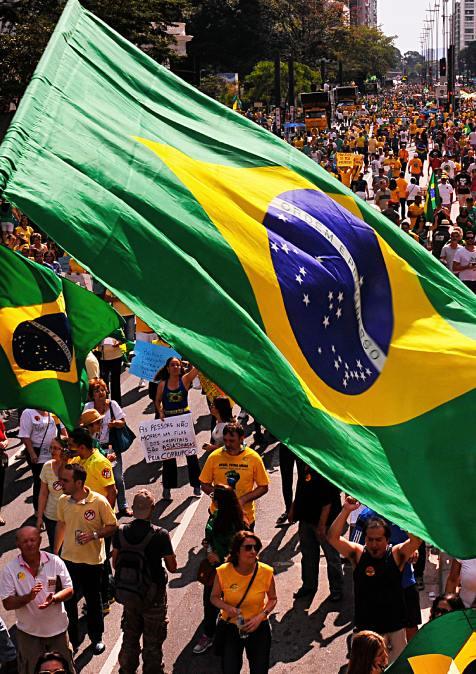 October 7, 2026Brazil's election poses a question that extends well beyond Latin America: how much freedom does a country retain to define its international role when external pressure collides with domestic political exhaustion? For the Global South, the answer matters more than any foreign government's preference regarding the next occupant of the presidential palace. Strategic autonomy remains fragile if every change of government puts a country's freedom of action back up for negotiation. ...
 -
 October 02, 2026Building on his Policy Brief "Latin America, World Politics and the Great Powers", Nizar Messari examines how recent developments are reshaping U.S. influence in the region and affecting ...
 -
 September 30, 2026You can imagine how often I've been asked to comment on where the Brazilian economy is headed after the election. With polls pointing to a runoff on October 25 and currently showing a statistical tie between Luiz Inácio Lula da Silva and Flávio Bolsonaro in vote simulations, I'm naturally asked about their economic programs and about the country's relations with the United States. ...
 -
 July 13, 2026On “marinetraffic.com”, thousands of triangles fill a map of the world’s ports and oceans, each representing the active location and destination of a ship, reported the “McGill International Review” (April 16, 2026) adding,” suspicious tankers are plentiful among them.” One of these vessels, marked by a red triangle, appears, zoomed, as “Monique”, a twenty-year-old vessel, aka Tokyo, Phuket and Elysia. Its old age and the frequent name change, suspects reporter Julnar Alzuki, “indic ...
 -
 June 16, 2026The Policy Center for the New South (PCNS) and the Mexican Council on Foreign Relations (COMEXI) organized a joint webinar under the theme “Protecting Migrants’ Rights under Externalized Migration Control: A Comparative Dialogue between Morocco and Mexico” on June 4, 2026. Migration go...
 -
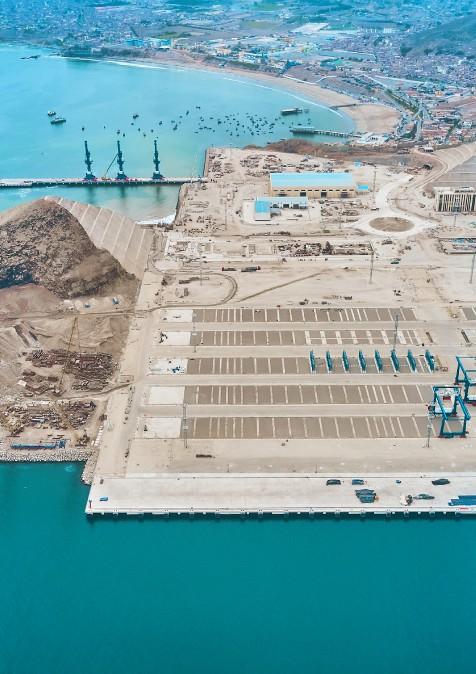 April 30, 2026The commercial and geopolitical interdependence between China and Latin America makes any U.S. claim to promote a "decoupling" between them impractical. Digital technologies and critical minerals will be in the crosshairs of the North American National Security Strategy ...
 -
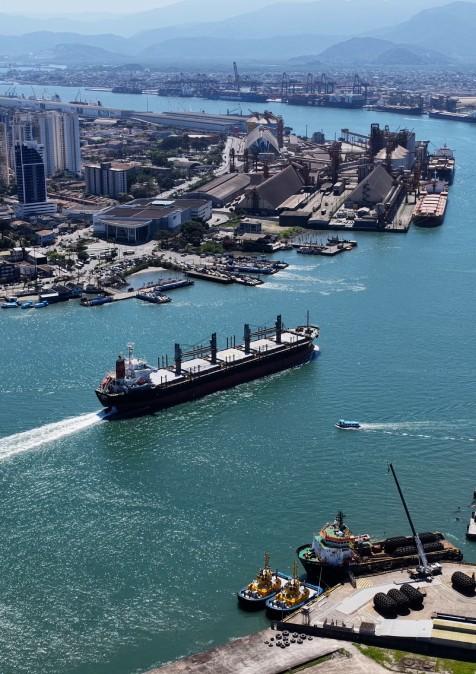 April 1, 2026We are now in the fifth week since the U.S. airstrike that killed top leaders of the Iranian regime, initiating a war involving the United States and Israel against the country. More than a month of mutual bombardments between Iran and Israel has ensued, extending to other Persian Gulf nations, U.S. military installations—and even Cyprus. From a global perspective, the impact has stemmed primarily from disruptions to regional production of goods and the blockade of the Strait of Hor ...
 -
 March 18, 2026Le premier sommet des BRICS, tenu à l’initiative de la Russie en 2009, sera suivi de 16 autres, le dernier étant celui de Rio dont les travaux se sont déroulés les 6 et 7 juillet 2025. Jusqu’en 2022, un seul élargissement est intervenu, celui accueillant l’Afrique du Sud, transformant les BRIC en BRICS. À partir de 2023, en revanche, trois sommets, ceux de 2023, 2024 et 2025, vont se solder par la transformation des BRICS en BRICS+5, accueillant 5 nouveaux pays membres, en ...
 -
March 18, 2026The first BRICS summit, convened at Russia's initiative in 2009, would be followed by sixteen more, the most recent being the Rio summit held on July 6 and 7, 2025. Until 2022, only one enlargement had taken place — the admission of South Africa, which turned BRIC into BRICS. From 2023 onward, however, three consecutive summits — 2023, 2024 and 2025 — transformed BRICS into BRICS+5, admitting five new member countries and introducing a new “partner country” status that now groups ni ...
-
 March 13, 2026Latin America has had to deal with expansionist agendas of great powers since its independence. To do so, different leaders from the region have adopted different policies. Some have sought to reinforce their relations with the U.S. whereas others mistrusted their big neighbor from the North and tried to multiply their partnerships with other parties in order to keep their autonomy. To this respect, the central role played by U.S.-Latin American relations, epitomized by the1823 Monr ...

