
As the African continent grapples with a new generation of complex and interconnected threats, ranging from violent extremism and transnational crime to governance-related tensions and climate-induced insecurity, Southern Africa is also called upon to reinforce its contribution to continental peace and security. While the region has traditionally maintained a strong reputation for stability, emerging challenges are testing the limits of existing mechanisms and requiring renewed political engagement. This conversation will explore the strategic role of Southern African leadership in shaping and operationalizing the African Peace and Security Architecture (APSA). It will examine how SADC, alongside national governments, can further align with APSA’s core pillars, early warning, preventive diplomacy, peace support operations, and post-conflict reconstruction, while upholding the principles of subsidiarity and regional ownership. Special attention will be given to how diplomacy, cooperation, and institutional coordination can help translate commitments into concrete impact on the ground.
Speakers
RELATED CONTENT
-
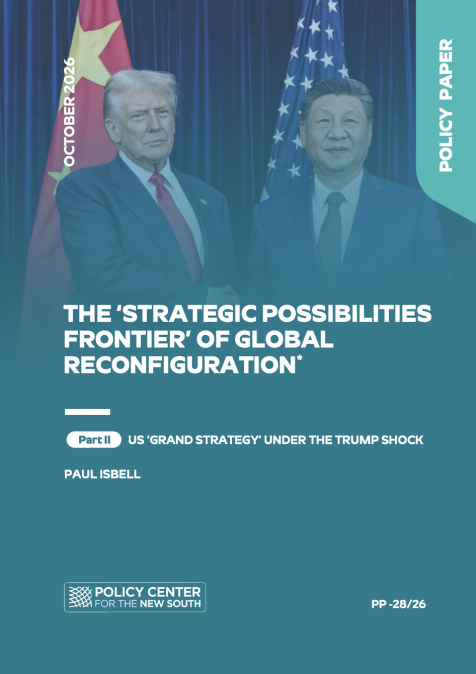 October 9, 2026In the first seven Policy Briefs of this ongoing series of analysis on Pan-Atlanticism: The Atlantic Basin in a Multipolar-Transnational World, we developed the argument that the strategic significance of the Atlantic Basin is on the rise for a range of international actors (states, regions and non-state agents) and from distinct political or ideological perspectives. In addition, in the most recently published Policy Brief -- “The U.S. and the Current International Reconfiguration: ...
 -
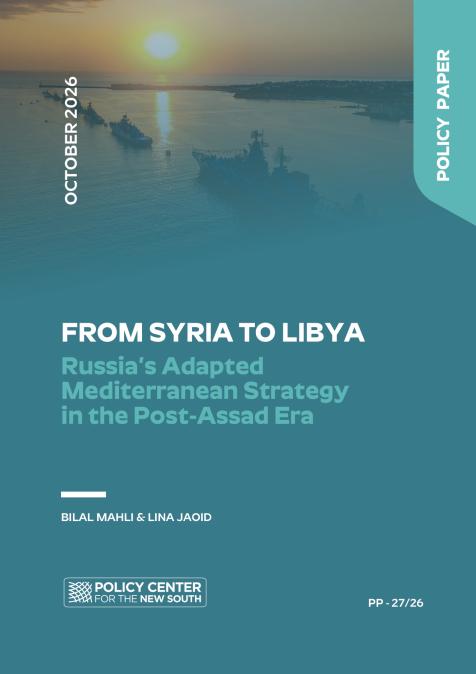 October 8, 2026In the two years since the fall of Bashar al-Assad in Syria, Russia has restructured its Mediterranean presence. Although Russia’s limited and increasingly conditional access to the Khmeimim and Tartus facilities in Syria has been preserved, its presence in the country has morphed from Assad’s ‘patron-client’ configuration to a more negotiated engagement. Simultaneously, Russia has upgraded its force-projection and logistical infrastructure in eastern Libya, giving it an access path ...
 -
 September 15, 2026The Africa Center, in partnership with the Policy Center for the New South, hosts a conversation on the current situation in the Sahel and opportunities for US reengagement. ...
 -
September 11, 2026This episode of Africafé features H.E. Abdisaid Moussa Ali, former Somali Foreign Minister, discussing Somalia's federal system tensions, the decline of Western support for peacekeeping missions, the Ethiopia-Somaliland MOU dispute over Red Sea access, and the growing role of Turkey and...
-
 August 13, 2026Recent crises in the Middle East, particularly attacks targeting commercial vessels in the Red Sea and tensions surrounding the Strait of Hormuz, have highlighted the vulnerability of the main strategic corridors of global trade. Rather than fundamentally disrupting the organization of trade flows, these crises are accelerating an ongoing transformation driven by the search for more resilient connectivity chains, the diversification of trade routes, and the development of logistics ...
 -
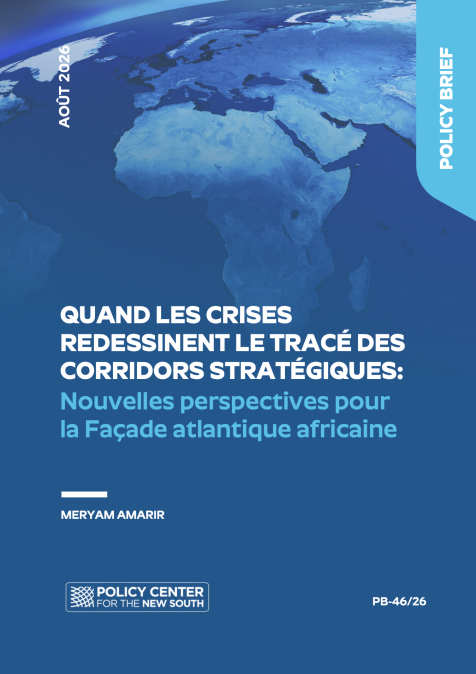 August 13, 2026Les crises récentes au Moyen-Orient, notamment les attaques ciblant les navires commerciaux en mer Rouge et les tensions autour du détroit d'Ormuz, ont mis en évidence la vulnérabilité des principaux corridors stratégiques du commerce mondial. Plus qu'un bouleversement de l'organisation des échanges, elles accélèrent une transformation déjà engagée, fondée sur la recherche de chaînes de connectivité plus résilientes, la diversification des itinéraires commerciaux et le développement ...
 -
 August 4, 2026 Cet article a initialement été publié sur la plateforme confrontations.org Février 2022 : face à un nouveau contexte international, les Européens se rallient aux idées de souveraineté européenne et d’autonomie stratégique, brisant ainsi un tabou. Octobre 2025 : après cinquante ans de contentieux, le Conseil de sécurité ouvre la porte à une reconnaissance officielle de la souveraineté marocaine au Sahara occidental.Apparemment sans rapport, ces deux évènements sont reliés ...
 -
 July 27, 2026Cet article évalue la pertinence du paradigme de la réconciliation pour analyser la rivalité maroco-algérienne. À partir d’une démarche qualitative, historico-interprétative et interdisciplinaire fondée sur un corpus raisonné de travaux académiques et de sources institutionnelles, il montre que cette conflictualité ne se réduit ni au différend du Sahara ni à un simple antagonisme bilatéral. Elle se construit à l’intersection de mémoires concurrentes, de mécanismes de sécuritisation, ...
 -
July 3, 2026This episode explores Russia’s growing influence in Africa through media, information warfare, and anti-Western narratives. It examines how Moscow uses historical ties, social media, local influencers, and security partnerships to shape perceptions, while questioning the real scope and ...
-
 June 26, 2026Three years after the adoption of the first National Action Plan (NAP) on the Women, Peace and Security (WPS) Agenda, Morocco has made real institutional progress, but implementation is still inadequate. The extension of the NAP opens a window of opportunity to prepare a second, more ambitious and operational cycle.This Policy Brief identifies four persistent obstacles: a virtually stagnant female employment rate of 19.1%, less than 3% female representation in peacekeeping contingen ...

