Publications /
Policy Brief

Back
Reviving Multilateral Security Dialogue in the MENA: Finding the Hard, but Possible, Compromise
Authors
Emilliano Alessandri
April 7, 2017

While possible, prospects for repairing existing fractures through multilateral dialogue and compromise have become elusive as crises in the region persist. There are quite a few unfavorable conditions hindering the emergence of some form of multilateral security process: areas of hot conflict have widened in recent years making violence almost endemic in the region, in countries like Syria, Iraq, Yemen and Libya. The Middle East peace process is in a stalemate and already thin trust between the Israeli and Palestinian leaderships is all but gone as both have become more contested among respective constituencies and less respected abroad In some countries, the social contract seems to be breaking after a failed Arab Spring, challenging government authority even in places like Tunisia where a fragile democratic transition audaciously continues despite growing socio-economic discontent and a deteriorating security situation. Some other MENA states have become weaker as a result of chronic violence and dysfunctional governance; while non-Arab states, from Turkey to Iran, have seen an opportunity to expand their clout in a Middle East in flux, even if themselves under great pressure, extra-regional actors have never appeared more divided about the course to follow, or more distracted by other priorities.

RELATED CONTENT

  • Authors
    October 13, 2026
    “Every gun that is made, every warship launched, every rocket fired signifies in the final sense, a theft from those who hunger and are not fed, those who are cold and are not clothed.”President Dwight Eisenhower, April 16, 1953 This paper examines the economic and human impacts of the first six months of the Iran war—from February to the end of August 2026—on Iran’s Arab neighbors and compares these impacts with those on the three countries directly involved—Iran, Israel and t ...
  • Authors
    Lina Jaoid
    October 8, 2026
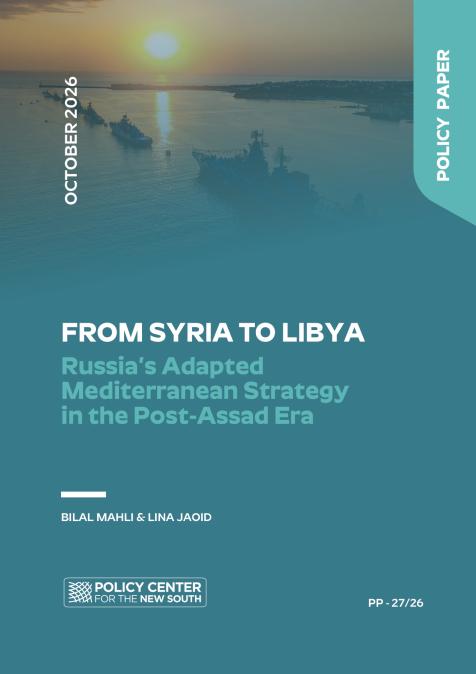
    In the two years since the fall of Bashar al-Assad in Syria, Russia has restructured its Mediterranean presence. Although Russia’s limited and increasingly conditional access to the Khmeimim and Tartus facilities in Syria has been preserved, its presence in the country has morphed from Assad’s ‘patron-client’ configuration to a more negotiated engagement. Simultaneously, Russia has upgraded its force-projection and logistical infrastructure in eastern Libya, giving it an access path ...
  • Authors
    October 2, 2026
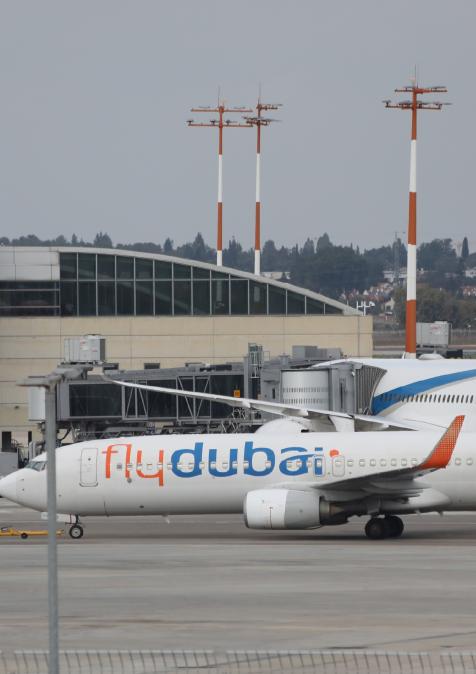
    The incident involving Flydubai Flight FZ1073 between Dubai and Tel Aviv does not yet support any definitive attribution. It does, however, provide a useful warning sign: as aviation security closes off traditional avenues of intrusion, threats may shift towards alternative pathways by exploiting the people, service providers, and systems that the aviation ecosystem must necessarily trust.  ...
  • Authors
    October 2, 2026
    L’incident du vol FZ1073 entre Dubaï et Tel-Aviv ne permet encore aucune attribution définitive. Il constitue en revanche un révélateur utile : à mesure que la sûreté aérienne ferme les voies classiques d’intrusion, la menace cherche à emprunter des voies alternatives en exploitant les personnes, les prestataires et les systèmes auxquels l’écosystème aéronautique doit nécessairement accorder sa confiance. ...
  • Authors
    September 30, 2026
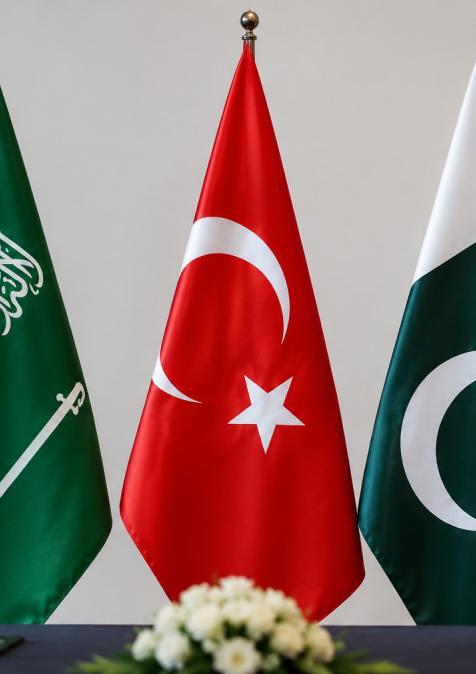
    On August 7, 2026, Saudi Arabia, Turkey, and Pakistan signed the Mecca Joint Défense Agreement, a collective-defense pact widely compared to NATO’s Article 5. This essay argues that the comparison is misleading. Mecca borrows NATO’s language of solidarity without yet possessing NATO’s institutional machinery, and the Houthi offensive against Saudi Arabia in September 2026 provided an early and revealing test of what the agreement actually means in practice. Neither Pakistan nor Turk ...
  • September 25, 2026
    In this episode, Senior Fellow Ian Lesser examines the United States’ longstanding ties with the Mediterranean as the country marks its 250th anniversary. He discusses how a possible shif ...
  • Authors
    August 13, 2026
    Cuando estalla una crisis, esta da lugar a la activación de reflejos para su gestión y la limitación de sus efectos. Comienzan, entonces, los análisis y las suposiciones sobre las disfunciones, los incumplimientos y las fallas que la ocasionaron. En algunos casos, la teoría de la conspiración se inmiscuye y las hipótesis buscan a los autores que provocaron la crisis, sus designios y sus objetivos. Sin embargo, la teoría de la gestión de crisis nos enseña que una crisis surge según ...
  • Authors
    August 12, 2026
    When a crisis erupts, it sets crisis-management reflexes in motion and prompts efforts to contain its effects. Analysts then begin looking for the malfunctions, oversights, and failures that caused it. In some cases, conspiracy theories creep in, and speculation turns to who engineered the crisis, and to what end. Crisis-management theory teaches us, however, that a crisis unfolds under conditions that favor its emergence. Crises take shape in an environment where latent vulnerabil ...
  • Authors
    August 11, 2026
    Lorsqu’une crise éclate, elle donne lieu à l’actionnement des réflexes pour sa gestion et la limitation de ses effets. Commencent, alors, les analyses et les suppositions sur les dysfonctionnements, les manquements et les défaillances ayant entrainé ladite crise. Dans certains cas, la théorie du complot s’ingère et les hypothèses cherchent les auteurs ayant provoqué la crise, leurs desseins et leurs buts.Cependant, la théorie de gestion des crises nous apprend qu’une crise inte ...
  • Authors
    August 11, 2026
    The Mecca Agreement: A First Step Towards a New Regional Security Architecture? On 7 August, Saudi Arabia, Türkiye and Pakistan signed the Mecca Agreement, a trilateral defense pact aimed at strengthening collective security and defense cooperation between the three countries. At its core lies a collective defense commitment under which an attack on one member is considered an attack on all three. While many details concerning its practical implementation remain unclear, the agreeme ...