Publications /
Book / Report

Back
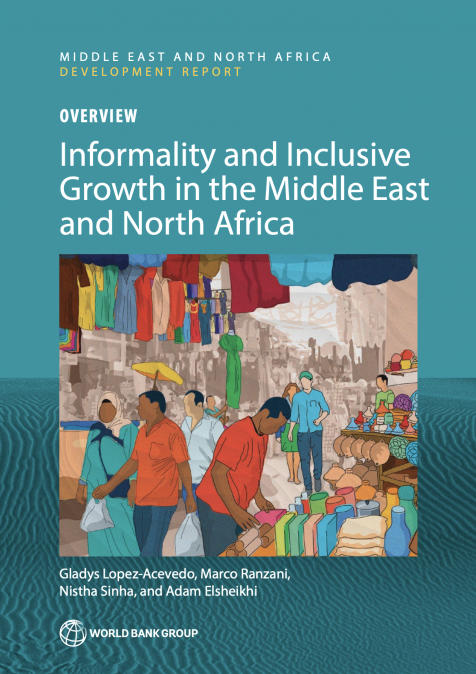
Informality and Inclusive Growth in the Middle East and North Africa
Authors
Gladys Lopez-Acevedo
Marco Ranzani
Nistha Sinha
Adam Elsheikh
June 23, 2023

This report was originally published on openknowledge.worldbank.org

The long-standing informality debate in the Middle East and North Africa (MENA) Region has taken on a new urgency as it looks for a pathway to more socially inclusive growth that is less reliant on fossil fuels. This is occurring against a backdrop of subpar labor market outcomes, further growth setbacks, and deteriorating fiscal and current account de ficits in the aftermath of the COVID-19 pandemic—and in the wake of high in flation and supply chain disruptions triggered by the Russian Federation–Ukraine war. "Informality and Inclusive Growth in the Middle East and North Africa" aims to better understand the characteristics and incentive structure that have led to the prevalence of informal employment in three MENA countries—the Arab Republic of Egypt, Morocco, and Tunisia. The report breaks new ground by adopting a comprehensive perspective to focus on the features of, and interrelationships among, different aspects of these countries’ institutional landscapes to make sense of the complex incentive structure that workers and firms face when deciding between formal and informal options. Specifically, the report groups these issues in three broad realms:(1) entrepreneur-worker relations, (2) taxes and transfers, and (3) market conditions.

“This report is an extremely welcome addition to the literature on MENA labor markets. By analyzing the incentive structure and institutional factors that have led to the prevalence of informal employment in Egypt, Morocco, and Tunisia, it points the way to policy actions that can be taken to reduce informality and increase social protection for workers. It is a must-read for anyone who cares about greater economic inclusion in MENA.” Ragui Assaad, Professor, Hubert H. Humphrey School of Public Affairs, University of Minnesota

“A compelling account of the implications of informality in the workforce and how economies of MENA can design appropriate policy responses. This timely report comes amid multiple social reforms in MENA and is a must-read for policy practitioners and economists in the region.” Karim El Aynaoui, Executive President, Policy Center for the New South

“This report is particularly timely given the negative impact the COVID-19 pandemic and subsequent crises have had on living standards and poverty rates around the world and especially in MENA countries. While the focus on boosting growth and achieving the Sustainable Development Goals has revolved around financing, the report sheds new light on the bene fits that tackling informality through institutional, regulatory, and policy changes could present to achieving these goals.” Mahmoud Mohieldin, Executive Director, International Monetary Fund.
RELATED CONTENT

  • Authors
    August 5, 2026
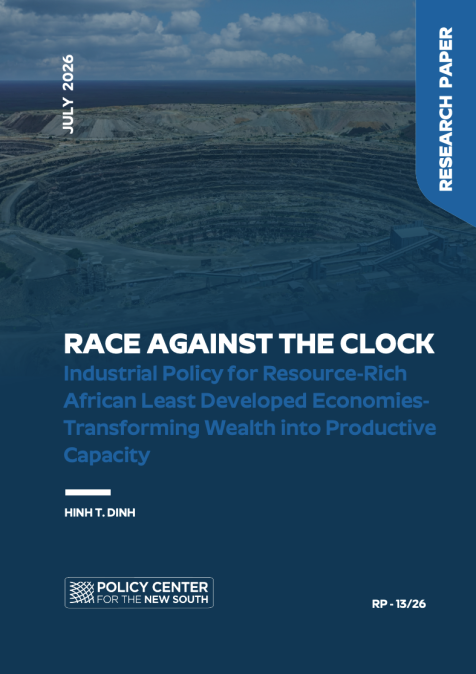
    This paper addresses the persistent challenge of resource dependence in the world's poorest countries, focusing on the ten poorest African nations where natural- resource rents average 14% of income. It argues that four decades of conventional policy advice, which treated resource dependence primarily as a revenue management problem, have failed to help these countries. While stabilization funds and permanent-income frameworks aim to smooth consumption, they do not answer the fundam ...
  • August 3, 2026
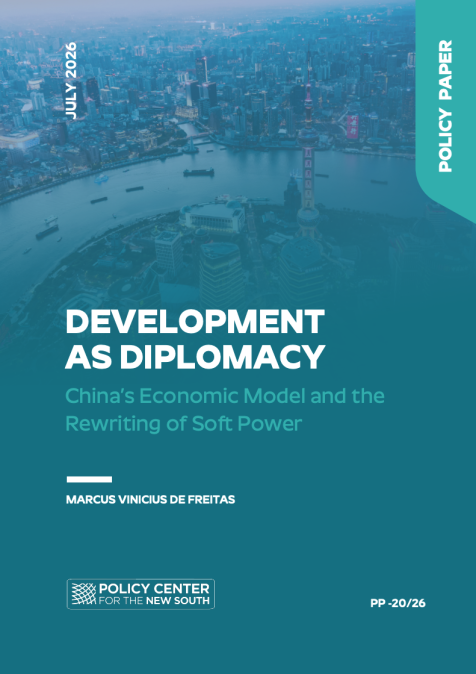
    This policy paper explores how China’s economic development model—rooted in pragmatism, long-term planning, and civilizational renewal—has become its most compelling soft power asset, particularly in the eyes of the Global South. While critically engaging with Joseph Nye’s original conception of soft power as a primarily cultural and normative force, the paper argues that China’s ability to transform itself from an impoverished postimperial state into the world’s largest trading nat ...
  • Authors
    Fatima Berahou
    July 28, 2026
    This Paper was originally published on cairn.infoL’insertion professionnelle des jeunes, et particulièrement des diplômés de l’enseignement supérieur, constitue un enjeu majeur pour le développement économique et la cohésion sociale de toute nation. Au Maroc, cette question revêt une acuité particulière et s’attache à un paradoxe persistant : malgré une démocratisation et une progression notable de l’accès à l’enseignement supérieur au cours des deux dernières décennies, le tau ...
  • Authors
    Edited by
    July 13, 2026
    Available soon on livremoi. The 2026 edition of the Annual Report on the African Economy examines the issue of the valorization of Africa’s natural resources, particularly its mineral wealth. While the continent holds some of the world’s largest known reserves of a wide range of minerals and metals, the objective is not merely to catalogue these resources, but rather to explore the conditions under which natural resource endowments can be transformed into drivers of Africa’s in ...
  • July 3, 2026
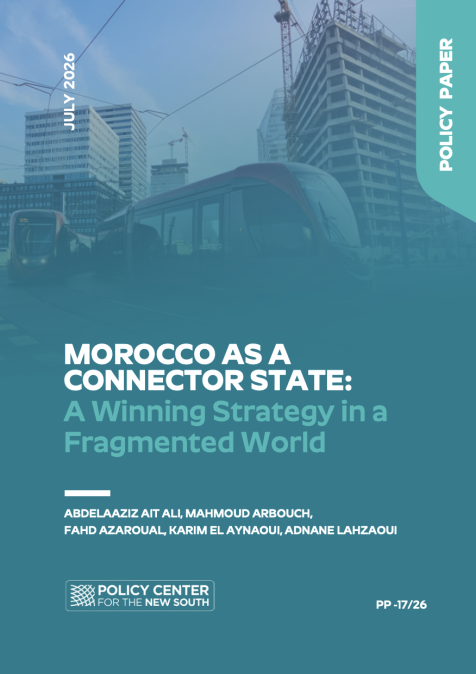
    Este Policy Paper también ha sido publicado en inglés y francés por Le Grand Continent La economía marroquí constituye un caso ilustrativo entre las economías de renta media, en un contexto marcado por una creciente fragmentación del entorno internacional, un crecimiento mundial anémico y una desaceleración de la convergencia. Desde 2022, su trayectoria se caracteriza por una relativa solidez, con un crecimiento superior a la media de las economías de la misma categoría. Superi ...
  • July 3, 2026
    This Policy Paper has also been published in French and Spanish by Le Grand Continent Morocco offers a compelling example of how a middle-income economy can navigate a more fragmented global environment, characterized by weak growth and slower convergence. Since 2022, economic activity has remained relatively strong, with growth exceeding that of many comparable economies. Non-agricultural growth has averaged 4.4% since 2022, around 1.3 percentage points above its historical av ...
  • July 3, 2026
    Ce Policy Paper a également été publiée en anglais et en espagnol par Le Grand Continent Le Maroc offre un exemple éclairant parmi les pays à revenu intermédiaire, dans un contexte marqué par une fragmentation croissante de l’environnement international, une croissance mondiale atone et un ralentissement de la convergence. Depuis 2022, sa trajectoire se distingue par une certaine robustesse, avec un rythme d’expansion supérieur à celui des autres économies de même catégorie. Dé ...
  • Authors
    July 2, 2026
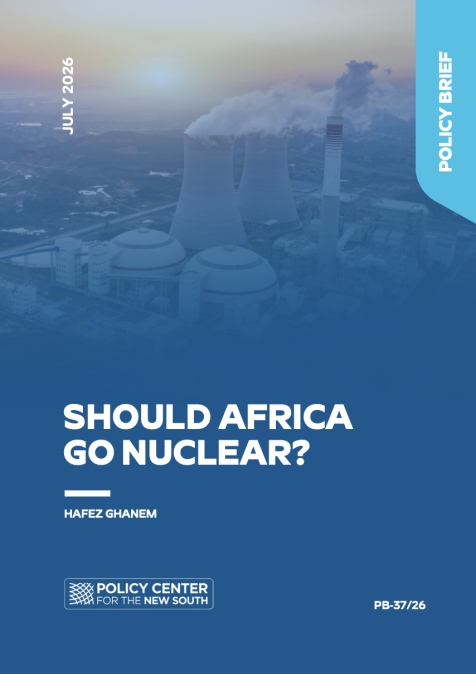
    Africa is facing a massive electricity deficit that is impacting its economic and social development, and its ability to catch up with the rest of the world. It is imperative that the continent increase its electricity production to connect the 600 million people who are currently without access and to improve the quality of service for the millions who are suffering from frequent blackouts and load-shedding. Economic development in the 21st century will crucially depend on the digi ...