Podcasts

Back

Post-Brexit transition: implications on UK-Africa relations

15
September 2016
Jonathan Eyal and Malcolm Chalmers 

A significant degree of uncertainty remains on the consequences of Britain’s EU referendum. Once Article 50 is triggered, the Brexit will still have to be enforced and effective. British Prime Minister, Theresa May, stated that ‘Brexit is Brexit’ sending a clear message that the UK will have to figure out the future of its foreign policy outside of the European Union, eventually needing to review its interests and its diplomatic relations unilateraly.
To answer some of our questions on the future of the UK-Africa relations, we are pleased to welcome with us, two senior experts from the Royal United Services Institute (RUSI) in London; Dr. Jonathan Eyal, Director of Strategic Partnerships and Pr. Malcolm Chalmers, Deputy Director General of the RUSI.
RELATED CONTENT

  • Authors
    July 14, 2026
    Avec la capitale Pékin comme acteur principal de la politique étrangère chinoise, l’engagement de la Chine en Afrique ne peut plus être appréhendé à travers le seul prisme de l’État central. Suite aux réformes de décentralisation engagées en 1978, les gouvernements provinciaux de l’Empire du Milieu jouent un rôle de plus en plus visible et structurant, en s’affirmant en tant qu’acteurs à part entière de la coopération internationale. Ils interviennent, entre autres domaines, dans le ...
  • July 10, 2026
    For much of the post-war period, the Global South was framed as an object of history, defined by dependency, constrained by structural asymmetries, and confined to the margins of global decision-making. That narrative, once empirically grounded, is now no longer adequate. A profound yet uneven transformation is underway. The Global South is no longer only reacting; it is increasingly shaping rules, institutions, and narratives.This Policy Brief argues that the Global South is thus t ...
  • Authors
    July 9, 2026
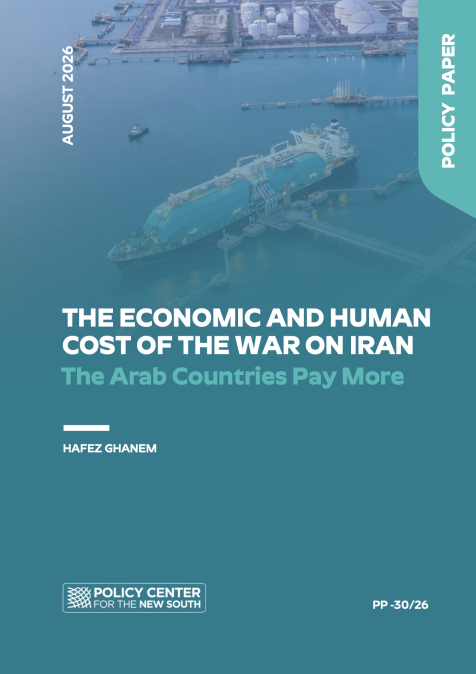
    Cet essai analyse la guerre Iran–États-Unis–Israël de 2026 comme un révélateur de la transformation profonde de l’ordre international. À travers le prisme du droit de la mer, du détroit d’Ormuz, des alliances fragmentées, des câbles sous-marins et des flux énergétiques, il montre que le pouvoir mondial se déplace progressivement du contrôle des territoires vers la maîtrise des infrastructures de circulation. Loin de disparaître, la mondialisation entre dans une phase de connectivité ...
  • Authors
    July 7, 2026
    The Green March is one of those seminal moments that have never ceased to influence the course of political events in Morocco, because of its long-term significance from the outset, the context in which it unfolded, the logic of interactions in which it was embedded through its causes and effects, and as one of the striking figures in the national narrative. ...
  • Authors
    July 6, 2026
    We take the 2026 G7 Summit in Évian-les-Bains as a case study for understanding how a leading existing multilateral organisation adapts to a more fragmented, technologically inflected, and multipolar world. We argue that the significance of Évian lies less in the summit agreements themselves than in what the summit reveals: a qualitative shift in governance away from exclusive summit diplomacy and towards more selective coalition-building, broader engagement with non-state actors, a ...
  • July 3, 2026
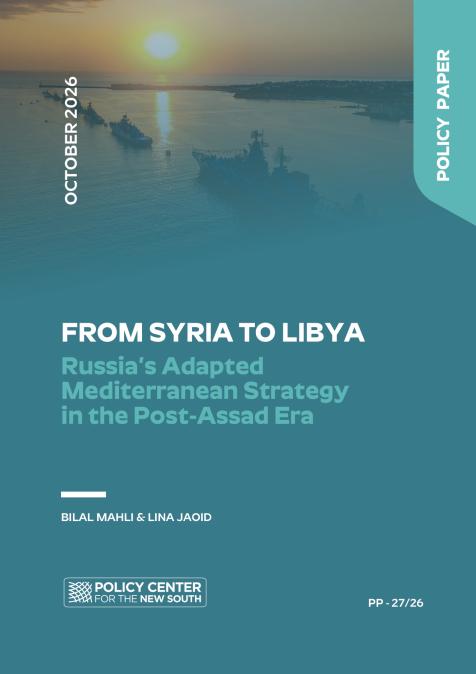
    This episode explores Russia’s growing influence in Africa through media, information warfare, and anti-Western narratives. It examines how Moscow uses historical ties, social media, local influencers, and security partnerships to shape perceptions, while questioning the real scope and ...
  • July 3, 2026
    This Policy Paper has also been published in French and Spanish by Le Grand Continent Morocco offers a compelling example of how a middle-income economy can navigate a more fragmented global environment, characterized by weak growth and slower convergence. Since 2022, economic activity has remained relatively strong, with growth exceeding that of many comparable economies. Non-agricultural growth has averaged 4.4% since 2022, around 1.3 percentage points above its historical av ...