Podcasts

Back

Climate Change and WEF Nexus in MENA

04
October 2017
Rabi H. Mohtar

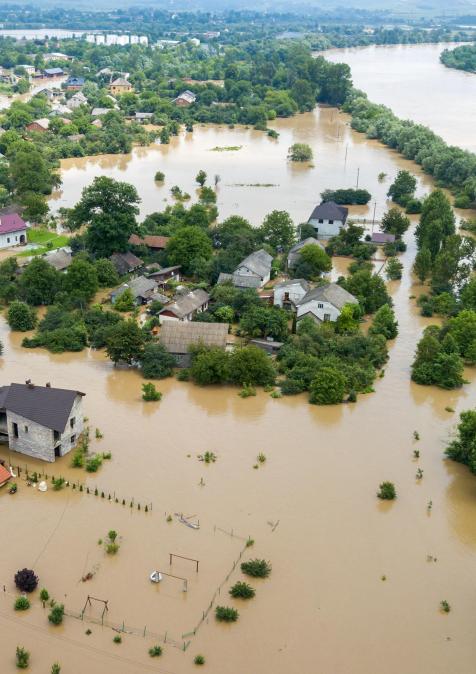
This podcast is performed by Dr. Rabi Mohtar. The Intergovernmental Panel on Climate Change (IPCC) has projected that temperatures in the Arab region will rise between 1 to 1.5 degrees by 2030 and up to 4 degrees by 2100 over parts of the Arab world (IPCC, 2007). Most of the dramatic impact is expected to affect the sub tropics where most of the ESCWA region is located. If adaptation and mitigation policies stay unchanged, it is projected that twenty coastal cities around the world will see devastating impacts from a significant increase in sea level waters; four of them are in north Africa and ME region: Algiers, Beirut, Alexandria and Benghazi. These cities will see significant impacts that have the potential to disrupt coastal agriculture, lifeline, power, telecommunications and transportation sectors (ESCWA 2016; Hallegatte et al., 2013).

RELATED CONTENT

  • Authors
    January 23, 2026
    Introduction: COP30 as a Test of Reality, Not AmbitionCOP30 in Belém was never going to be a breakthrough. In a world marked by fiscal exhaustion, geopolitical rivalry, and eroding trust in multilateralism, expecting transformational climate cooperation bordered on denial. The choice of the Amazon as host carried symbolic weight, but symbolism does not override power, interests, or institutional capacity.The outcome of COP30 confirms a deeper truth: the global climate regime has ent ...
  • Authors
    January 21, 2026
    In response to developing countries’ dissatisfaction with the New Collective Quantified Goal (NCQG) of $300 billion, which was decided at the Twenty-Ninth Conference Of the Parties (COP29) to the United Nations Framework Convention on Climate Change, in 2024 in Baku, Azerbaijan, the COP29 and COP30 presidencies promised to develop a roadmap to achieve $1.3 trillion in external climate finance that developing countries need, and to present it at COP30 in Belém, Brazil[1]. The two pre ...
  • January 20, 2026
    The episode explores the global push to move beyond fossil fuels amid climate urgency, geopolitical tensions, and energy security shocks. It highlights how the energy transition is advancing unevenly, with advanced economies decarbonizing faster than many Global South countries constrai...
  • Authors
    January 13, 2026
    This paper examines the nexus between governance structures, digital transformation, sustainability, and port service efficiency through an international comparative lens, with a specific focus on the Tanger Med–Algeciras corridor in the strait of Gibraltar. Using global best practices—from Singapore to Busan and Kaohsiung—it explores how public-private coordination, digital innovation, and green transition policies contribute to port competitiveness and integration into global supp ...
  • January 2, 2026
    Ce Policy Paper analyse les enjeux politiques, économiques et opérationnels du Fonds pour les pertes et dommages, créé pour répondre aux impacts climatiques irréversibles subis par les pays les plus vulnérables. Il clarifie d’abord la notion de pertes et dommages, qui mêle effets économiques et non économiques, et souligne les défis d’attribution liés à la superposition entre chocs climatiques et fragilités structurelles. L’analyse met ensuite en lumière les tensions d’économie poli ...
  • Authors
    November 14, 2025
    Dix ans après l’Accord de Paris, la trajectoire mondiale semble s’orienter vers un réchauffement de +2,8°C d’ici la fin du siècle, si les politiques actuelles ne sont pas renforcées en termes d’engagements climatiques. Pourtant, la prise de conscience collective face aux enjeux climatiques est globalement affirmée, appelant à la nécessité de transformer nos modes de consommation, de production et de mobilité vers des solutions à plus faible empreinte carbone. ...
  • Authors
    November 13, 2025
    Africa today has only one real climate priority: adaptation. Africa should still push the rich countries of the Global North to cut emissions. But Africa should not have any illusions. Past mitigation efforts have had some positive effects but have not been sufficient to stay on track with the targets of the Paris Agreement. There is no reason to believe that future efforts will fare any better. Political developments in the United States and Europe do not augur well for global miti ...
  • November 10, 2025
    This Opinion was originaly published on kalam.chathamhouse.org Morocco’s environmental governance rests on a comprehensive constitutional and legal architecture that establishes the right to a healthy environment as a fundamental right. The 2011 Constitution obliges the state to ensure equal access to water, a healthy environment, and sustainable development while also requiring the protection of natural resources and future generations, and guaranteeing equal environmental rig ...