Podcasts

Back

Argentina: 100 days of change

10
May 2016
Santiago Villar 

This podcast is performed by Santiago Villar. In December 2015 a new President took office in Argentina: Mauricio Macri. These elections left behind 12 years of government of the "Victory Front", headed by Nestor Kirchner (2003-2007) and his wife Cristina Fernández de Kirchner (2007-2015). The new president will face several challenges such as inflation, stagnation, high levels of corruption and an increasing fiscal deficit, among other. Since his party ("Let's Change") will not have majority within the Parliament, he will need to reach agreements with other parties in order to move forward with his government agenda. Through this talk we will try to evaluate the first 100 days of Mauricio Macri's government and to present a possible future scenario for the rest of the year 2016.
RELATED CONTENT

  • Authors
    March 13, 2026
    While acknowledging the centrality of security tensions and potential conflict in the Gulf, this essay intentionally sets aside a detailed treatment of military and hard-power dynamics, concentrating instead on the geoeconomic logics of capital, infrastructure, energy, and connectivity, through which Gulf states now articulate power in a fragmented world order.It examines the emergence of a new tripartite or three-pillar power configuration in the Gulf, arguing that Saudi Arabi ...
  • Authors
    Nizar Messari
    March 13, 2026
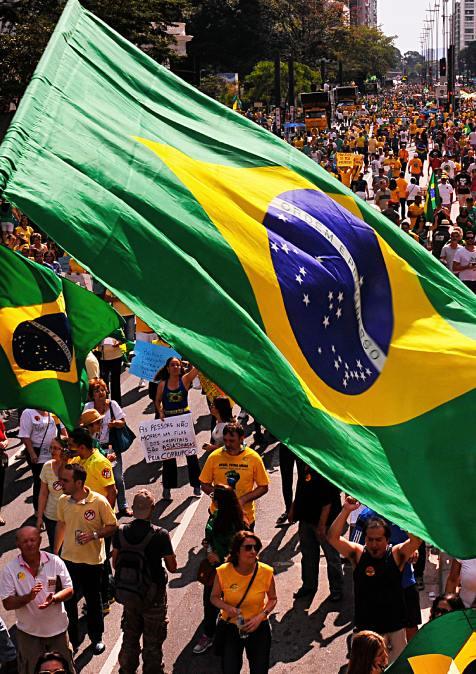
    Latin America has had to deal with expansionist agendas of great powers since its independence. To do so, different leaders from the region have adopted different policies. Some have sought to reinforce their relations with the U.S. whereas others mistrusted their big neighbor from the North and tried to multiply their partnerships with other parties in order to keep their autonomy. To this respect, the central role played by U.S.-Latin American relations, epitomized by the1823 Monr ...
  • March 5, 2026
    This episode of Africafé explores the evolving dynamics of US-Africa relations, tracing their historical shifts from Cold War and War on Terror engagements to today’s focus on trade, investment, and strategic partnerships. Dr. Ian Lesser highlights how Africa’s role in US foreign policy...
  • February 27, 2026
    Technological and industrial capabilities have become core instruments of state power, reshaping military strategies, economic competition, and global influence. The rapid rise of AI, cyber warfare, autonomous systems, and advanced manufacturing is redefining how states project power an...
  • February 20, 2026
    تناول هذا البودكاست، المنظم على هامش الدورة الرابعة عشرة من منتدى الحوارات الأطلسية، الدور الاستراتيجي للممرات البحرية باعتبارها رافعة للتنمية ومحركاً لإدماج اقتصادات الجنوب في التجارة ال ...
  • February 18, 2026
    Following Donald Trump’s statements asserting that the United States should acquire Greenland, fundamental questions about sovereignty, alliances, and the authority of international law have resurfaced. The Greenland case reveals the tensions between security imperatives, alliance cohes...
  • Authors
    February 17, 2026
    La Marche Verte fait partie de ces moments féconds qui n’ont pas cessé d’influer sur le cours des événements politiques du Maroc, par la place qu’elle a prise, dès le départ, dans la longue durée, le contexte dans lequel elle s’est déployée, la logique des interactions dans laquelle elle s’est inscrite par ses causes et ses effets, et comme une des figures éclatantes du récit national. ...
  • Authors
    Sofia Formigli
    February 13, 2026
    There is a story told by Václav Havel, the Czech dissident writer who later became president after the fall of communism. In his essay The Power of the Powerless, Havel describes a shopkeeper who, every morning, places a sign in his window reading: “Workers of the world, unite!” He does not believe in it. Nor do the people around him. Yet the sign remains. ...