L’état face à la crise du Covid-19

April 7, 2020

Au-delà de la gestion immédiate de la crise, qui concentre légitimement l’attention à ce jour, l’enjeu actuel consiste également de mener des réflexions sur les politiques publiques, économiques et sociales que les pays devront mettre en place comme stratégies pour remettre à niveau leurs économies. Cela suppose une réflexion projetée sur une période après la crise qui vise à conduire une redéfinition plus large des politiques publiques et de leurs priorités. Modérateur : - Mhamed Dryef, Senior Fellow, Policy Center for the New South Intervenants : - Uri Dadush, Senior Fellow, Policy Center for the New South - Larabi Jaidi, Senior Fellow, Policy Center for the New South - Moubarack Lo, Senior Fellow, Policy Center for the New South

Speakers
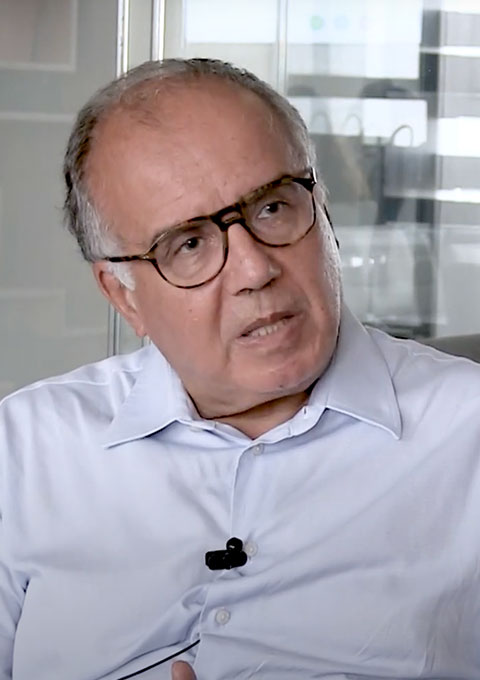
Uri Dadush
Non-Resident Senior Fellow
Uri Dadush was a Senior Fellow at the Policy Center for the New South, where he served as Senior Fellow from its founding in 2014 until 2022. He is Research Professor at the School of Public Policy, University of Maryland and a non-resident scholar at Bruegel. He is based in Washington, DC, and is Principal of Economic Policy International, LLC, providing consulting services to the World Bank and to other international organizations as well as corporations. Previously, he served as Director of the International Economics Program at the Carnegie Endowment for International Peace and, at the World Bank, was Director of the International Trade, Economic Policy, and Development Prospects Departments. In the private sector before that he was President of the Economist Intelligence ...

Larabi Jaïdi
Senior Fellow
Larabi Jaïdi is a Senior Fellow at the Policy Center for the New South and an Affiliate Professor at Mohammed VI Polytechnic University. His areas of expertise include international economy, economic policies, international economic relations, regional economies, social development, international relations, and Mediterranean studies. He also served on the Special Commission on the New Development Model of Morocco, a consultative body created in November 2019 to formulate the country's new developmental guidelines. Jaïdi is a former Professor at Mohamed V University in Rabat-Agdal and a founding member of both the Centre Marocain de Conjoncture and the Groupement d’Etudes et de Recherches sur la Méditerranée.   Prof. Jaïdi previously served as Advisor to the Prime Minist ...
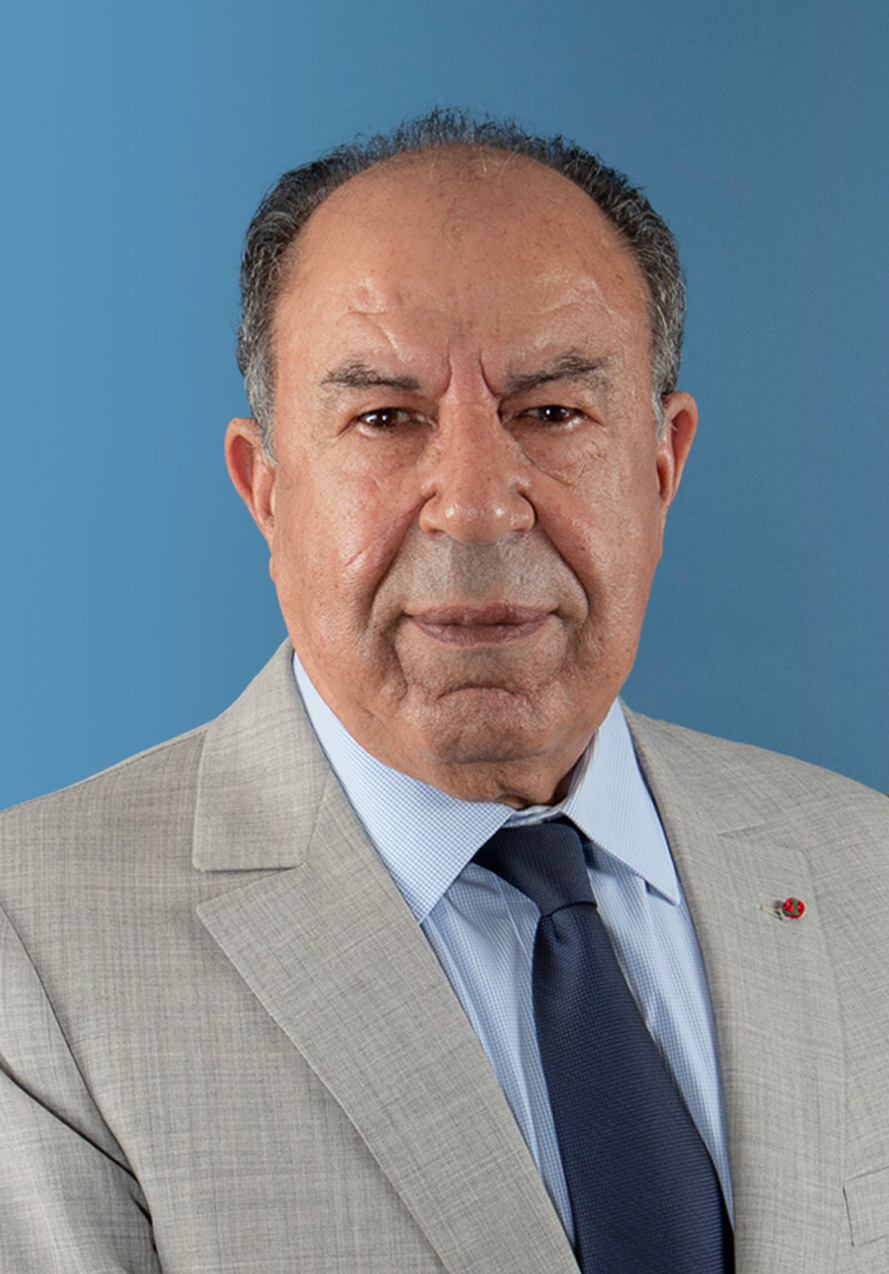
M'hammed Dryef
Senior Fellow
M’hammed Dryef is a Senior Fellow at the Policy Center for the New South, and a Professor of Practice at Mohammed VI Polytechnic University, where he also serves as a Special Advisor to the Public Policy School (PPS). He graduated from the École Nationale d’Administration Publique (ENAP) in 1972 and also holds two postgraduate diplomas in Private Law, obtained in 1975 and 1977 from Mohammed V University in Rabat. In 1992, he earned a PhD in Public Law from the Pierre Mendès-France University in Grenoble. M’hammed Dryef began his administrative career in 1972 as Deputy Administrator at the Ministry of Administrative Affairs, General Secretariat of the Government. From 1974 to 1977, he served as Chief of Staff to the Secretary of State in charge of Housing, Urban ...
RELATED CONTENT

  • Authors
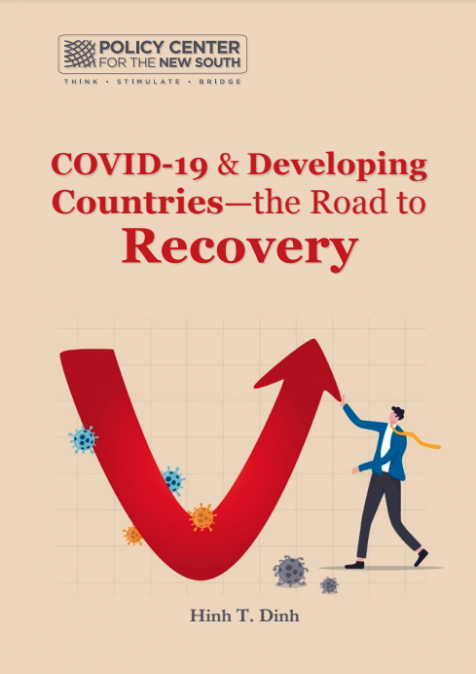
    February 3, 2022
    COVID-19 has ravaged nearly every country in the world, with the globalization of recent decades intensifying its spread. As of mid-2021, the world had spent $16.5 trillion—18% of global GDP—to fight the disease. And that amount does not even include the most important losses such as deaths, mental health effects, restrictions on human freedom, and other nonmonetary suffering. Nearly 90% of this spending was by developed economies, with the rest by emerging market and developing eco ...
  • Authors
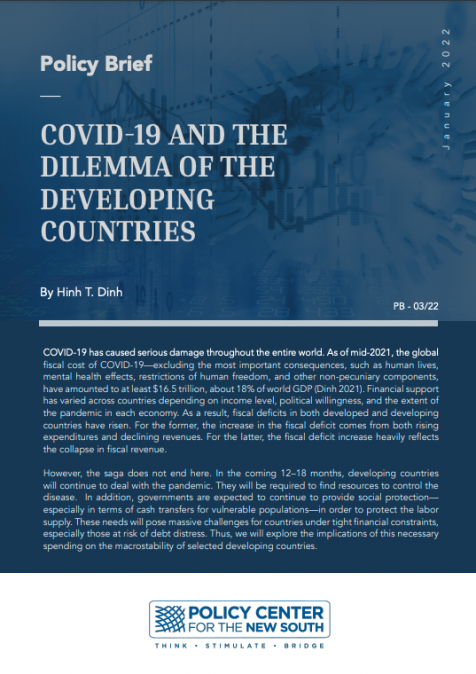
    January 26, 2022
    COVID-19 has caused serious damage throughout the entire world. As of mid-2021, the global fiscal cost of COVID-19—excluding the most important consequences, such as human lives, mental health effects, restrictions of human freedom, and other non-pecuniary components, have amounted to at least $16.5 trillion, about 18% of world GDP (Dinh 2021). Financial support has varied across countries depending on income level, political willingness, and the extent of the pandemic in each econo ...
  • Authors
    Gerson Javier Pérez Valbuena
    Diana Ricciulli
    Jaime Bonet
    Inácio Araújo
    Fernando Perobelli
    December 28, 2021
    This paper analyses the regional economic differences in the impact of lockdown measures to prevent the spread of COVID-19 ordered by Colombia’s national gov­ernment. Using an input-output model, we estimate regional economic losses by extracting a group of formal and informal workers from different sectors of the economy. Results show regional differences in the impact of lockdown measures on their labour markets, local economies, and productive sectors. We also find that periphera ...
  • Authors
    October 21, 2021
    In the World Economic Outlook, published October 12, the International Monetary Fund (IMF) slightly lowered its forecast for global economic growth this year to 5.9%, while maintaining a forecast of 4.9% for 2022. It also emphasized the “divergence” in the pace and extent of economic recovery in different countries. Two factors are highlighted in explaining the divergence. First, there are the different paces and extent of vaccination in different countries, that is, the ‘Great Vac ...
  • March 02, 2021
    The Covid-19 pandemic has severely damaged the global economy. Confinement policies, global value chains disruption and risk aversion in the financial systems markets have brought the glo ...
  • Authors
    Paola Maniga
    Yassine Moustanjidi
    February 15, 2021
    The COVID-19 pandemic has exposed new vulnerabilities in social, infrastructure, and governance systems. In the first months of the pandemic, there was a genuine concern about the capacity of the Global South to contain the spread of the virus. African cities were particularly vulnerable, with some experts1, including the head of WHO2, predicting a catastrophe for the continent. Despite the structural and chronic challenges that African cities face, including informality, poverty, a ...
  • Authors
    February 12, 2021
    This paper provides a preliminary assessment of COVID-19’s impact on Africa, focusing on the sub-Saharan Africa (SSA) countries, based on information available as of October 2020. We first identify the two key long-term issues of the SSA countries before the crisis: resource dependency and slow productivity growth. COVID-19 has hit SSA countries hard, causing human and economic destruction and wiping out economic progress from the last decade. Instead of growing at 2.9% in 2020, as ...
  • Authors
    Sous la direction de
    December 29, 2020
    Dès les premiers cas du Coronavirus relevés en Afrique, les prédictions les plus sombres ont été faites sur la catastrophe sanitaire à venir sur le continent, en raison d’un certain nombre de caractéristiques supposées favoriser la propagation de l’épidémie. Ces prévisions ont été démenties par la rapidité des ripostes des Etats et par divers autres facteurs. La progression de la Covid-19 en Afrique n’est pas le fait d’une dynamique unique mais plutôt de multiples profils de risques ...