Publications /
Research Paper

Back
Africa’s Development Issues After Covid-19
Authors
February 12, 2021

This paper provides a preliminary assessment of COVID-19’s impact on Africa, focusing on the sub-Saharan Africa (SSA) countries, based on information available as of October 2020. We first identify the two key long-term issues of the SSA countries before the crisis: resource dependency and slow productivity growth. COVID-19 has hit SSA countries hard, causing human and economic destruction and wiping out economic progress from the last decade. Instead of growing at 2.9% in 2020, as expected before COVID-19, the real GDP of SSA countries is now projected to decline by over 3%. At that pace, SSA’s real GDP per capita would be back to its 2008 level at the end of 2021. The impact of COVID-19 is also uneven: output decline in East and Southern Africa is expected to be greater than West and Central Africa, and resource-based economies are expected to be worse off than others. However, beyond the devastating effects caused by COVID-19 in health, fiscal, monetary, informal market, and debt servicing areas, SSA needs to address the long-term structural issues of slow productivity and resource dependency if it is to fully recover and achieve sustained economic growth. This paper discusses policy options available to the SSA countries during the transition until the world economy is returned to full normalcy, expected after 2022.

RELATED CONTENT

  • August 3, 2026
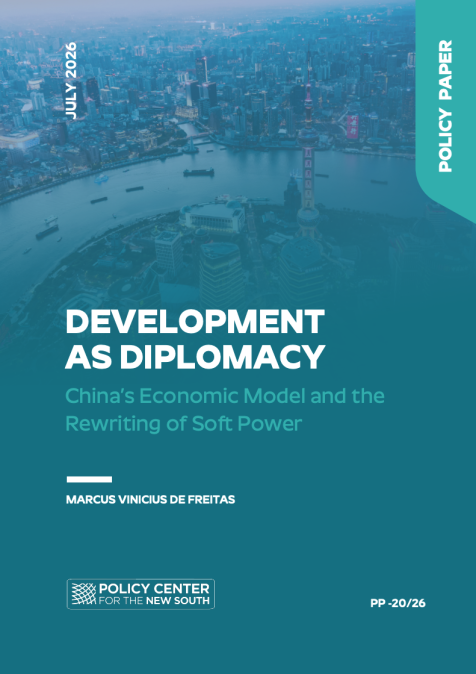
    This policy paper explores how China’s economic development model—rooted in pragmatism, long-term planning, and civilizational renewal—has become its most compelling soft power asset, particularly in the eyes of the Global South. While critically engaging with Joseph Nye’s original conception of soft power as a primarily cultural and normative force, the paper argues that China’s ability to transform itself from an impoverished postimperial state into the world’s largest trading nat ...
  • July 3, 2026
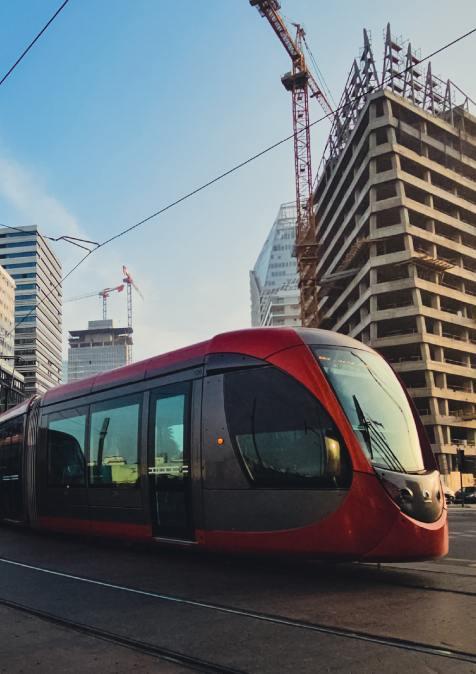
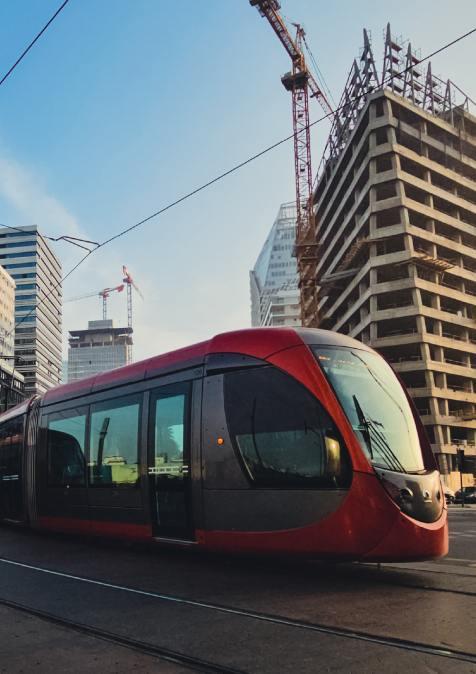
    Ce Policy Paper a également été publiée en anglais et en espagnol par Le Grand Continent Le Maroc offre un exemple éclairant parmi les pays à revenu intermédiaire, dans un contexte marqué par une fragmentation croissante de l’environnement international, une croissance mondiale atone et un ralentissement de la convergence. Depuis 2022, sa trajectoire se distingue par une certaine robustesse, avec un rythme d’expansion supérieur à celui des autres économies de même catégorie. Dé ...
  • July 3, 2026
    Este Policy Paper también ha sido publicado en inglés y francés por Le Grand Continent La economía marroquí constituye un caso ilustrativo entre las economías de renta media, en un contexto marcado por una creciente fragmentación del entorno internacional, un crecimiento mundial anémico y una desaceleración de la convergencia. Desde 2022, su trayectoria se caracteriza por una relativa solidez, con un crecimiento superior a la media de las economías de la misma categoría. Superi ...
  • July 3, 2026
    This Policy Paper has also been published in French and Spanish by Le Grand Continent Morocco offers a compelling example of how a middle-income economy can navigate a more fragmented global environment, characterized by weak growth and slower convergence. Since 2022, economic activity has remained relatively strong, with growth exceeding that of many comparable economies. Non-agricultural growth has averaged 4.4% since 2022, around 1.3 percentage points above its historical av ...
  • Authors
    June 8, 2026
    The energy shock caused by the war between the United States and Israel and Iran has highlighted the need for Africa to refine more of its own crude oil. Africa is a net hydrocarbon exporter, but remains stuck in the old colonial economic model: it mostly exports raw materials and imports refined products. Africa exports about 2.6 billion barrels of crude oil every year, and imports about 1.4 billion barrels of refined products. This is a problem for two reasons. First, Africa ...
  • May 29, 2026
    This Paper was originally published on tandfonline.com This paper examines how reductions in transportation costs reshape regional economic and environmental outcomes in Morocco. We simulate a reduction in delivered (purchasers’) costs via a transport-margin efficiency improvement – implemented as a margin-saving technical change in the transport sector – within a province-level Spatial Computable General Equilibrium (SCGE) framework. Simulating a 1% decline in transport costs, ...
  • Authors
    January 27, 2026
    This paper revisits Big Push industrialization theory in the context of open economies deeply integrated into global value chains (GVCs). While classical Big Push models emphasize demand complementarities and coordination failures in largely closed economies, many middle-income countries now industrialize through foreign-owned, import-intensive production networks. We develop an extended Big Push framework that incorporates GVC integration and import leakage, and show how these feat ...
  • Authors
    Arkebe Oqubay
    November 17, 2025
    Morocco has emerged as one of Africa's success stories, achieving significant progress in economic transformation and the green transition over the past 25 years. Continuing and deepening this transformation is essential to reach the country’s goal of becoming a high-income economy in the coming decades. Significant challenges include managing the risk of the middle-income trap, addressing demographic pressures, promoting inclusive growth, ensuring environmental sustainability, and ...
  • October 3, 2025
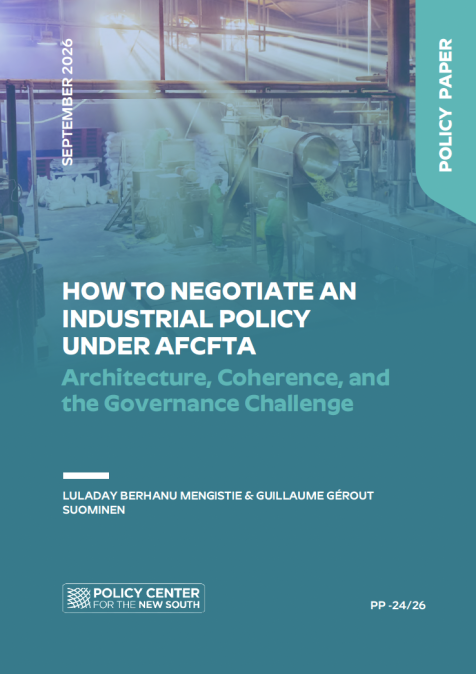
    In this episode, we explore Africa’s industrial challenges and opportunities, showing how AfCFTA-driven integration, green sectors, and inclusive policies for women, youth, and SMEs can foster sustainable growth, resilience, and domestic value capture. ...