Fighting for Africa: External Power competition in the Red Sea

December 14, 2020

Foreign powers are grappling for influence across the African continent, but competition has been particularly fierce in the Red Sea. With Ethiopia, long viewed as a bulwark against instability in the Horn of Africa, emerging from conflict, there is a new opportunity to cement the peace with Eritrea. Increased access to the sea could provide an immense peace dividend to the region—and especially to the people of Tigray. How will key external actors, especially the UAE and China, react to this moment of transition? And will the United States and Europe attempt to repair relations with the region, or risk being left out in the cold? Chair: Bronwyn Bruton, Director of Programs and Studies, Africa Center, Atlantic Council Speakers: . Maha Skah, International Relations Specialist, Policy Center for the New South . Gabriel Negatu, Former Director General, African Development Bank; Senior Fellow, Africa Center, Atlantic Council . Khalid Chegraoui, Senior Fellow, Policy Center for the New South
Speakers
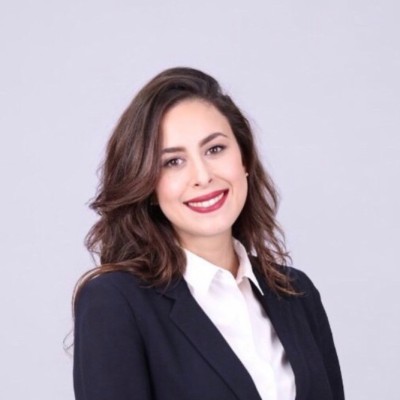
Maha Skah
Political Affairs Officer, United Nations
Maha Skah is a Political Affairs Officer at the Policy and Mediation Division of the United Nations Department of the Political and Peacebuilding Affairs (DPPA) in New York, where her role centers around providing technical and political advice on how to assess and analyze climate-related peace and security risks and how to integrate climate considerations into the Department of the Political and Peacebuilding Affairs (DPPA) conflict prevention, peacebuilding, and peacemaking work. Maha Skah previously worked at the Policy Center for the New South as an International Relations Specialist, where her research activities focused on geopolitics in Africa and climate change policies, and at the Organisation for Economic Co-operation (OECD) on issues relating to development cooperat ...
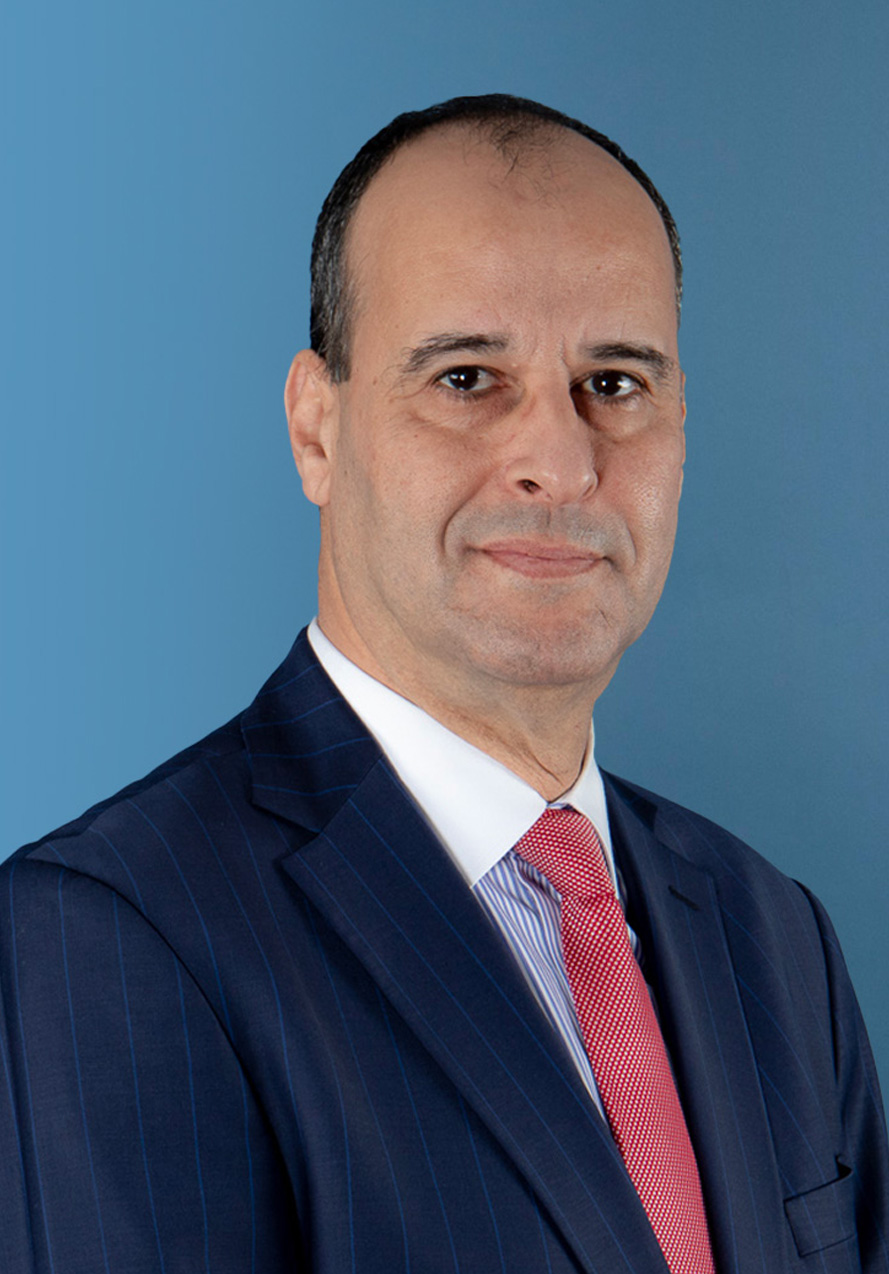
Khalid Chegraoui
Senior Fellow
Khalid Chegraoui is Senior Fellow at the Policy Center for the New South and Vice Dean of Political Sciences and International Relations at the Faculty of Governance, Economic and Social Sciences of the Mohammed VI University.  He began his teaching and research career in 1992 as a Research Assistant Professor at Sidi Mohammed Ben Abdallah University in Fez after earning his first doctorate in African Studies from the Mohammed V University in Rabat focusing on West Sub-Saharan Africa. He also earned a Doctorate of State in African Studies from the same University in 2002, where he focused on Contemporary West Africa, in 2003 he became Professor of History and Political Anthropology at the Institute of African Studies, Mohammed V University, consultant on African and Midd ...

Bronwyn Bruton
Director of Programs and Studies, Africa Center, Atlantic Council
...
Gabriel Negatu
Former Director General, African Development Bank; Senior Fellow, Africa Center, Atlantic Council
...

RELATED CONTENT

  • October 15, 2026
    The Policy Center for the New South, in partnership with The Asian Network, is organizing a webinar titled “Emerging Powers and the Remaking of Global Order” to examine the growing role of emerging powers and the Global South at a time of profound transformation in the international sys...
  • October 14, 2026
    في ظل التوترات الجيوسياسية المتصاعدة، تتغير طرق التجارة العالمية وتتبدل معها موازين الممرات الاستراتيجية. تفتح هذه الحلقة من «حديث الثلاثاء» النقاش حول التقاء المسارات البحرية والبرية داخل هذه الممرات، والعوامل التي تتحكم في طبيعة السلع التي تعبرها. وتبحث كذلك في ما يمكن للمغرب أن يجنيه...
  • Authors
    Florent Parmentier
    October 12, 2026
    Cet article soutient que le Chief Geopolitical Officer (CGO) doit être repensé à partir de l’expérience des entreprises africaines. Dans un environnement multipolaire et fragmenté, leur principal défi n’est pas seulement la gestion des risques, mais la préservation de plusieurs options stratégiques simultanément selon une logique de hedging. Trois modèles de CGO sont à distinguer : l’intermédiation (Office chérifien des Phosphates (OCP), Tanger Med), l’intégration régionale (Ethiopi ...
  • Authors
    Paul Isbell
    October 9, 2026
    In the first seven Policy Briefs of this ongoing series of analysis on Pan-Atlanticism: The Atlantic Basin in a Multipolar-Transnational World, we developed the argument that the strategic significance of the Atlantic Basin is on the rise for a range of international actors (states, regions and non-state agents) and from distinct political or ideological perspectives. In addition, in the most recently published Policy Brief -- “The U.S. and the Current International Reconfiguration: ...
  • Authors
    Lina Jaoid
    October 8, 2026
    In the two years since the fall of Bashar al-Assad in Syria, Russia has restructured its Mediterranean presence. Although Russia’s limited and increasingly conditional access to the Khmeimim and Tartus facilities in Syria has been preserved, its presence in the country has morphed from Assad’s ‘patron-client’ configuration to a more negotiated engagement. Simultaneously, Russia has upgraded its force-projection and logistical infrastructure in eastern Libya, giving it an access path ...
  • Authors
    Marie-Noelle Nwokolo
    October 6, 2026
    The author of this opinion, Marie-Noelle Nwokolo, is a 2024 alumna of the Atlantic Dialogues Emerging Leaders Program.In September 1978, delegations from 138 countries gathered in Buenos Aires, Argentina, around a powerful idea: developing countries had knowledge, experience and capabilities worth sharing with one another. The Buenos Aires Plan of Action gave institutional form to what we now call South-South Cooperation, part of a wider post-colonial effort by developing ...
  • September 28, 2026
    This paper was initially published in French on the website of the Fondation Jean-Jaurès. There was a historic decline in Official Development Assistance (ODA) in 2025. Foreign aid to developing countries from members of the OECD-DAC fell by some 23%, the largest decline on record and the second consecutive annual decline. Aid to Africa fell by more than 25%. The International Monetary Fund (IMF) described this decline in ODA to Africa as “a shock like no other.” It differ ...
  • Authors
    Marianna Albuquerque
    September 23, 2026
    The author of this opinion, Marianna Albuquerque, is a 2022 alumna of the Atlantic Dialogues Emerging Leaders Program.As world leaders gather in New York for the 81st United Nations General Assembly, climate change returns to the center of multilateral diplomacy under markedly different circumstances. The debate is no longer confined to whether the world must decarbonize, but increasingly centers on how the transition will happen, who will bear its costs, who will capture ...