
RELATED CONTENT
-
 October 15, 2026The Policy Center for the New South, in partnership with The Asian Network, is organizing a webinar titled “Emerging Powers and the Remaking of Global Order” to examine the growing role of emerging powers and the Global South at a time of profound transformation in the international sys...
 -
 October 9, 2026In the first seven Policy Briefs of this ongoing series of analysis on Pan-Atlanticism: The Atlantic Basin in a Multipolar-Transnational World, we developed the argument that the strategic significance of the Atlantic Basin is on the rise for a range of international actors (states, regions and non-state agents) and from distinct political or ideological perspectives. In addition, in the most recently published Policy Brief -- “The U.S. and the Current International Reconfiguration: ...
 -
 September 12, 2026The author of this opinion, Joana Ama Osei-Tutu, is a 2017 alumna of the Atlantic Dialogues Emerging Leaders Program.South-South cooperation (SSC) is often presented as an alternative to the hierarchical relationships that have historically characterized international development. In principle, SSC means Global South countries learn from one another, share expertise and resources, and develop solutions grounded in their own experiences, rather than importing models designe ...
 -
 September 11, 2026Marcus Vinicius de Freitas, Senior Fellow at the Policy Center for the New South, discusses in this podcast his policy brief "Africa, Latin America and Global Governance." He argues that ...
 -
 August 3, 2026This policy paper explores how China’s economic development model—rooted in pragmatism, long-term planning, and civilizational renewal—has become its most compelling soft power asset, particularly in the eyes of the Global South. While critically engaging with Joseph Nye’s original conception of soft power as a primarily cultural and normative force, the paper argues that China’s ability to transform itself from an impoverished postimperial state into the world’s largest trading nat ...
 -
 March 14, 2022Although it has largely gone unnoticed in France, the agreement signed on December 3, 2020 between the European Union (EU) and the Organisation of African, Caribbean and Pacific States (ACP) is a major shift in the long-standing relations between the EU and countries in the Global South. The EU established a development assistance policy as early as the Treaty of Rome in 1957, signed the first cooperation agreement in 1963, and nowadays is often the largest donor to these countries, ...
 -
 March 11, 2022The pros and the cons of regional market integration are well exemplified by the experience of Uruguay, a small, open economy in MERCOSUR, which is a highly protectionist trade bloc, dominated by Argentina and Brazil. With access to such large markets, Uruguay did raise its growth rate during the first decade of MERCOSUR, the 1990s. However, market integration as implemented in MERCOSUR was also problematic in that Uruguay suffered from the high protectionism of Argentina in the for ...
 -
 March 8, 2022The contrast between Argentina’s rich natural resource endowment and its poor economic performance has been the focus of much socio-political and economic analysis. When it created MERCOSUR with its immediate neighbors, Brazil, Uruguay, and Paraguay in 1991, it had access to a trading bloc with a combined GDP of US$ 419 trillion (2019), making it the 5th largest economy in the world. Joining the MERCOSUR was a break from its protectionist past. But it did not last. Argentina greatl ...
 -
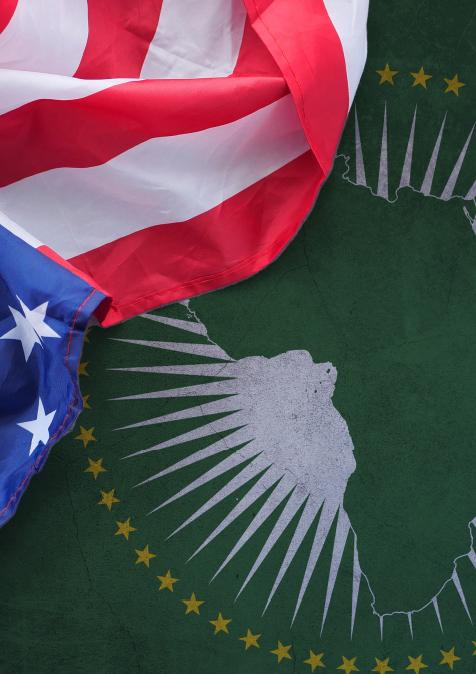 March 2, 2022The White House classified the speech as “remarks by President Obama to the People of Africa”, their representatives gathered at Mandela Hall, Addis Ababa, Ethiopia, July 28, 2015. It was the first address by a US-President to the African Union. He was standing before the audience as “a proud American” and “the son of an African”. His father, Barack Hussein Obama, who grew up near a small village in Nyanza Province, Kenya, won a scholarship to study economics and made h ...
 -

