Africafé: Les inégalités en Afrique

August 4, 2022

Dans cet épisode d’Africafé, Gilles Yabi analyse les enjeux des inégalités en Afrique et les moyens de palier à ce manquement des économies Africaines. En compagnie de Hamza Saoudi, cet épisode passe aussi en revue les politiques publiques mises en œuvre par les Etats Africains pour combattre les inégalités.

Speakers
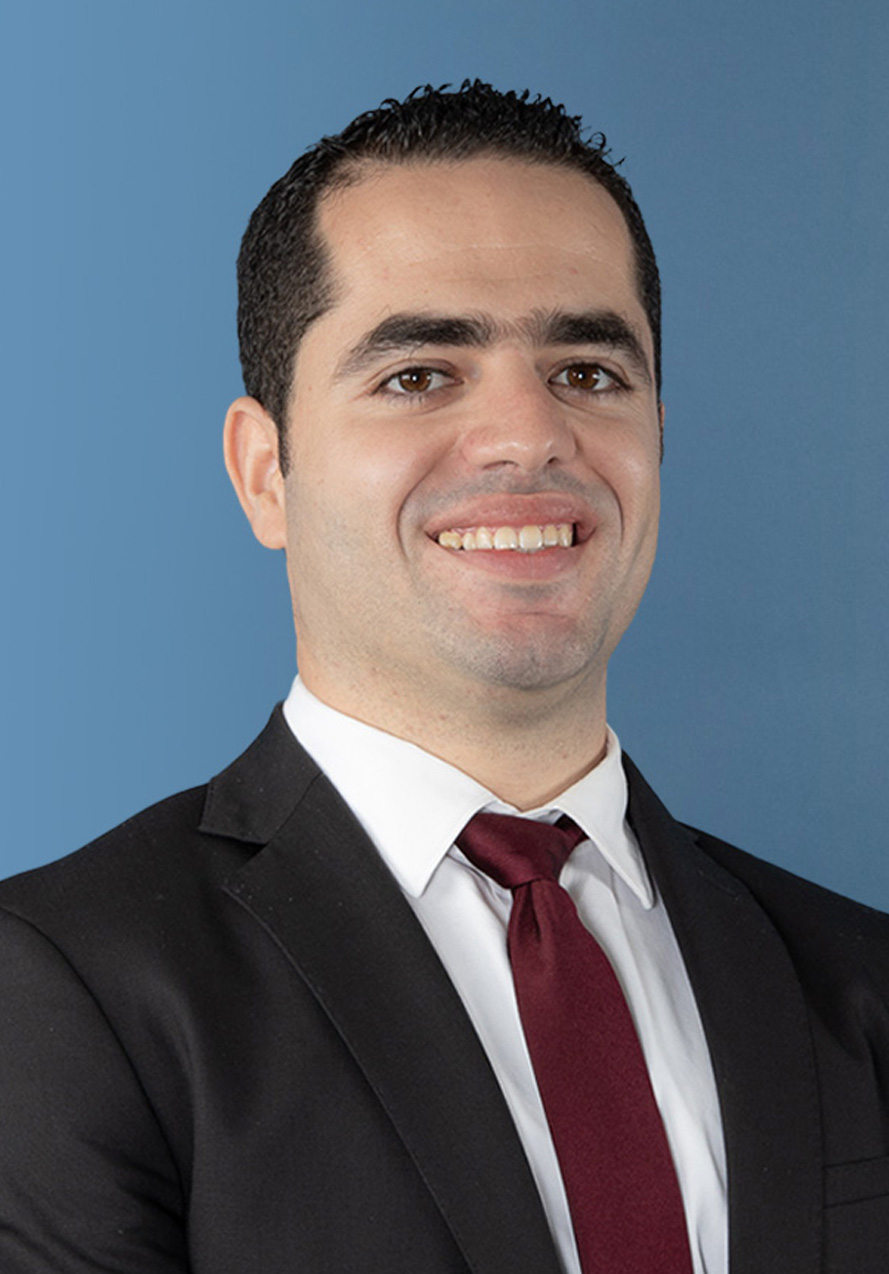
Hamza Saoudi
Senior Economist
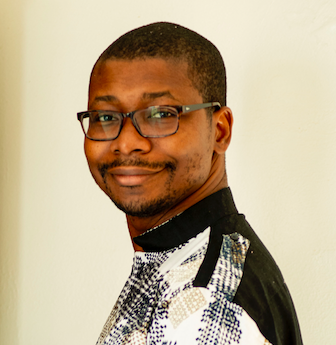
Hamza Saoudi is a Senior Economist at the Policy Center for the New South (PCNS).At the PCNS, Hamza Saoudi conducts research on labor market dynamics, social protection systems, and inclusive growth, with a particular focus on Morocco and Africa. He is also interested in macroeconomic stabilization policies, international trade, and long-term economic development.He has contributed to PCNS projects and publications addressing informality, social protection, and inequality in developing economies.He also served as the project coordinator of the upcoming Oxford Handbook of the Moroccan Economy, to be published by Oxford University Press in 2026.Before joining the PCNS in 2017, Hamza Saoudi contributed to the development of quantitative models for bank credit risk management.Hamz ...
Gilles Yabi
Founder and Executive Director, WATHI
Gilles Olakounlé Yabi is the founder and CEO of WATHI, the West Africa Citizen Think Tank launched in 2015. WATHI is a unique participative and multidisciplinary citizen-focused think tank on West African issues (www.wathi.org). Gilles Yabi worked as senior political analyst and later as West Africa Project Director of the International Crisis Group, a think tank dedicated to conflict prevention and resolution. He led the research, policy, advocacy and media work of Crisis Group in West Africa and worked particularly on the political crises and conflicts in Côte d’Ivoire, Guinea, Guinea Bissau, Mali and Nigeria. Holding a Ph.D in Development economics from the University of Clermont-Ferrand in France, Gilles Yabi also worked as a journalist for the weekly magazine Jeune Afriqu ...

RELATED CONTENT

  • Authors
    Ahmed Ouhnini
    December 5, 2025
    L’« uberisation », terme né du nom de l’entreprise américaine Uber au début des années 2010, désigne initialement un modèle économique fondé sur la mise en relation directe entre offre et demande via des plateformes numériques. Rapidement popularisé, le concept s’est élargi, avec Airbnb dans l’hébergement, puis à une multitude d’autres secteurs : livraison de repas, services à domicile, commerce en ligne, voire des métiers traditionnellement régulés ou corporatistes. Ce néologisme t ...
  • Authors
    December 2, 2025
    This paper assesses the economic and environmental implications of Morocco’s strategic transition from internal combustion engine vehicle (ICEV) manufacturing to electric vehicle (EV) production, with a particular focus on the regional impacts of localizing high-value battery manufacturing. Using an interregional input-output model, extended with environmental satellite accounts, the study simulates a structural shock related to the wholesale substitution of ICEV-specific inputs wit ...
  • Authors
    October 3, 2025
    En dépit des progrès sociaux, le Maroc reste confronté à une série de défis. Le chômage persiste à un niveau inacceptable, l’adéquation entre la formation et l’emploi est insatisfaisante, l’accès aux soins est contrarié par maintes contraintes, les disparités territoriales demeurent flagrantes. Pourtant, que de réformes, que de programmes sociaux sont financés depuis des décennies pour couvrir les déficits accumulés par le passé. Beaucoup de ces secteurs névralgiques pour le bi ...
  • September 19, 2025
    Pierre Nguimkeu, Director of the Africa Growth Initiative at Brookings, examines Africa’s digital transformation and its impact on work, education, and the economy. From mobile technology ...
  • Authors
    September 19, 2025
    Le constat est unanime et est constamment souligné : le modèle de développement en vigueur au Maroc a atteint ses limites. La Vision Royale, refusant « un Maroc à deux vitesses », vient formaliser au plus haut niveau cette préoccupation systémique, documentée par une décennie de rapports officiels. La  Vision de Sa Majesté le Roi Mohammed VI est un hymne à une dynamique de croissance dont les retombées doivent être plus équitablement réparties et à un développement te ...
  • Authors
    September 16, 2025
    Les questions des inégalités sociales et des inégalités territoriales sont profondément liées.  Les politiques publiques ne peuvent réduire l’une sans s’attaquer à l’autre.  Le phénomène des inégalités peut s’accentuer avec la fragilité de la situation socio-économique de certains territoires d’autant que le développement territorial n’est pas spontanément équitable. La réduction de ces inégalités, un des enjeux majeurs des politiques publiques, oblige à con ...
  • Authors
    Soukaina Raoui
    September 12, 2025
    This Paper was originally published on springer.com This paper provides an in-depth analysis of socio-economic convergence across communes in Morocco, focusing on monetary poverty and educational inequalities. This research investigates the impact of the well-known territorial and inclusive development policies of the National Initiative for Human Development on the catch-up process. We explore the data from the last two general population and housing censuses (2004 and 20 ...
  • September 11, 2025
    Ce travail apporte un éclairage critique sur l'alignement des dispositifs publics d'orientation des étudiants marocains à l'étranger avec les ambitions de développement du pays. Il interroge la capacité de ces mécanismes à transformer la mobilité étudiante d'une potentielle "fuite des cerveaux" en un véritable "gain de cerveaux". S'appuyant sur une étude de cas qualitative, nous avons mené une analyse de contenu systématique (cartographie) de 204 programmes promus par le ministère d ...
  • August 28, 2025
    This Paper was originally published on tandfonline.com The gender gap in education remains a concern for Moroccan policymakers and researchers, yet it is rarely measured quantitatively. This study examines differences in reading and mathematics performance between girls and boys, both at the national level and by place of residence, using PIRLS (2016, 2021) and TIMSS (2015, 2019) data covering 21,129 students. The Blinder-Oaxaca decomposition method is applied to distingui ...
  • Authors
    Zakaria Elouaourti
    August 7, 2025
    This paper was originally published on tandfonline.comYouth’s life paths have become increasingly challenging, especially for those classified as ‘Not in Education, Employment, or Training’ (NEET), who comprise 31.2% of North Africa’s youth population. This paper contributes to the growing discourse on the NEET phenomenon by exploring its structural and psychosocial dimensions in North Africa, with a specific focus on gender. Using a rich micro-level dataset of 7,815 individuals age ...