
In this interview with François Reybet-Degat, we explore the complex challenges and strategies involved in managing and mitigating refugee situations, especially in conflict-affected areas. We discuss how various regions, including both state and non-state actors, respond to the influx of refugees, taking into account political, economic, and social factors. The conversation also covers international cooperation, humanitarian aid, and policy frameworks designed to offer support and sustainable solutions for displaced populations. Reybet-Degat’s insights illuminate the intricacies of regional responses and the efforts to coordinate effective assistance and integration strategies.
RELATED CONTENT
-
 October 15, 2026The Policy Center for the New South, in partnership with The Asian Network, is organizing a webinar titled “Emerging Powers and the Remaking of Global Order” to examine the growing role of emerging powers and the Global South at a time of profound transformation in the international sys...
 -
 October 13, 2026“Every gun that is made, every warship launched, every rocket fired signifies in the final sense, a theft from those who hunger and are not fed, those who are cold and are not clothed.”President Dwight Eisenhower, April 16, 1953 This paper examines the economic and human impacts of the first six months of the Iran war—from February to the end of August 2026—on Iran’s Arab neighbors and compares these impacts with those on the three countries directly involved—Iran, Israel and t ...
 -
 October 12, 2026Cet article soutient que le Chief Geopolitical Officer (CGO) doit être repensé à partir de l’expérience des entreprises africaines. Dans un environnement multipolaire et fragmenté, leur principal défi n’est pas seulement la gestion des risques, mais la préservation de plusieurs options stratégiques simultanément selon une logique de hedging. Trois modèles de CGO sont à distinguer : l’intermédiation (Office chérifien des Phosphates (OCP), Tanger Med), l’intégration régionale (Ethiopi ...
 -
 October 9, 2026In the first seven Policy Briefs of this ongoing series of analysis on Pan-Atlanticism: The Atlantic Basin in a Multipolar-Transnational World, we developed the argument that the strategic significance of the Atlantic Basin is on the rise for a range of international actors (states, regions and non-state agents) and from distinct political or ideological perspectives. In addition, in the most recently published Policy Brief -- “The U.S. and the Current International Reconfiguration: ...
 -
 October 6, 2026The author of this opinion, Marie-Noelle Nwokolo, is a 2024 alumna of the Atlantic Dialogues Emerging Leaders Program.In September 1978, delegations from 138 countries gathered in Buenos Aires, Argentina, around a powerful idea: developing countries had knowledge, experience and capabilities worth sharing with one another. The Buenos Aires Plan of Action gave institutional form to what we now call South-South Cooperation, part of a wider post-colonial effort by developing ...
 -
 October 02, 2026Building on his Policy Brief "Latin America, World Politics and the Great Powers", Nizar Messari examines how recent developments are reshaping U.S. influence in the region and affecting ...
 -
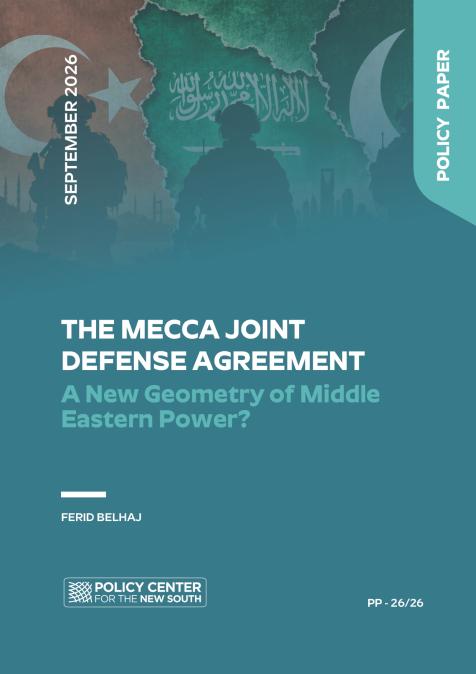 September 30, 2026On August 7, 2026, Saudi Arabia, Turkey, and Pakistan signed the Mecca Joint Défense Agreement, a collective-defense pact widely compared to NATO’s Article 5. This essay argues that the comparison is misleading. Mecca borrows NATO’s language of solidarity without yet possessing NATO’s institutional machinery, and the Houthi offensive against Saudi Arabia in September 2026 provided an early and revealing test of what the agreement actually means in practice. Neither Pakistan nor Turk ...
 -
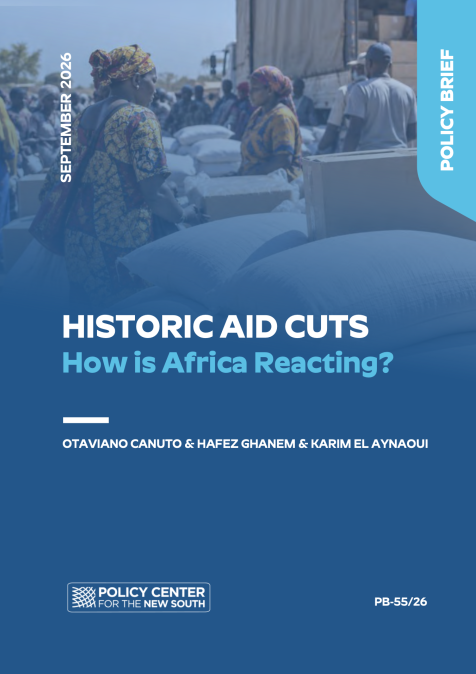 September 28, 2026This paper was initially published in French on the website of the Fondation Jean-Jaurès. There was a historic decline in Official Development Assistance (ODA) in 2025. Foreign aid to developing countries from members of the OECD-DAC fell by some 23%, the largest decline on record and the second consecutive annual decline. Aid to Africa fell by more than 25%. The International Monetary Fund (IMF) described this decline in ODA to Africa as “a shock like no other.” It differ ...
 -
September 25, 2026In this episode, Senior Fellow Ian Lesser examines the United States’ longstanding ties with the Mediterranean as the country marks its 250th anniversary. He discusses how a possible shif ...
-
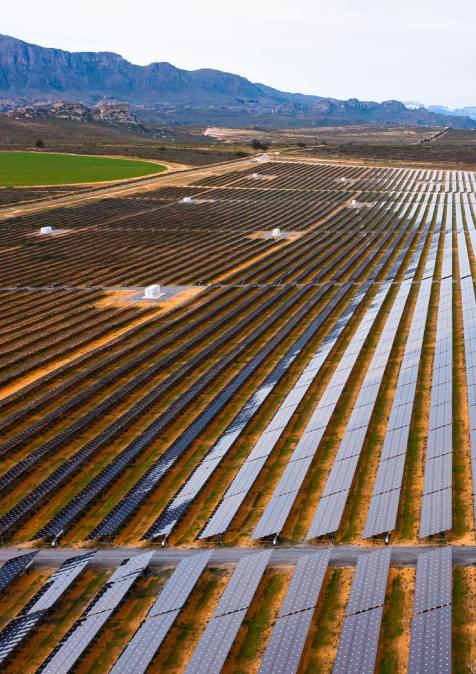 September 23, 2026The author of this opinion, Marianna Albuquerque, is a 2022 alumna of the Atlantic Dialogues Emerging Leaders Program.As world leaders gather in New York for the 81st United Nations General Assembly, climate change returns to the center of multilateral diplomacy under markedly different circumstances. The debate is no longer confined to whether the world must decarbonize, but increasingly centers on how the transition will happen, who will bear its costs, who will capture ...

