AD 2021: Economic Recovery and the Great Reset

November 15, 2021

The Covid-19 pandemic has plunged the world into a health, social and economic crisis of exceptional magnitude. In economic terms, the restrictions established to contain the spread of the virus have resulted in a sudden stop to entire sectors of activity and major disruptions to supply chains. Consequently, the global economy experienced its worst recession since World War II in 2020, with a 3.3% contraction in real GDP, a sharp decline in trade and direct investment flows, in addition to massive job losses. As a result, the downward trend in poverty that began in the 1980s has been reversed and more than 100 million additional people have fallen back into extreme poverty. In this context, a number of questions seem relevant: What are the levers to act on for a quick and strong recovery for the world economy? What place for human development in the post-Covid development strategies? How to conciliate between ambitious development objectives and budget sustainability? Moderator: Otaviano Canuto, Senior Fellow, Policy Center for the New South Speakers: - Maria Eugenia Brizuela de Avila, Former Minister of Foreign Affairs, El Salvador - Harinder Kohli, President and CEO, Centennial Group, USA - Frannie Leautier, Chairperson, Co-Founding Partner, Mkoba Private Equity Fund, Tanzania

Speakers
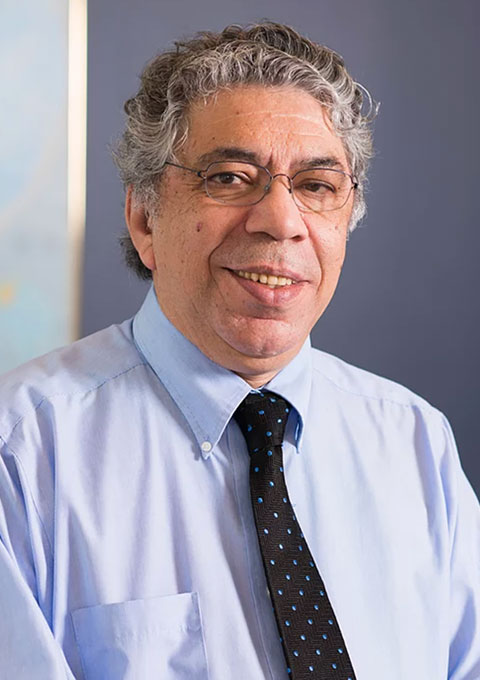
Otaviano Canuto
Senior Fellow
Senior Fellow at the Policy Center for the New South, Affiliate Professor at Mohammed VI Polytechnic University and Non-Resident Senior Fellow at Brookings Institute. Former Vice President and Executive Director at the World Bank, Executive Director at the International Monetary Fund (IMF) and Vice President at the Inter-American Development Bank. ...
Harinder Kohli
Founding Director and Chief Executive, Emerging Markets Forum (EMF)
...

RELATED CONTENT

  • June 22, 2026
    History devotes considerable attention to the rise and fall of great powers. Scholars have spent centuries analyzing why empires collapse, why nations decline, and why dominant states eventually lose their position. By comparison, relatively little attention has been devoted to a different question: what happens when a country succeeds beyond its own expectations? ...
  • Authors
    Diogo Ramos Coelho
    Bruno Saraiva
    June 22, 2026
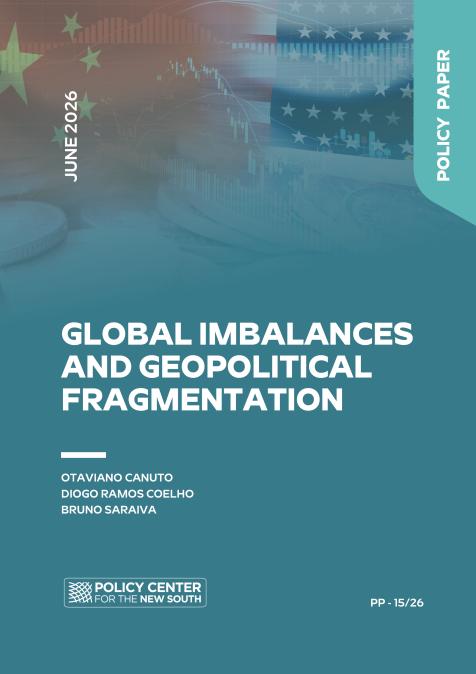
    Global imbalances are back—and this time the risks look different. The 2008 financial crisis showed how persistent current-account deficits and surpluses between major economies can fuel financial instability and trigger sudden, severe reversals of capital flows. After almost two decades, many thought that episode had been resolved. It had not. New imbalances have built up, with a familiar cast: China, Germany, Japan, and oil exporters running large surpluses, and the United States ...
  • Authors
    June 19, 2026
    The early March 2026 Pentagon briefings were tuned towards triumph and surrender - unconditional. The white flag of defeat was visible on the Iran horizon, and America's commander in chief needed only a few more weeks to declare "their military is gone. Wiped out". His secretary of war, Pete Hegseth, added to Trump's assessment his own, the Iranian navy was "decimated, destroyed and defeated", the naval fleet of the enemy rested on the bottom of the Persian Gulf. Iran's defense indu ...
  • June 18, 2026
    تتناول هذه الحلقة واقع صناعة الألعاب الإلكترونية في المغرب، في ظل الاهتمام المتزايد بهذا القطاع الواعد وما يتيحه من فرص اقتصادية وإبداعية. كما تناقش التحديات التي تواجه المطورين والمقاولات الناشئة، من حيث التكوين والتمويل والولوج إلى الأسواق، مع تسليط الضوء على الإمكانات التي يمتلكها ال...
  • Authors
    Mehran Haghirian
    June 15, 2026
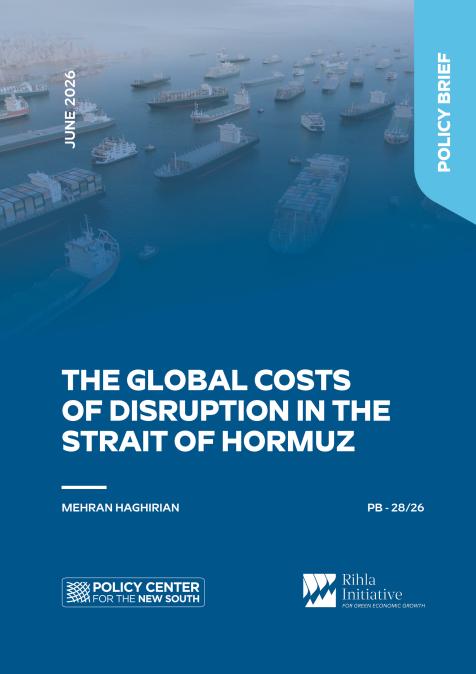
    This article draws in part on perspectives shared by members of the Rihla Initiative for Green Economic Growth, whose regional insights helped inform the sections on how the costs of the war are being felt across the Global South. The war on Iran and in the Gulf has made it impossible to treat the Strait of Hormuz as a regional issue. The disruption around the Strait has moved through the world economy in concrete ways, from higher fuel bills and pressure on food and fertilizer ...
  • June 15, 2026
    As part of the OECD Multilateral Development Finance Week 2026 (MDF Week), the Policy Center for the New South (PCNS) is organizing a webinar entitled “Rethinking Development Finance: African Agency and the Future of Multilateral Development Co-operation after ODA Retrenchment.” The dis...
  • June 15, 2026
    Cette interview revient sur le rôle structurant des infrastructures portuaires dans l’industrialisation du Maroc, à travers l’exemple de Tanger Med. Elle souligne aussi l’importance de la digitalisation, de la formation et de la connexion des régions intérieures pour renforcer la compét...
  • Authors
    June 12, 2026
    This essay argues that the current debate about the future of the international monetary system is not really about Gulf currencies, oil pricing, or de-dollarization in the narrow technical sense. It is about something deeper and more important: whether institutional trust can survive when geopolitical certainty is eroding.The Gulf monarchies—Saudi Arabia, the United Arab Emirates, Qatar, Kuwait, Bahrain, and Oman—increasingly exist in a world where the United States no longer looks ...
  • June 12, 2026
    Cet épisode revient sur les principaux défis de la politique budgétaire au Maroc, à partir du chapitre consacré au sujet dans le Oxford Handbook of the Moroccan Economy. Les intervenants soulignent le caractère largement structurel des déficits, la difficulté à sortir d’une politique bu...
  • June 11, 2026
    The global energy system has entered a period of acute structural stress following the strikes by the United States and Israel on Iran in late February 2026, and the subsequent disruption of flows through the Strait of Hormuz. According to the International Energy Agency, the resulting shock marks the most severe disruption to global energy markets since the 1970s oil crises, with systemic characteristics comparable to the combined effects of those crises and the 2022 Russia-Ukraine ...