Publications /
Opinion

Back
The Atlantic Dialogues: A participant’s perspective
Authors
Mohammad Zia
December 15, 2017

As I arrived in Casablanca, I swerved between the crowds and baggage carousels to find someone I had never met before. That day in Casablanca was my first as a U.S. Fulbright Research Scholar seeking to learn more about Morocco’s energy sector.

Only three months into my time in Morocco, I have had the chance to befriend young Moroccans and share conversations about Morocco’s burgeoning economy and its plans to build the world’s largest solar power plant. These Moroccan youth also shared stories of their country’s struggles such as rising unemployment, climate change vulnerability, and growing political pressures to meet citizen needs. Morocco’s potential coupled with its challenges represents a microcosm of what Africa, more broadly, faces as a continent. 

Promise in light of significant obstacles was one of the main themes brought up throughout the first two days of the Atlantic Dialogues here in Marrakech. Prior to attending the conference, I read about positive trends on the continent such as a growing youth population, seen an asset for sustaining a growing economy. Africa has also rapidly urbanized creating opportunities for more fluid knowledge transfer and Africa has capitalized on innovative technologies to leap across traditional infrastructure. For example, in many parts of East Africa mobile phones spread before landline phones and, consequently, mobile banking services have preceded traditional branch banking.

The trends above, however, also point to significant challenges. I heard questions from young Africans concerned about the lack of standards to ensure quality in technology innovations in the solar sector. Audience participants also brought up the challenge that a youth bulge coupled with unemployment can bring. These struggles were mentioned once again on day two when a participant pointed out the dangerous interaction of youth employment, religious extremism, and rigid national/regional identities. These issues are further complicated by climate change induced desertification, which is stressing critical natural resources such as soil and water. With reduced access to arable land and freshwater, many young farmers in the Sahel, for example, are left without employment and susceptible to the predation of violent groups. Land and water also form the bedrock of the agriculture, Africa’s largest economic sector. I am glad that the conference coupled exposure to these problems with perspectives from Emerging Leaders who are developing innovative solutions. I enjoyed learning about Oluseyi Oyenuga’s innovation to use remote monitoring technology and drone sensing to increase agricultural efficiency in Nigeria.  

Moving forward, the speakers made it clear that African leaders need to be held accountable, governance mechanisms need to be improved, and technology needs to be used as a conduit for Africa to reach its economic potential. Emerging young leaders and entrepreneurs were repeatedly mentioned as the drivers of these changes but concrete steps are still being debated in forums such as the Atlantic Dialogues. During the last day of the conference, I hope to learn more about these concrete steps while also hearing from the Emerging Leaders about their ideas, start-ups, and campaigns. These avenues can help resolve the dual challenges of realizing Africa’s promising economic potential while addressing challenges such as unemployment, climate change and effective governance. 

During today’s panel on African Geopolitics, Aminata Touré, the former Prime Minister of Senegal, closed by saying that the Atlantic Dialogues has been like reading 40 books over the course of a few hours. Her words describe how I feel after two days of panels, breakout dinners, and informal discussions on trends and innovations across the Atlantic. I will be leaving the Atlantic Dialogues with exposure to new ideas and innovators focused on crafting a better future across Africa and in the broader Atlantic region. 

Mohammad Zia – U.S. Fulbright Scholar in Morocco

Mohammad Zia is an American born in Saudi Arabia to parents of Pakistan and Afghani descent. He was raised in New York and studied at the University of Maryland and the University of Oxford. He is passionate about natural resources management, technology innovation and public policy. 

RELATED CONTENT

  • October 15, 2026
    The Policy Center for the New South, in partnership with The Asian Network, is organizing a webinar titled “Emerging Powers and the Remaking of Global Order” to examine the growing role of emerging powers and the Global South at a time of profound transformation in the international sys...
  • Authors
    October 13, 2026
    “Every gun that is made, every warship launched, every rocket fired signifies in the final sense, a theft from those who hunger and are not fed, those who are cold and are not clothed.”President Dwight Eisenhower, April 16, 1953 This paper examines the economic and human impacts of the first six months of the Iran war—from February to the end of August 2026—on Iran’s Arab neighbors and compares these impacts with those on the three countries directly involved—Iran, Israel and t ...
  • Authors
    Florent Parmentier
    October 12, 2026
    Cet article soutient que le Chief Geopolitical Officer (CGO) doit être repensé à partir de l’expérience des entreprises africaines. Dans un environnement multipolaire et fragmenté, leur principal défi n’est pas seulement la gestion des risques, mais la préservation de plusieurs options stratégiques simultanément selon une logique de hedging. Trois modèles de CGO sont à distinguer : l’intermédiation (Office chérifien des Phosphates (OCP), Tanger Med), l’intégration régionale (Ethiopi ...
  • Authors
    Paul Isbell
    October 9, 2026
    In the first seven Policy Briefs of this ongoing series of analysis on Pan-Atlanticism: The Atlantic Basin in a Multipolar-Transnational World, we developed the argument that the strategic significance of the Atlantic Basin is on the rise for a range of international actors (states, regions and non-state agents) and from distinct political or ideological perspectives. In addition, in the most recently published Policy Brief -- “The U.S. and the Current International Reconfiguration: ...
  • Authors
    Marie-Noelle Nwokolo
    October 6, 2026
    The author of this opinion, Marie-Noelle Nwokolo, is a 2024 alumna of the Atlantic Dialogues Emerging Leaders Program.In September 1978, delegations from 138 countries gathered in Buenos Aires, Argentina, around a powerful idea: developing countries had knowledge, experience and capabilities worth sharing with one another. The Buenos Aires Plan of Action gave institutional form to what we now call South-South Cooperation, part of a wider post-colonial effort by developing ...
  • October 02, 2026
    Building on his Policy Brief "Latin America, World Politics and the Great Powers", Nizar Messari examines how recent developments are reshaping U.S. influence in the region and affecting ...
  • September 28, 2026
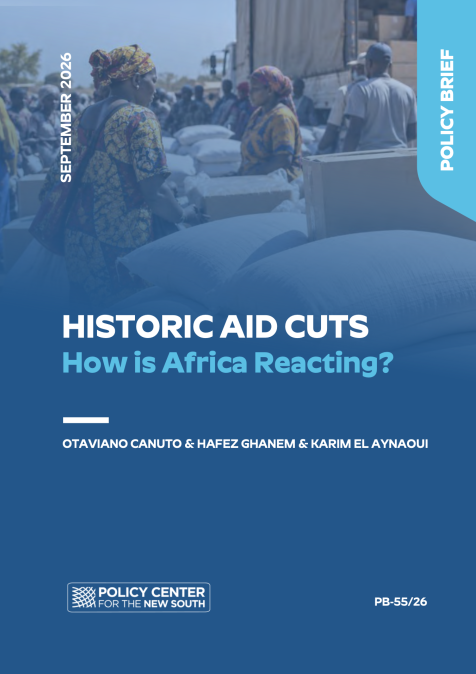
    This paper was initially published in French on the website of the Fondation Jean-Jaurès. There was a historic decline in Official Development Assistance (ODA) in 2025. Foreign aid to developing countries from members of the OECD-DAC fell by some 23%, the largest decline on record and the second consecutive annual decline. Aid to Africa fell by more than 25%. The International Monetary Fund (IMF) described this decline in ODA to Africa as “a shock like no other.” It differ ...
  • Authors
    September 23, 2026
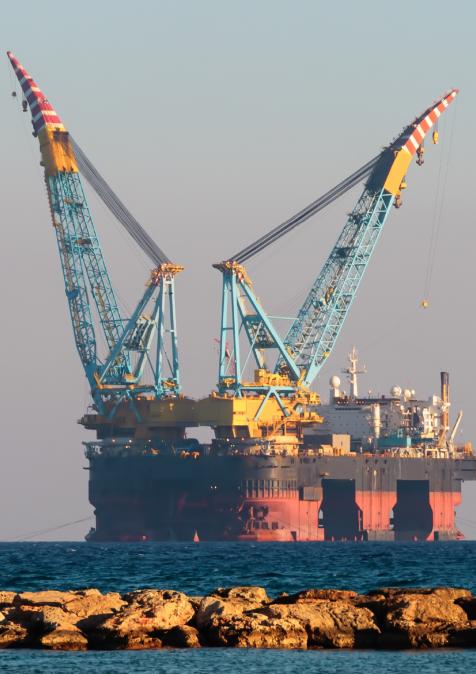
    Since around 2010, it has been known that the Eastern Mediterranean is a new gas province. Gas resources have indeed been discovered offshore four countries or territories: Egypt, Israel, Cyprus and Gaza. Two of them have become producers and exporters of natural gas, Egypt and Israel. Off the coast of Gaza, the Gaza Marine gas field has never been developed, and it is highly unlikely to be developed anytime soon given the very high tensions between the State of Israel and Hamas. By ...
  • Authors
    September 23, 2026
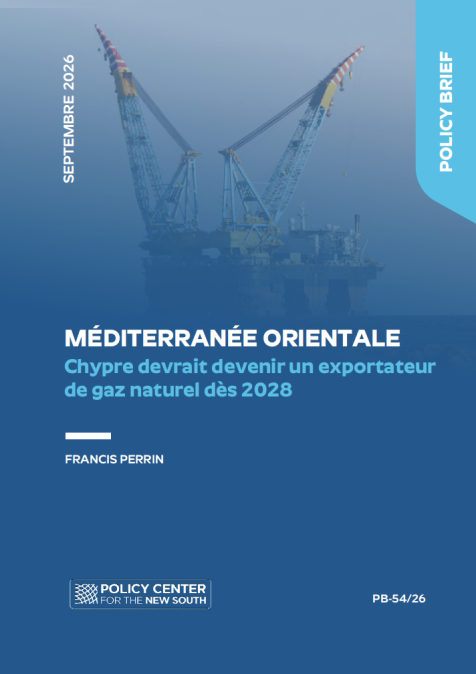
    Depuis 2010, environ, on sait que la Méditerranée orientale est une nouvelle province gazière. Des ressources gazières ont en effet été découvertes au large de quatre pays ou territoires, l’Égypte, Israël, Chypre et Gaza. Deux d’entre eux sont devenus producteurs et exportateurs de gaz naturel, l’Égypte et Israël. Au large de Gaza, le champ gazier de Gaza Marine n’a jamais été développé et il est très peu probable qu’il le soit prochainement en raison des très fortes tensions entre ...
  • Authors
    Luladay Berhanu Mengistie
    Guillaume Gérout Suominen
    September 21, 2026
    The African Union Summit of February 2026 instructed the African Continental Free Trade Area (AfCFTA) Council of Ministers to negotiate a Protocol on Industrial Policy and Development. This work, handled without adequate preparation, is likely to reproduce the weaknesses it is meant to remedy. This paper is a conceptual mapping exercise, written to raise the preparatory questions before drafting begins, rather than to prescribe outcomes.It proceeds in five sections:1. It works towar ...