Publications /
Opinion
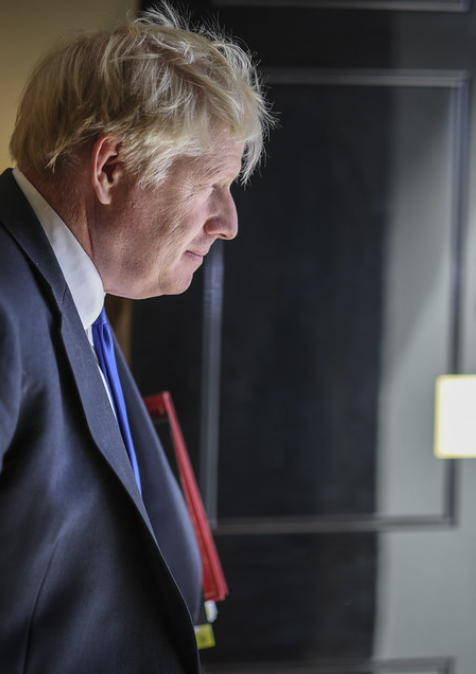
Boris Johnson has been pushed into giving up the country’s leadership during a perilous economic moment, noted the “New York Times”( July 7, 2022), leaving behind a grim outlook and an uncertain Brexit legacy. Inflation in the country has reached an annual rate of 9.1 percent, the highest in four decades, driven by supply chain disruptions from pandemic lockdown and the war in Ukraine.
Eshe Nelson draws a sober assessment of the British economy left behind by Boris Johnson: ” Price pressures keep building as companies begin to pass on the increases in costs to their customers and workers demand higher wages to cope with the rising cost of living.
Households are facing the worst squeeze on their living standards in generations because wage growth is not keeping up with inflation, which isn’t expected to peak until at least the fall when the price cap on household energy bills is reset higher. Once adjusted for inflation, Disposable household income is expected to fall more than two percent this year. That’s the worst since 1945, according to “Oxford Economics”. ”Peter Arnold, UK Chief Economist of the global consulting firm “Ernst &Young,” reveals in his summer forecast (July 20, 2022)/UK GDP “forecast to grow 3.7 % in 2022 and 1 % in 2023, a downgrade from may’s 4.1 % and 1.9 % growth expectations.
The forecast expects the UK to avoid a recession-although the risks to the forecast are significant. ”The sober news analyzed by experts in the UK was confirmed by the latest “Financial Stability report” of the “Bank of England” ( Guardian, July 5, 2022), which announced: “ The economic outlook for the UK and globally has deteriorated materially.
Prices of essential goods such as food and energy have risen sharply in the UK and globally, and the growth outlook has worsened. This is primarily the result of Russia’s illegal invasion of Ukraine. The higher prices, weaker growth, and tighter financing conditions will make it harder for households and businesses to repay or refinance debt.
Given this, we expect households and businesses to become more stretched over the coming months. They will also be vulnerable for further shocks.” The Bank of England expects inflation to rise to 11 % later this year, and the Central bank’s base interest rate could increase to as high as 3% by the end of 2023. The outlook, the Bank wrote, is “subject to considerable uncertainty and there are several downside risks that could adversely affect UK financial stability, BoE said. Britain will have the slowest growth among major industrialized nations next year, reported Philip Aldrick on Bloomberg ( July 26, 2022)as double-digit inflation and rising interest rates squeeze household spending, the International Monetary Fund predicted.” And, IMF reports, UK economy will have the slowest growth in G-7 next year.”
Mr. Johnson’s departure “leaves considerable uncertainty about the government’s next moves to address economic hardship”, writes Eshe Nelson in the “ New York Times” (July 7, 2022). Even though many of the economic shocks hitting Britain now, Nelson says, such as the jump in energy prices, are shared with other countries,” Britain’s outlook is particularly challenging. “These shocks are revealing ,deep-seated problems that have been around for a while and making the economy much more precarious than it would otherwise be”, states Jagjit Chadha, director of the “National Institute of Economic and Social Research”. The research institute expects little economic growth in Britain this year and nextn extended, compoundingthe long-running problem of unequal wealth and income distribution.
Mr. Chadha says, Brexit has been a “slow puncture” to the British economy, dragging down growth as trade barriers have been erected. European Union citizens have left the labor market, and policy uncertainty has discouraged business investment. “This is not a very attractive picture I am painting”, the analyst told the “New York Times” reporter, but this is the inheritance of whoever is the next prime minister and the cabinet that comes along.”
One of Mr. Johnson’s proudest achievements, notes the paper, was” getting Brexit done”, but as that process continues to be mired in conflict in Ireland. Mr. Johnson’s Brexit legacy is uncertain, as the economic benefits of leaving the European Union are slow to materialize.” Mr. Chadha mentions several reasons:” We haven’t really “Brexited” in the way that people said we would ‘ve done .”For Anne Applebaum, writer for “The Atlantic” (July 7, 2022 ), it is lyevident that “Brexit, the solution to the problem Johnson and his supporters described, was based on a series of lies”.
The electorate was promised that departure from the EU would lead not only to fewer immigrants but to greater prosperity, more welfare spending, and less crowded hospitals. Instead, Britain is less prosperous and more unequal six years after the vote. Britain is less prosperous and more unequal six years after the vote. Brexit reduced the UK GDP by at least 1.5 percent even before it took full effect; the UK has the highest inflation rate in the G7; small businesses, especially importers, have been crushed by Brexit-related red tape and supply chain problems. Mrs. Applebaum insists that “no one will claim that Brexit is why the Conservative Party has just lost two by-elections and crowds at the Queen's jubilee service booed Johnson when he arrived at the church. But Johnson’s perceived dishonesty is a by-product of Brexit. The Tories perceived failure to keep economic promises is a by-product of Brexit. The flailing economy itself is a partial by-product of Brexit. All these things hover in the background, whether the tories want to admit it or not.”
“I will not miss him,” sighed French finance minister Bruno Le Maire when in early July, the news surprised the world that Boris Johnsonhadresigned. “highlighting an open disdain unseen since the Europeans welcomed the election loss of Donald Trump in 2020,” reported the “ Associated Press”(July 9, 2022). And while transatlantic relations picked up quickly since the arrival of President Joe Biden, don’t expect anything similar with a new British leader, politicians and experts say. “Even with a new prime minister, I believe there will likely be few changes in the British government's position” on the main Brexit issues causing current divisions,” said David Mc Allister, the leading EU legislator dealing with the UK. Disdain never ran deeper than earlier this year”, reported AP, when Boris Johnson “started moves toward unilaterally rewriting parts of the post-Brexit deal he signed with the 27 nation bloc. The agreement set up a special system in Northern Ireland, which is part of the UK, so trade with the Republic of Ireland -an EU member-could goes on without setting up a physical border. ”I was there face to face with him. Line for line, comma for comma, and he doesn’t want to respect it, fumed EU chief Brexit negotiator Michel Barnier about Johnson, the unreliable.”.”The reputational damage has been substantialtremendous to a country and society which has long been proud of its deep culture of “My word is my bond”, remembered Michael Emerson of the “Center of European Policy Studies”, “without even a written contract, let alone an international treaty.” The change of Britain”s leader next month, will hardly bring a different attitude to the table of possible negotiations .” If you look at potential successors” declared Rem Kortewege of the “Clingendael Institute “in The Hague, Netherland, prior to the final selection of two Conservative candidates he was quoted by the AP, “there is no one who will fundamentally break with the Brexit line. The Conservative Party has a dominant Brexit core that you will have to convince to become prime minister.”