Publications /
Policy Brief
On November 5, 2024, Donald Trump defeated Kamala Harris. The 45th President of the United States will also be the 47th, taking office in the White House on January 20, 2025. The policies of the future Trump Administration will obviously be very different from those that a Harris Administration would have pursued and from those pursued by the Biden Administration since January 2021, including on energy issues. But one thing is certain: whether the world's leading power is led by Barack Obama, Joe Biden, Donald Trump or his successor, the United States is, and will remain for many years to come, an energy superpower.
INTRODUCTION
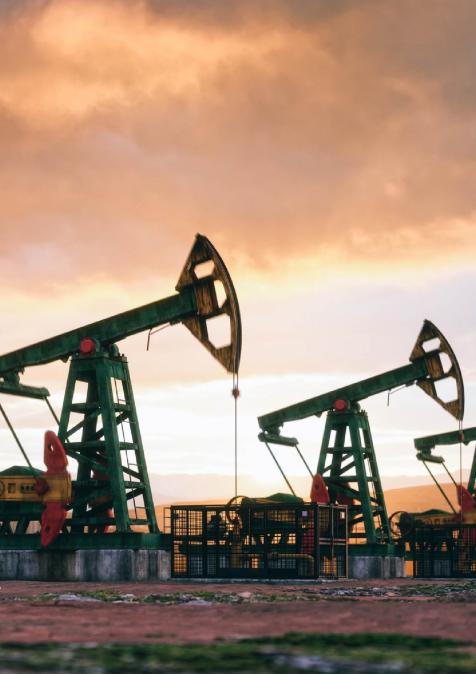
Let's start with oil, the most widely consumed energy source in the world. In 2024, the country's crude oil production will be slightly above 13 million barrels per day (Mb/d), making the United States the world's leading producer ahead of Russia (currently 9.1 Mb/d) and Saudi Arabia (9 Mb/d) in that order. Global crude production will be around 103-104 Mb/d this year. The United States has never produced so much crude, and no other country has ever produced such a volume in the entire history of oil. Moreover, as highlighted by the U.S. Energy Information Administration (EIA), an agency within the Department of Energy (U.S. DOE), no country will be able to reach such a level in the coming years because no other country has a production capacity of 13 Mb/d. However, for the second- or third-largest producer (Russia or Saudi Arabia) to increase its capacity to 13 Mb/d or a little more, it would take several years and investments amounting to tens of billions of dollars. Russia cannot do it, and Saudi Arabia does not want to do it since it abandoned, at the beginning of 2024, its plan to increase its maximum production capacity from 12 to 13 Mb/d by 2027, as it had previously considered. American oil supremacy (in this text, the adjective "American" refers to the United States) is even greater than the above figures suggest. They only refer to crude oil production. If we add the liquids associated with natural gas, the United States currently produces more than 20 Mb/d. The gap with other major oil producers is therefore considerable.
The impressive rise of shale oil
The key role of the United States in oil production is mainly attributable to the rise of shale oil since the second half of the 2000s. U.S. crude production declined between 1970 and 2008 (-92%) before rising almost continuously between 2009 and 2023 (+158%). Without unconventional oil, which is produced through the combination of hydraulic fracturing and horizontal drilling, the United States would not have become the world's leading producer. It is clearly the foundation of American energy power.
The United States is also the world's leading oil consumer, and for a long time was a net importer, meaning that its oil imports (crude and refined products) exceeded its oil exports. This is no longer the case. For some years now, the country has been a net oil exporter. In 2023, its net crude imports were 2.41 Mb/d, but its net refined product exports were 4.12 Mb/d. Its crude imports fell from 10.13 Mb/d in 2005 to 6.49 Mb/d in 2023, a drop of 36%.
The United States accounts for 25% of the world's natural gas production
In natural gas production, the United States is also the world's leading producer, ahead once again of Russia, which has long been the world's gas giant. In 2023, U.S. production was 1,035 billion cubic meters, according to Cedigaz and the Energy Institute. While the U.S. share of global oil production was almost 13% last year, it was 25% for gas. The gap with the second-largest producer was considerable in 2023, since Russian production did not exceed 586 billion cubic meters. In 2013, the difference was very small, with U.S. and Russian production at 656 and 614 billion cubic meters respectively. The gap has widened over time, but the war in Ukraine, which began at the end of February 2022, has further increased the U.S. lead. Due to the drop in Russian gas exports to the European Union (EU) as a result of this war, Russian production fell in 2022 and 2023. In 2021, Russian production was 702 billion cubic meters, while that of the United States was 944 billion cubic meters. Between 2021 and 2023, U.S. production grew by almost 10%, while Russia's fell by 16%. As with oil, production growth is largely due to the development of shale gas. Production has been rising almost continuously since 2005. Production increased by 110% between 2005 and 2023.
Last year, the United States became the world's leading exporter of liquefied natural gas (LNG), ahead of Australia and Qatar in that order. U.S. exports reached 114 billion cubic meters in 2023, compared with 108 billion cubic meters for Qatar and 107 billion cubic meters for Australia. The growth in U.S. LNG exports has been very impressive, since the United States exported virtually no LNG prior to 2016. In 2016, U.S. LNG exports did not exceed 4 billion cubic meters, compared with 107 billion cubic meters for Qatar and 60 billion cubic meters for Australia. In terms of gas exported by pipeline, the United States last year ranked third in the world after Norway and Russia, and ahead of neighboring Canada.
U.S. oil and gas dominance relates to production, production capacity and exports, but not to reserves. Indeed, although the country's hydrocarbon reserves (oil and natural gas) are very substantial, it does not control the largest proven oil or gas reserves.
The world's fourth-largest coal producer
When it comes to coal, the third most important fossil fuel (but second only to oil in terms of global production), the United States is not number one. In 2023, it was the fourth-largest producer, a significant position. China was by far the biggest producer, with around 52% of the world total, ahead of India (11%), Indonesia (8.5%) and the United States (just under 6%). The USA also ranks fourth in coal exports, after Indonesia, Australia and Russia, with a market share of 7% last year (Indonesia around 28%, Australia 25% and Russia 15%).
There is another major difference between the U.S. position in the hydrocarbon sector (oil and natural gas) and its position in the coal industry. While U.S. oil and gas production has been rising sharply since the mid-2000s, its coal production is in free fall. It fell by 42% between 2014 and 2023. Ten years ago, the United States was the world's second-largest coal producer after China.
Donald Trump is an advocate of fossil fuels, including coal. In 2016, during the campaign that led to his victory in the November 2016 presidential election, he won over coal miners, but the decline in U.S. production continued during his first term between January 2017 and January 2021. One of the main reasons for this decline is that natural gas has taken market share from coal in power generation.
The world's leading producer of nuclear energy and a key player in renewable energy
The United States is therefore indisputably a giant when it comes to fossil fuels (oil, coal and natural gas), which are currently the most widely consumed energy sources, accounting for around 80% of global energy consumption. But its strength in the energy sector is not limited to these sources. The country is also well positioned in carbon-free energy. It is the world's leading producer of nuclear power, far ahead of China and France. In 2023, its electricity production from nuclear power plants was 816 TWh, compared with 435 TWh for China and 338 TWh for France. However, production has been declining slightly in recent years.
In terms of hydroelectric power generation, the United States ranks fourth in the world after China, Brazil and Canada, but here too, American production is on the decline. Its share of global production was just under 6%, while China's reached 29%. In solar power (electricity generation capacity from solar installations), the United States was number two after China, with a share of almost 10% of global capacity (China 43%). The same applies to wind power capacity: China and the United States lead the way with respective shares of 43% and almost 15% (2023 figures). And when it comes to biofuel production, the United States is the undisputed leader, with a 39% share of global production in 2023, ahead of Brazil (22%). For renewable energy excluding hydroelectricity, U.S. production has been on an upward trend for over ten years.
Towards energy independence and dominance
Let's summarize the situation. The United States is the world's leading producer of oil, natural gas, nuclear power and biofuels. It is number two in solar and wind power capacity. It ranks fourth for coal and hydroelectricity. The country is therefore clearly an energy superpower, and these energy assets reinforce its overall status as a superpower.
During the 2016 presidential campaign, Donald Trump's energy platform contained the following goal: first energy independence, then energy dominance. In his platform for the 2024 election, these same two key ideas appear. Thanks to the United States' abundant energy resources, the dynamism of its energy companies, its technological and financial strength, and the support of the federal government, the future 47th President of the United States has many assets at his disposal to pursue this dual ambition.
Notes
Note 1
The statistics used in this Policy Brief come mainly from the U.S. Energy Information Administration (EIA), an agency of the U.S. Department of Energy (U.S. DOE), the Statistical Review of World Energy, published annually by the Energy Institute (London), the International Energy Agency (IEA, Paris) and Cedigaz (Rueil-Malmaison, France).
EIA: www.eia.gov
Statistical Review of World Energy: www.energyinst.org/statistical-review
IEA: www.iea.org
Cedigaz: www.cedigaz.org
Note 2
Below is point 4 of the Republican Party platform for the 2024 presidential election:
4. “Reliable and Abundant Low-Cost Energy
Republicans will increase Energy Production across the board, streamline permitting, and end market-distorting restrictions on Oil, Natural Gas, and Coal. The Republican Party will once again make America Energy Independent, and then Energy Dominant, lowering Energy prices even below the record lows achieved during President Trump's first term” (author's note: the editors of this platform clearly overuse capital letters, but we have reproduced this text as published).
The following passage is taken from the preamble of this platform:
“Common Sense tells us clearly that we must unleash American Energy if we want to destroy Inflation and rapidly bring down prices, build the Greatest Economy in History, revive our Defense Industrial Base, fuel Emerging Industries, and establish the United States as the Manufacturing Superpower of the World. We will DRILL, BABY, DRILL and we will become Energy Independent, and even Dominant again. The United States has more liquid gold under our feet than any other Nation, and it’s not even close. The Republican Party will harness that potential to power our future”.