Publications /
Policy Paper

Back
Under Invested The Caribbean-African Relationship
Authors
June 27, 2019

Caribbean and African ties run deep. They are based on a shared history, culture, and sense of a common identity forged by the slave trade which forcibly relocated more than 10 million Africans to the New World, in the process, creating large centres of African Diaspora in the Caribbean and elsewhere. The common historical experiences of slavery and colonialism inspired formation of the Pan-African Movement in the first half of the 1900’s led by the African Diaspora outside of Africa. Organized around an agenda of de-colonialization and racial equality, spanning several decades, this early period marked the most rich, vibrant and dynamic period in African-Caribbean relations with both groups united around a common agenda. Today, while Africa and the Caribbean engage through multiple points of contact and in different fora, the relationship seems to have lost its lustre and drive. This paper argues that the future of Caribbean-African relations is one ripe with potential and promise, but it requires concerted investments of time, attention and political will to systematically transform the relationship into a political, social and economic force, fit for purpose and suitable for these modern times.

RELATED CONTENT

  • Authors
    Paul Isbell
    October 9, 2026
    In the first seven Policy Briefs of this ongoing series of analysis on Pan-Atlanticism: The Atlantic Basin in a Multipolar-Transnational World, we developed the argument that the strategic significance of the Atlantic Basin is on the rise for a range of international actors (states, regions and non-state agents) and from distinct political or ideological perspectives. In addition, in the most recently published Policy Brief -- “The U.S. and the Current International Reconfiguration: ...
  • October 7, 2026
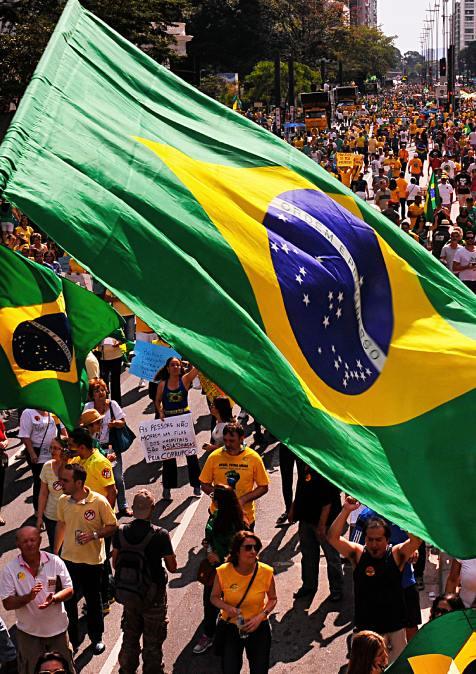
    Brazil's election poses a question that extends well beyond Latin America: how much freedom does a country retain to define its international role when external pressure collides with domestic political exhaustion? For the Global South, the answer matters more than any foreign government's preference regarding the next occupant of the presidential palace. Strategic autonomy remains fragile if every change of government puts a country's freedom of action back up for negotiation. ...
  • October 02, 2026
    Building on his Policy Brief "Latin America, World Politics and the Great Powers", Nizar Messari examines how recent developments are reshaping U.S. influence in the region and affecting ...
  • Authors
    September 30, 2026
    You can imagine how often I've been asked to comment on where the Brazilian economy is headed after the election. With polls pointing to a runoff on October 25 and currently showing a statistical tie between Luiz Inácio Lula da Silva and Flávio Bolsonaro in vote simulations, I'm naturally asked about their economic programs and about the country's relations with the United States. ...
  • Authors
    Joana Ama Osei-Tutu
    September 12, 2026
    The author of this opinion, Joana Ama Osei-Tutu, is a 2017 alumna of the Atlantic Dialogues Emerging Leaders Program.South-South cooperation (SSC) is often presented as an alternative to the hierarchical relationships that have historically characterized international development. In principle, SSC means Global South countries learn from one another, share expertise and resources, and develop solutions grounded in their own experiences, rather than importing models designe ...
  • August 3, 2026
    This policy paper explores how China’s economic development model—rooted in pragmatism, long-term planning, and civilizational renewal—has become its most compelling soft power asset, particularly in the eyes of the Global South. While critically engaging with Joseph Nye’s original conception of soft power as a primarily cultural and normative force, the paper argues that China’s ability to transform itself from an impoverished postimperial state into the world’s largest trading nat ...
  • Authors
    April 6, 2022
    The insurrection of 6 January 2021, when supporters of then President Donald Trump stormed the US Congress in Washington DC, “is widely viewed as a seminal moment in the history of US democracy,” noted the British The Guardian (January 9, 2022). “Never before had the modern nation witnessed such an organized, violent attempt to overthrow the elected government. Never before, not even at the height of the Civil War, had the Confederated flag flown over the halls of Congress.” This w ...
  • Authors
    Dominique Lecompte
    Thierry Vircoulon
    March 14, 2022
    Although it has largely gone unnoticed in France, the agreement signed on December 3, 2020 between the European Union (EU) and the Organisation of African, Caribbean and Pacific States (ACP) is a major shift in the long-standing relations between the EU and countries in the Global South. The EU established a development assistance policy as early as the Treaty of Rome in 1957, signed the first cooperation agreement in 1963, and nowadays is often the largest donor to these countries, ...