Publications /
Policy Paper

Back
Un monde en fracture : l’Amérique de Trump face aux lignes de faille de l’ordre international
Authors
May 20, 2025

Le retour de Trump à la présidence des États-Unis en 2025 accélère l’effondrement de l’ordre international issu de 1945, déjà fragilisé par ses contradictions internes, ses promesses non tenues et son incapacité à intégrer le Sud global. Dans un monde traversé par une polycrise — climatique, énergétique, financière et alimentaire — Trump 2.0 incarne un tournant vers un réalisme assumé, où les alliances sont conditionnelles, les institutions multilatérales instrumentalisées, et les règles remplacées par des rapports de force bilatéraux. La doctrine Bessent transforme le FMI et la Banque mondiale en leviers de fidélité géopolitique, tandis que la doctrine Monroe est élargie à l’échelle mondiale pour verrouiller les infrastructures, les flux logistiques et les normes au service de la puissance américaine.

Face à cette hégémonie coercitive, la Chine bâtit un ordre parallèle fondé sur l’autonomie financière (CIPS, yuan numérique), les infrastructures stratégiques (BRI) et des coalitions alternatives (AIIB, BRICS+). Mais elle reste pragmatique et sans projet idéologique global. Le Nouveau Sud, moteur de la croissance mondiale mais toujours exclu des centres de décision, reste pris dans une triple dépendance — financière, technologique et normative. S’il veut passer de la croissance à la souveraineté, il doit rompre avec la passivité, construire ses propres instruments de gouvernance, et s’affirmer comme acteur stratégique dans un monde où seuls pèsent ceux qui maîtrisent les leviers du réel.

En synthèse, ce texte propose une lecture réaliste, critique et profondément structurée du basculement géopolitique de l’ère Trump 2.0, en soulignant la fin d’un cycle multilatéral universaliste ainsi que l’émergence d’un monde fondé sur la puissance, la loyauté conditionnelle et la fragmentation stratégique. Le défi du 21ème siècle est clair : refonder l’ordre mondial avec — ou malgré — ses fractures.

 

RELATED CONTENT

  • May 13, 2026
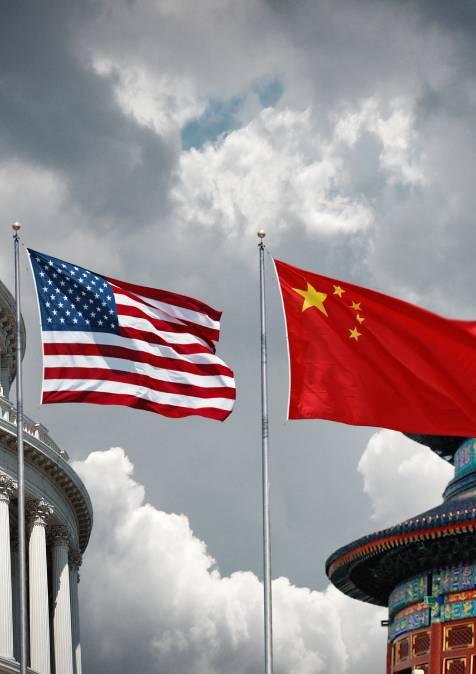
    The meeting between Donald Trump and Xi Jinping in Beijing this week goes far beyond the traditional framework of a bilateral encounter between the world’s two largest economies. In many respects, it is a symbolic moment in the transition toward a new international order—one increasingly shaped not only by great-power competition but also by the Global South’s growing political consciousness and strategic relevance. ...
  • Authors
    May 6, 2026
    Trump’s Strategy of Overriding Constitutional SafeguardsPerhaps bearing in mind that only a minority of voters in the United States support U.S. military action against Iran, President Donald Trump has called the war a “short term excursion” and a “little journey” that may be over “pretty quickly”. The war is thus not a war, although Trump has said the U.S. will take Iran “back to the stone ages, where they belong”, and the U.S. military has admitted to attacks on 14,000 Irania ...
  • Authors
    Paul Isbell
    April 2, 2026
    PrefaceThis series of policy briefs, Pan-Atlanticism: The Atlantic Basin in a Multipolar-Transnational World, assesses the strategic significance—and potential—of the Atlantic Basin, when viewed and engaged with as a distinct and coherent region for international cooperation or governance, and as a potential arena of strategic competition, within a shifting structure of international power that is now moving from unipolarity to a new multipolar reality.The series began by tracing th ...
  • March 5, 2026
    This episode of Africafé explores the evolving dynamics of US-Africa relations, tracing their historical shifts from Cold War and War on Terror engagements to today’s focus on trade, investment, and strategic partnerships. Dr. Ian Lesser highlights how Africa’s role in US foreign policy...
  • February 18, 2026
    Following Donald Trump’s statements asserting that the United States should acquire Greenland, fundamental questions about sovereignty, alliances, and the authority of international law have resurfaced. The Greenland case reveals the tensions between security imperatives, alliance cohes...
  • Authors
    February 12, 2026
    Divergent regulatory regimes for data, driven by different motivations, ranging from privacy protection in the European Union to information control in China, could eventually produce distinctively different, and possibly contradictory, bodies of data. Artificial-intelligence models trained on those datasets could produce differing and possibly even conflicting outputs. To the extent that AI outputs start to shape human perception and to influence decisions, in governments and ...
  • Authors
    February 11, 2026
    The U.S.–China technological rivalry has become a central axis of global economic and geopolitical competition. While the United States continues to lead in frontier innovation—most notably in advanced semiconductors and artificial intelligence (AI)—China has consolidated strengths in large-scale implementation, manufacturing capacity, and control over critical segments of global supply chains. These advantages are especially visible in clean energy technologies and in the processin ...
  • January 30, 2026
    En 2019, Donald Trump a proposé d’acheter le Groenland, déclenchant un refus catégorique du Danemark et une tension diplomatique transatlantique. Cette initiative reflétait l’intérêt stratégique et économique des États-Unis pour l’Arctique et ses ressources. L’épisode a mis en lumière l...