Publications /
Policy Brief
Suriname is at a crossroads. In 2020, the country discovered extensive oil and gas reserves, presenting the new Geerlings-Simons Government with a golden opportunity to use this windfall to chart a new path of high productivity and inclusive growth, fundamentally different from the low and volatile growth of previous decades.
The key question is: will it successfully do so?
Success will require the current government to overcome the main constraints of the business-as-usual approach. Such an approach is characterized by political patronage along ethnic lines, clientelism, and a poor-quality, bloated bureaucracy, while much-needed investments in public infrastructure and human capital are neglected.
As a result, Suriname suffers from high levels of poverty, vulnerability, and inequality, all of which result in a fragile food security situation, despite Suriname being classified an upper-middle-income country.
Introduction
With an ethnically diverse population of about 645,000 (2026), the Republic of Suriname (Suriname for short) is a small, upper-middle-income economy with a GNI per capita of USD 6,140 (2025), using the Atlas method (WDI). It is a natural-resource-rich country, where the commodities sector, more specifically mining (e.g., oil, gold) plays a dominant role in the economy. Along with milling and refining operations, which are capital-intensive, this industry generates 30% of value added and 10% of employment (2019).
Being a commodity-driven economy, Suriname has experienced cycles of boom and bust. The most recent downturn began when the commodity boom ended in mid-2014 when the prices of crude oil, gold and alumina/bauxite all crashed. GNI per capita rose from USD 1,640 (2001) to USD 9,200 (2014) before falling to USD 4,900 (2021) (WBG, 2023). The ups and downs of commodity prices interact with other factors to shape the economic performance of Suriname, and therefore its poverty profile and food security situation.
This project brief is about the food security situation of this multi-ethnic population and its challenges under the threat of climate change. Specifically, it is about how the institutional framework and management capacity of its government affect the socio-economic performance of this commodity-driven economy and therefore the poverty and food security status of different population groups, given their geographical location and historical legacy.
Section I is about the major political and socio-economic developments at the macro and trade levels over recent decades, with a focus on the period since the commodity crash of 2014 and the deep crisis exacerbated by the onslaught of COVID-19. In January 2020, Suriname discovered vast oil deposits offshore in the Guyana-Suriname Basin, with major implications for its potential development and growth in the decades ahead. Its current President, Jennifer Geerlings-Simons (Suriname’s first female president), is keenly aware of the corruption and governance issues that could derail the proper use of this latest windfall. “If we do not prepare properly, we will inevitably suffer a resource curse… The time we have to prevent a resource curse is very short” (Pinas, Jan 2026).
Section II examines the primary sector, which comprises agriculture, forestry and fishing, under the threat of climate change. Though not a major sector compared with mining, it provides a measure of food security for subsistence-oriented farmers who depend on these activities. Section III is about poverty, vulnerability, inequality, and human capital and focuses on recent progress or regression, if any. Section IV discusses the social protection system, its reach among the poor and vulnerable and its impact on food security. Section V outlines the implications for food security under the threat of climate change and its major challenges. The conclusion looks forward to suggested approaches on how to meet these challenges.
Section I: Overview of Major Macro-Trade Socio-Economic Developments
Major features of economic performance of a commodity-driven economy: Suriname experienced decades of low and volatile growth. From 1960 to 2019, Suriname’s average real GDP per capita growth rate of about 1.5 percent was below that of other small Caribbean states, the Latin America and Caribbean (LAC) region, and other upper-middle-income countries. Suriname experienced an economic boom (2000-2014) in gold, oil/petroleum and alumina/bauxite, which ended abruptly, plunging Suriname into crisis.
GDP contracted by 16% during the COVID-19 pandemic, and by another 2.7% in 2021. Tax revenues also fell from 15% of GDP in 2019 to 13.4% in 2020. General gross government debt peaked at 150% of GDP in 2020. Interest paid on public debt increased rapidly to over 5 percent of GDP per year. The Santokhi Government (2020-2025) partially stabilized the economy through several measures including an IMF recovery program, fiscal consolidation and budget tightening, and debt restructuring.
Nevertheless, the economic turmoil took a heavy toll. In 2021, inflation increased to over 50%, before being brought down to less than 9% by 2025. There was a contraction in several sectors: in mining and quarrying by 36%; in construction and education by 38%; in accommodation and food services by 76%; and in public administration by 32%. Inevitably, there were business closures, and declines in employment and remittances (WBG and IDB, July 2024).
The percentage of households indicating that they had run out of food increased from 13% pre-crisis to 25% after. The losses in income were more pronounced among the lowest pre-pandemic income groups. These multiple negative impacts of the crash are not surprising given the importance of the extractive sector. Mining and oil already represent close to 30 percent of GDP and 90 percent of Suriname’s exports. Oil exploration and exploitation alone contribute 10% of GDP; gold and oil generate 85% of export earnings; and the sector generates 25-27% of government revenues.
Looking forward, President Jennifer Geerlings-Simons has emphasized her commitment to ensuring that Suriname does not succumb to the resource curse. She promised to “work together on a new model in which the wealth given by God benefits everyone.” This will be a major challenge in a country infamous for political patronage mainly along ethnic lines, clientelism and widespread corruption.
The funds already obtained from the new venture are in the billions of dollars. The government created Staatsolie in 1980, a parastatal that executes national energy and oil policy. For the GranMorgu deep-water project, Staatsolie is part of a consortium consisting of France’s TotalEnergies and the USA company APA. Production is expected in 2028. An estimate of USD 10.5 bn has been invested in this major project.
Geerlings-Simons inherited from the Santokhi Government (July 16, 2020-July 16, 2025) two important institutional mechanisms: (i) fiscal rules whereby the government is to set a target for public debt to be reached by the end of its five-year term; (ii) a revamped Savings and Stabilizing Fund Suriname (SSFS), which is to receive all mineral revenues and invest the proceeds exclusively in foreign currency instruments outside Suriname. The SSFS was approved in 2017, but as of 2026 it is still not operational, as further legislation and institutional arrangements are required. The years ahead will be critical in determining whether the Geerlings-Simons Government will strictly adhere to the fiscal discipline imposed by these institutions and steer the economy away from the resource curse.
Her administration plans to digitize government in 2026, a step it considers crucial for increasing transparency and accountability and reducing corruption. In terms of public investment, it plans to invest in (i) education and training to build the skilled labor force urgently needed in the mineral sector in particular, and in a more diversified and dynamic economy more generally; and (ii) in agriculture to improve productivity, farmer incomes, the food situation and exports to Suriname’s neighbors.
Section II: The Primary Sector – Agriculture, Forestry and Fishing
Major features of the structure and performance of the primary sector, under the threat of climate change: Agriculture contributes to around 9% of GDP (2025/26), and accounts for 9-15% of the workforce which operates within an economy-wide labor market characterized by high informality, weak job quality, extensive underemployment, and large productivity gaps with its regional peers. Historically, agriculture has accounted for an average of 8.83% of GDP (1960-2024).
Agriculture is dual in that it consists of commercial agriculture primarily along the coast, and subsistence-oriented agriculture in the interior. Commercial farmers can hold private titles to land or have long-term leases, but they generally do not have land tenure security due to various institutional problems including systemic corruption, weak enforcement, overlapping claims, and state allocation of agricultural concessions.
Indigenous and tribal collective lands are not legally recognized by the state, which means that the land of these interior communities are vulnerable to state expropriation, illegal logging and other forms of state-sponsored agricultural expansion. Suriname is the only tropical South American country that still does not legally recognize the collective land rights of indigenous and Maroon communities.
Average annual growth in coastal agriculture, dominated by rice, has been low: at 1.8% (2000-2014) and lower still at a 10-year compound rate of 0.15% (2015-2026). Annual total factor productivity growth was also marginal. Like other Caribbean nations, agricultural growth is mainly explained by increased inputs, not higher productivity growth (RED, 2026).
Commercial coastal agriculture consists mainly of rice, sugar cane, bananas, plantains, oil palms, coconuts, peanuts and citrus fruits. The farmers are descendants of Hindustani and Javanese indentured servants. They are mainly smallholders, though Hindustani farmers are more highly mechanized than their Javanese counterparts.
Interior agriculture is practiced by Maroons, descendants of slaves who fled to the interior, and indigenous Amerindian communities. Their primary staple is cassava. They practice shifting cultivation, hunting, fishing and forest harvesting. The plantation agriculture system, which lasted from the 17th to the early 20th century, no longer exists as it did under the Dutch colonizers. Plantations producing sugar cane, coffee, cocoa, cotton, and indigo used slave labor, which was foundational to the system established after the Dutch colonized Suriname in 1667.
Irrigation dominates coastal agriculture, covering 86% of total cultivated land. Polder infrastructure is used (dikes, sluices and pump stations). Irrigation and drainage infrastructure are necessary because coastal farming takes place at or near sea level; therefore, land must be reclaimed from tidal flats before the river delta can be cultivated. Drainage channels and pump stations are essential to remove excess water and enable the infrastructure to manage the timing, level and distribution of water. Irrigation and drainage infrastructure are therefore necessary not for the usual reason of water scarcity. With sea level rise projected under climate change, this irrigated agriculture is under threat from increasing saltwater intrusion.
Rice is the main user of irrigation, accounting for 89% of the total irrigated area. The shares devoted to other crops are therefore relatively small: sugar cane accounts for 5%, bananas 3.5%, vegetables and other crops 1.5%, while citrus is mostly rainfed. Coconuts, palm oil and plantains are entirely rainfed.
Rice farmers use short-duration modern cultivars developed after 2000, and these support multiple cropping (up to eight times a year) which naturally exhausts soil fertility. Therefore, fertilizer use is essential to maintain soil fertility. The 10-year (2016-2025) average rice yield is 4.47 t/ha, which seems to have plateaued since the 10-year annual compound growth rate at only 0.15% per yearstatistically near zero. This average yield is far below 8-10 t/ha under optimal management (e.g., below the best-performing Japanese irrigated systems).
Other important commercial crops include (i) bananas, under irrigation (Cavendish tissue), which are highly mechanized with high inputs of fertilizer, fungicides and herbicides. They are mainly exported, but exports have declined precipitously since 2012 for multiple reasons; (ii) sugar cane, produced using irrigation and mechanized harvesting. Since the EU subsidy (the guaranteed price) ended in 2017, this sub-sector has become uncompetitive and has declined; (iii) vegetables, produced using labor-intensive technology, which supply the domestic market, although imports are still required to satisfy demand; and (iv) coconuts and plantains (palm oil has not been produced for the last decade), produced mainly by smallholders who use subsistence to semi-commercial technology. They are primarily important for local food security, but some are also traded commercially. There is emerging interest in coconuts, as global and regional demand for coconut oil and water has risen sharply.
Around 93% of Suriname’s land area is covered by forest (2023). Though vast, the forestry sector contributes roughly 1.7% of GDP and USD 70-80 million in exports. The forest is largely untouched. There are few roads in this vast interior as most of the population lives along the narrow coastal strip. However, there are localized areas of small-scale and industrial gold mining.
There is also limited value-added timber processing; 50% of timber production is exported without processing, of which over 95% consists of raw roundwood logs. There is little further downstream processing into higher-value products such as furniture, flooring, panels and other engineered wood products at any meaningful scale. In its National Development Plan (2017-2021), the government sought to increase domestic value added from its forest products. It increased their contribution to GDP to 2.5%, but did not eliminate roundwood log exports, as was its goal.
Suriname has earned the “High Forest, Low Deforestation” (HFLD) status, with its low annual deforestation rate of 0.02% to 0.06%. The government has pledged to permanently protect 90% of its total forest to serve as a vital carbon sink (Mayer, September 2025). The core goal of its NDC 3.0 is not only to keep 90% of its forest cover but also to apply climate-smart agriculture techniques across 60% of its farmland and to reach 30% or more renewables in the electricity mix by 2035.
In 2021, Suriname cut 4.8 million metric tons (mmt) of CO₂ equivalent, generating verified carbon credits that can be sold as Internationally Transferred Mitigation Outcomes (ITMOS) under Article 6 of the Paris Agreement. At USD 50-100/ton, Suriname can earn a revenue stream of USD 185-370 m/year, but it has yet to realize these payments.
The fisheries sector has both artisanal and large commercial/industrial fishing fleets, which together contribute around 2.3% of GDP. The artisanal fleet fishes in shallower waters; the commercial fleet operates in deeper waters. The fisheries subsector contributes about 35% of the production value of agriculture, and 35-40% of agricultural exports.
The artisanal fishermen (some commercial, some subsistence-oriented) are from several ethnic groups, each operating in very specific zones and districts: Creole-Surinamese (e.g., Wanica district); Guyanese migrants (e.g., Nickerie district); Amerindian communities (e.g., Maroijne and Sipaliwini) engaged in coastal and estuarine fishing; and Maroon communities (in the rainforest interior) engaged in subsistence fishing, artisanal gold mining, and subsistence horticulture.
The fisheries sector harvests shrimp (whose catch collapsed from 13,000 t/yr in 2003 to 2,117 t/yr in 2022; seabob shrimp (small shrimp, whose catch grew from 6,000 t/yr in 2010 to 9,000 t/yr in 2022), thus partially compensating for the collapse in other shrimp catches; and finfish (fish with backbones, e.g., salmon, tuna, mackerel, other pelagic fish), whose catch is primarily artisanal. Fish is an important source of animal protein for urban markets in Paramaribo and for local communities, while also contributing to their incomes and food security.
Climate change presents a continuing threat to the primary sector: Saltwater intrusion presents an existential threat to coastal agriculture, which is primarily commercial and a major contributor to incomes and food security. A one-meter rise in sea level (projected baseline to 2100) would be devastating to the polder/irrigation/drainage infrastructure, unless urgent measures are taken to strengthen the entire system.
Sergio Akiemboto, chief of staff of the Geerlings-Simons administration, stated that the current government wants to use some of the substantial GranMorgu project oil revenues to develop agriculture, boosting food production, and hence food security, among other things (Pinas, Jan 2026). Given this stated priority, the coming years should witness the necessary investments in measures to counter the effects of climate change, which could further reduce productivity and yields in an already low-productivity agricultural sector unless adaptive agricultural measures are widely adopted.
A temperature rise of 2-3o C will cause spikelet sterility (panicles with empty or unfilled grains) in rice; bunch fill reduction (overall volume, length and thickness of the bunches are less) in bananas; severe poultry mortality, and reductions in dairy and pig production. A reduction in rainfall of 10% will reduce freshwater recharge of coastal aquifers and freshwater river discharge that currently holds salinity intrusion at bay.
The challenge of making the required timely public investments in infrastructure as well as in extension services to promote climate-smart agriculture among smallholders is enormous, as the irrigation infrastructure is old and extension services are extremely weak. The other perennial issue is access to credit: smallholders have virtually no collateral and interest rates are high—averaging 14.2% in 2023; 14.8% in 2024; and 14.5% in 2025.
Suriname’s fisheries are also threatened by climate change, although there is uncertainty around whether the reduced catches are primarily due to overfishing, illegal fishing, and underreporting rather than climate change. Fish landings have plunged from some 39,993 tons in 2017 to roughly 24,000 tons in 2019. Since there is no recent research focusing on the possible impacts of climate change on Suriname’s fisheries, no firm causal links have been established. With this caveat in mind, the following known effects can reduce fish availability and inflict severe damage:
Warmer temperatures alter the migration patterns of wild fish stocks, their abundance and metabolic rates.
Rising sea levels and accelerated coastal erosion damage low-lying coastal zones, degrading mangrove fringes that act as critical breeding and nursery grounds for young marine species.
High sand temperatures and stronger storms hit coastal beaches, destroying nests and altering sex ratios for endangered marine life interconnected with the broader ecosystem.
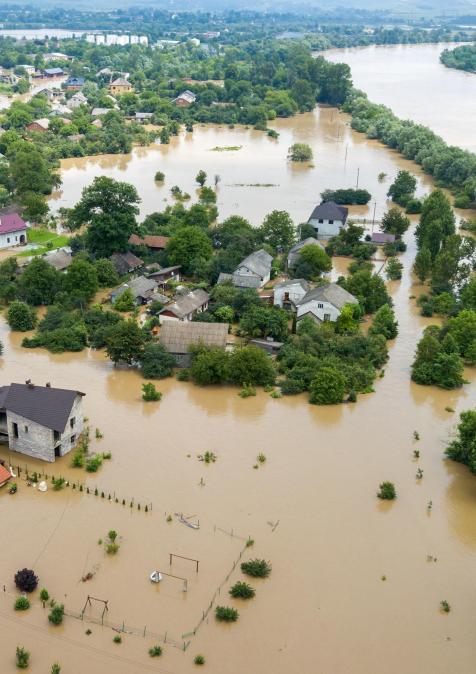
More frequent and more severe flooding hurts the fishery and other sectors directly; for example, the historic 2006 floods in Suriname inundated 25,000-30,000 sq. km of land, destroying 90% of local fisheries facilities and equipment and 65%-70% of crops. Other infrastructure and property were also damaged, including roads, telecommunications, electricity grids, housing, schools, and medical clinics. According to ECLAC, the estimated cost was at least SDR 111 m (Special Drawing Rights) or USD 40 m, according to UNDRR.
Suriname’s forests are an important carbon sink and constitute an essential global public good. Reducing the pressure on these forests will require the Surinamese government to control and reduce illegal, small-scale mining and logging, as well as promote a more productive agriculture. It must also invest in alternative renewable forms of energy, while strengthening the capacity of local indigenous and Maroon communities to sustainably manage their forests.
Section III: Poverty, Vulnerability, Inequality and Low Human Capital
Poverty and vulnerability–characteristics, distribution and mutually reinforcing multiple causes: At the upper-middle-income poverty line of USD 6.85/day (2017 PPP), the poverty rate was 17.5% of the population in 2022. At the extreme international poverty line of USD 2.15/day, the rate dropped to about 1.1% of the population (WBG and IDB, 2024).
According to the Suriname National Multidimensional Poverty Index (MPI), which measures absence of medical insurance, chronic illness, low information and communication technology (ICT) skills, and regional transport constraints, the MPI is around 46%; it is markedly higher at 74.6% in rural areas and lower at 36.8% in urban areas (WBG, June 2023). Poor health and low levels of education are both important contributing factors to the MPI.
The differences in poverty levels across these measures provide indirect evidence of the extent of vulnerability. A substantial portion of the population, nearly 39%, is not considered monetarily poor but lives on USD 14/day or less. This group can be considered vulnerable to falling into poverty (WBG and IDB, 2024).
The urban multidimensional-poverty headcount is 12.6%; the rural rate is 21.3%. The population in the coastal zone is much better off; for example, Paramaribo has a 1.3% multidimensional-poverty headcount, whereas in the vast interior, which accounts for less than 10% of the total population, the rate is around 50%. The poverty incidence rates for Maroons and Amerindians are 62% and 48% respectively. In contrast, poverty levels among Creole and Hindustani households, though still high, average below 25%.
The poor tend to have larger households, usually with more than five members; the vulnerable average 4.3 members and the middle class 3.1 members. The poor have less access to tangible (that is, ownership of physical assets such as a dwelling or means of personal transport) and intangible assets (such as health insurance, access to banks, and market opportunities). These constraints make it hard for them to participate productively in society and earn adequate incomes.
Children make up a large portion of the poor. An estimated 6.7% of children under five are underweight, and 8.3% are stunted. The rate of wasting (low weight for height) among children under five ranges from 3.6% to 5.5% (2020s) (FAO, 2024). Some 6% of children engage in child labor; with the share rising to 19% in the interior. Among 16-year-olds who work, only 28% attend school, versus 82% among children who do not work.
Some 24% of youth aged 20-24 were married before the age of 18; about 7% were married before the age of 15. In the rural interior, the respective rates are 32% and 18%. The literacy rate amongst those who married before the age of 15 was 91%, versus 96% among those who did not.
Female-headed households make up 37% of the total number of households but constitute 47% of the poor, although their educational outcomes are, on average, superior to those of male-headed households. More generally, 62% of all households have a chronically ill member and 34% have a member with a disability. In 52% of households, the head did not complete lower secondary education. In nearly four out of 10 households, at least one member does not use the internet (WBG and IDB, July 2024).
The headline Gini coefficient of income inequality is estimated at 0.392 (2022), below the level of many countries in the LAC region, for example, Brazil at 0.516; Colombia at 0.539; Paraguay at 0.444; Mexico at 0.435; Chile at 0.430; Argentina at 0.424, and Uruguay at 0.409.
However, it masks extreme ethnic and spatial inequalities, which are closely intertwined with poverty and vulnerability, given the significant variations in poverty by geographic location and population group. Only 9-10% of the population lives in the interior, yet it accounts for 14% of the poor (measured at the poverty line of USD 6.85/day). The Maroon and indigenous communities constitute only 21% and 2.5% respectively of the total population but make up 40% and 4.2% respectively of the poor.
Low human capital is a major cause and effect of poverty and inequality, in large part a legacy of Dutch colonial rule and slavery. It is also partly due to ineffective or inefficient spending on education. The net secondary enrollment rate (52%) and the lower secondary school completion rate (45%) are well below the performance of Suriname’s structural peers, but on par with low-income countries such as Djibouti, Senegal and Mozambique. There are high dropout rates across all secondary school grades, especially after Grade 8. About 50% of students do not continue to postsecondary education.
There is also concern about the skills they acquire. UNICEF finds that, by Grade 6, only 42% and 63% of children have acquired the numeracy and reading skills, respectively, expected by the end of Grade 3. Thus, although Suriname has achieved a literacy rate of around 95% (among those aged 15 and above), and its expenditure on education is comparable to that of other upper-middle-income countries, some of Suriname’s education indicators are closer to those of markedly poorer countries such as Mozambique.
Chronic malnutrition and poor health, low educational outcomes, high dependency ratios, widespread workplace informality and underemployment (especially among youth who suffer an unemployment rate of 22% (2022)), are all causes and effects of poverty.
Section IV: Suriname’s Social Protection System, its Reach among the Poor and Vulnerable, and Its Impact
The social protection system—main programs, recent performance, and reach among the poor and vulnerable: Suriname’s social protection system (SPS) is grounded in the Constitution, which mandates that the state guarantee the right to social security and social protection to all its citizens. Social protection is prioritized in the Multi-Annual Development Plan (MDP) 2022-2026, which outlines a series of priority actions, including (i) the transfer of social benefits through debit cards and the banking system; (ii) a shift towards conditional cash transfers; (iii) dedicated resources and facilities for the homeless; (iv) creation of a job bank for job seekers and enhanced support and protection for people with disabilities; and (v) regular updates of the minimum wage and poverty line.
The system is primarily funded through government tax revenue, but it also draws on donor funding. According to the Extended Fund Facility (EFF) with the IMF, Suriname is committed to spending 3% of GDP on its social programs. The Ministry of Social Affairs and Housing (MOSAH) is responsible for implementing the programs.
The social safety net (SSN) programs consist of four core unconditional cash transfer programs (CTP) plus an early childhood program with emergency extensions. These are (WBG and IDB, Annex 3, July 2024):
The General Child Benefit (GCB or AKB in Dutch): It is a universal child allowance of SDR 200/month, paid to families for up to four children, with an unemployed household head, and for families with unmarried, unemployed children up to age 17. Since it is universal, it is not targeted to the poor. It has been the fastest growing program, reaching 85,000-88,000 children in 2022 and 110,000-140,000 in more recent years. The amount is modest, however: its transfer value was only 5% of the upper-middle-income poverty line of USD 6.85/day. In 2022, it cost around 0.2% of GDP.
The General Old Age Pension (AOV in Dutch): It is also a universal program for people aged 60 or older. It covers around 85,000-90,000 beneficiaries. Of all four programs, it has the strongest impact on poverty. It transferred roughly USD 70/month in 2018, but this amount is not indexed to inflation, so its purchasing power collapsed during 2016-2022. In 2022, the transfer was SDR 1250/month, or SDR 41.1/day, equivalent to 45% of the World Bank’s upper-middle-income poverty line of USD 6.85/day. The cost represented around 1% of GDP (2023). The total number of beneficiaries increased in recent years, rising from 66,000 in 2020 to 71,000 in 2022, and 85,000-90,000 in more recent years.
Financial Support to Financially Weak Families (FBZWHH in Dutch): It paid SDR 1,200/family/month (2026). It benefited around 10,000 people in 2020 and 13,574 in 2022; rising to 25,000-35,000 in more recent years. It represented 0.05% of GDP (2022).
The Financial Contribution to Persons with Disabilities (FBMMED in Dutch): The transfer is SDR 1,750/month to people up to age 60 who are medically certified as no longer able to work and who have an income of SDR 4,500/month or less. The total number of beneficiaries was 1,750 (2022), and rose to 10,000 and 15,000 in more recent years. The estimated cost was 0.02% of GDP (2022).
In addition to these main programs, the state introduced (i) the Basic Health Insurance (BHI) Act, which pays the BHI premiums for registered residents aged 17-59, with 500,000 nominally enrolled, and (ii) the Social Program to Enhance Purchasing Power (KVV in Dutch), which is a temporary program designed to assist economically vulnerable households with a total income of up to SDR 6,000 in coping with the elimination of utilities subsidies (as a condition of the EFF) and price increases. The transfer is SRD 1,800/month. The total number of beneficiaries was 120,972 in 2024, and the program’s cost represented 1.8% of GDP. There are also some minor programs that provide assistance with the acquisition of medical equipment and medical care, home care, nutritional supplementation, and the provision of food parcels to socially disadvantaged households.
Therefore, Suriname’s social protection system operates in many areas, assisting various groups. Together, the four main programs represent 1.5% of GDP in recent years. With the KVV, social assistance spending exceeds 2% of GDP, placing Suriname above the international average. These programs do help alleviate poverty, as, without the four main programs, the poverty rate would have been 1.5 percentage points higher in 2022. However, due to several problems, including weaknesses in the delivery chain, the targeting methods used, and the modest amount of the transfers provided to each group, the social assistance programs are only moderately pro-poor. Thus:
Over 60% of the households in the bottom consumption quintile receive benefits through at least one of the main social assistance programs, whereas at the top of the consumption distribution, this share is about 40%.
Moreover, the programs miss a sizable portion—some 38%—of the poorest quintile. The coverage of the social programs is lower in the country’s interior, the most deprived area. The monetary poverty rate in the interior was 27%, versus 17.5% nationwide, while 59% of the population was classified as multidimensionally poor, versus 41% nationwide. Maroons who live primarily in the interior participate in the programs at a low rate. Only 7% benefit from AOK (the elderly allowance) and only 11% from AKB (the child allowance).
Although more and less educated groups both benefit from social programs, the more educated tend to reap the highest benefits.
The less educated tend to be poorer. Households whose heads have not completed education have monetary and multidimensional poverty rates of 30% and 54% respectively; whereas the respective rates are 0.5% and 22% for households whose heads have completed tertiary education.
Households with children tend to be poor, at 22% versus 8% at the upper-middle-income poverty line of USD 6.85/day, and benefit less from social assistance. The probability of benefiting from at least one program is 38% for households with children, versus 55% for households without children. Moreover, when they do benefit, it is usually through the AKB allowance, which is modest.
An overarching problem with all the transfers is that they are not fully indexed to inflation. Therefore, the ability of these transfers to strengthen the resilience of the poor and vulnerable to shocks is limited.
The Geerlings-Simons Government has reiterated its commitment to social policy. To mobilize the required funds, it created Royalties for All (RVI in Dutch) in September 2025. RVI is a mechanism whereby government can directly distribute GranMorgu offshore oil royalties to citizens. In addition, the GOS has launched a local content program for 2026, in line with the Local Content Policy Framework, which seeks to “maximize, the level, quality, and benefits of participation in the extractive sector value chain by the Surinamese” (ASFA, 2022).
Section V: Implications for the Food Security Situation and Major Challenges
Food security under the continuing threat of climate change and major challenges: Food security in Suriname is fragile given an environment characterized by decades of slow and volatile growth; low-yield coastal commercial agriculture and even lower-yield subsistence farming in the interior; commercial coastal fisheries experiencing lower catches in recent years; and interior riverine fisheries with uncertain catch levels.
Most people are still recovering from a brutal recession triggered by a downturn in commodity prices that began in 2014. Thus, although Suriname is classified as an upper-middle-income country, multidimensional poverty is widespread. Such poverty is more widespread in the vast interior where the Maroon and indigenous Amerindian communities predominate.
Continuation of business-as-usual will mean that the continuing threat of climate change is existential even for the better-off coastal and urban population. The Geerlings-Simons Government must make good on its governance promise to invest in public infrastructure and human capital to build a sustainable, higher-productivity and inclusive economy. The challenges are twofold:
Institutional: building and strengthening the institutional mechanisms required to channel the newfound oil and gas wealth into long-term physical and human assets that promote inclusive and resilient growth; and
Limited time: given the backlog of measures needed, the time available is short before the anticipated oil boom funds materialize in 2028.
Suriname is already burdened with widespread corruption and a weak and bloated civil service. Political patronage mainly along ethnic lines is business-as-usual. Skill levels and human capital among the workforce are low, undermining the Government’s stated priority of maximizing local content.
The current government is well aware of these problems and the urgency of overcoming them. According to President Geerlings-Simons, “The time we have to prevent a resource curse is very short.” Sergio Akiemboto also expressed the same keen sense of urgency: “The oil boom will bring many benefits but as a government we are currently insufficiently organized to cope with it” (Pinas, Jan 2026).
Conclusion and Looking Forward
Suriname is at a crossroads. Unlike Mozambique, which is in the grip of a resource curse exacerbated by long-standing political conflict and recurrent insurgencies, Suriname has a new government officially committed to forging a different path. Production revenues from the oil and gas windfall are not expected until 2028. Before these revenues materialize, it therefore has a short window of time to lay the institutional and human capital groundwork needed to steer the economy along a different path toward higher productivity and more inclusive and resilient growth. The Geerlings-Simons Government has a golden opportunity to chart such a path.
Bibliography
Associate van Surinaamse Fabrikanten (ASFA) 2022 Local Content Policy Framework. Suriname Trade and Industry Association (VSB) & Manufacturers’ Association of Suriname (ASFA) and the Alliance. https://vsbstia.org/wp-content/uploads/2022/11/LC-Policy_Suriname-versie-.19.-oct.-22-1.pdf
Food and Agriculture Organization (FAO) 2024. Latin American and the Caribbean—Regional Overview of Food Security and Nutrition 2024: Statistics and Trends. https://openknowledge.fao.org/server/api/core/bitstreams/0556ea9c-65bb-46e9-aa6b-39fdeb8afbe7/content/sofi-statistics-rlc-2024/wasting-among-children.html
Mayer, Lindsay Renick. Sept 28, 2025. “Suriname pledges to permanently protect 90% of its forests, far exceeding the 30X30 global goal for climate and biodiversity protection.” https://www.rewild.org/press/suriname-forest-protection-pledge
Misiekaba-Kia Priscilla. Dec 12, 2022. “How are Surinamese fisheries impacted by climate change?” Climate Tracker.Org. https://climatetrackercaribbean.org/citizen-journalism/how-are-surinamese-fisheries-impacted-by-climate-change/
Pinas, Jason. Jan 07, 2026. “Suriname’s President Prepares for an oil boom”. https://americasquarterly.org/article/surinames-president-prepares-for-an-oil-boom/
Report on Economic Development (RED) 2026. Roots for the Future: A new rural landscape in Latin America and the Caribbean. Development Bank of Latin America and the Caribbean (CAF)
World Bank Group. 2026. Suriname Skills and Jobs Radar 2030: From Economic Opportunity to Jobs for Surinamese Workers. https://openknowledge.worldbank.org/server/api/core/bitstreams/b6148ee5-4df9-42ea-a09c-ba0ddc7973c0/content
World Development Indicators (WDI). Suriname 2025. https://data.worldbank.org/indicator/NY.GNP.PCAP.CD?YEAR_HIGH_DESC=FALSE&locations=SR
World Bank Group and IDB. July 2024. Suriname: Poverty and Equity Assessment. https://openknowledge.worldbank.org/server/api/core/bitstreams/d0b85f03-01fb-4a8c-b22b-ceec56637d4c/content.
World Bank Group and IDB. July 2024. Suriname: Poverty and Equity Assessment. Annex 3: Assessment of Suriname’s Social Protection System. https://documents1.worldbank.org/curated/en/099072924110541334/pdf/P179498-e30bec47-2a10-4e13-93e0-eb13bf399cb8.pdf
World Bank Group (WBG) 2023. Suriname: Systematic Country Diagnostic. https://openknowledge.worldbank.org/server/api/core/bitstreams/b6148ee5-4df9-42ea-a09c-ba0ddc7973c0/content
- According to the 2012 census, the main ethnic groups are Hindu (27%), Maroons (22%), Creoles (16%), Javanese (14%), mixed (13%), indigenous (4%), and Chinese (1.5%). No ethnic group predominates. The official language is Dutch.
- World Bank income country classification (USD): low—less than 1,135; lower-middle income—1,136-4,495; upper-middle income—4,496-13,935; high—greater than 13,935.
- Clientelism and patronage mainly along ethnic lines are pervasive. For example, membership in state-owned enterprises and civil service positions are determined by patronage. There have been repeated public outcries, even breaking out in violent protests as in Paramaribo in February 2023.
- The resource curse is also called the “paradox of plenty”. Nations which have an abundance of natural resources such as fossil fuels (non-renewable, extractive sectors like oil and gas and precious metals) do not succeed in translating this abundance into sustainable, higher, more inclusive growth. Three mechanisms are usually at work. One is Dutch Disease whereby large resource exports drive up the value of the national currency, making exports from other domestic sectors like manufacturing and agriculture not competitive globally. Two is volatility causing large swings in the budget, generating shocks to the local economy. Three is poor governance and corruption, in particular rent-seeking among the political elite and in public institutions more generally.
- The current president’s term in office began on July 16, 2025, with a scheduled end date of July 16, 2030. The term is renewable.
- This exploration/production venture is structured thus: 40% share each for TotalEnergies and APA, 20% for Staatsolie. It raised USD 10.5-125 bn in investment. Staatsolie raised an additional USD 515.8 million.
- Plantations collapsed after slavery was abolished (1863-73), and with the termination of indentured labor (from China, India and the Dutch East Indies) agreements in early 20th century. After WWI, Surinamese sugar and coffee faced unfavorable competition, while the discovery of massive bauxite deposits shifted economic activity away from plantation agriculture).
- Vietnam’s irrigated double-cropped rice yield averages 5.8 t/ha.
- The decline has been due to multiple causes, including (i) Moko disease infestation, which wiped out roughly 25% of the commercial crop; (ii) the failed privatization of Food and Agriculture Industries (FAI), the sole commercial producer. The Government took it over in 2019; (iii) recurring severe weather (including droughts, soil salinity and erratic rainfall); and (iv) labor shortfalls. Exports were mainly destined for the Netherlands and Belgium. The remaining exports are mainly destined for neighboring Caribbean countries.
- “Bunch fill” is the critical growth stage. A reduction in bunch fill results in lighter bunches, and in smaller and poorly filled bananas. There are several possible causes including high temperatures, extended periods of drought, heavy rainfall, and increasing soil salinity, which can result in bunch fill reduction.
- The polder/irrigation infrastructure, much of it built in the post-war era (1948-1960s) and the late 1970s-1980s, is in a state of severe neglect and disrepair. Mechanical pumps are frequently breaking down, and drainage capacity is inadequate.
- The Suriname Seafood Association has been requesting that the government use fishing license fees to undertake the research (Misiekaba-Kia, December 12, 2022). As of 2026, no such study has been undertaken.
- ECLAC is the United Nations Economic Commission for Latin America and the Caribbean.
- SDRs are international reserve assets created by the International Monetary Fund (IMF) in 1969. An SDR is not a physical currency but an artificial accounting unit and a potential claim on freely usable currencies of IMF member countries. A basket of five currencies defines the SDR: the US dollar, the euro, the Chinese renminbi, the Japanese yen and the British pound.
- UNDRR is United Nations Office for Disaster Risk Reduction.
- It is one of the highest rates in the Caribbean region, compared to Jamaica at 13.7% (2021); 11.1% in Barbados (2018) and 13.8% in Grenada (2018) (WBG, 2026).
- The MPI usually includes overlapping deprivations in health, education, and living standards. These often include measures of adult and child nutrition, child mortality; years of schooling, school attendance; housing, sanitation, drinking water, cooking fuel, assets.
- Suriname is primarily urban. The urban population of Suriname averaged 61.11% between 1960 and 2024. In 2024, this figure was 66.53%, while the rural population accounted for 33%.
- This rate is more than 9 percentage points above the national rate and more than 10 percentage points above the LAC regional average (WBG, 2026).
- The EFF was approved in December 2021, and the final review was in March 2025.
- Depending on the floating exchange rate, it is equivalent to USD 50-75/month.
- It is still a temporary program as of Oct. 2026.
- Public spending on social assistance equalled 1.68% of GDP in Latin America and the Caribbean, 1.47% of GDP in the Caribbean, and 1.42% of GDP globally.
- It has no consolidated social registry comparable to Brazil’s Cadastro Único.
- Indeed, the average per capita benefit from social assistance is only about USD 0.18 (2017 PPP) in households with children versus USD 1.33 in households without children.
- The Local Content Policy Framework defines local content as “the extent to which the output of the extractive industry generates further benefits to the economy beyond the direct contribution to the Gross Domestic Product (GDP) and government revenues, through its linkage with other domestic production sectors” (ASFA, 2022).