Publications /
Opinion

Back
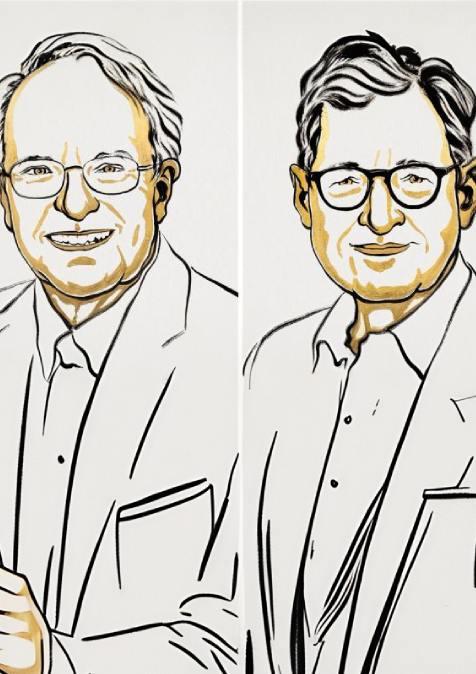
Robert E .Hall et Michael Woodford, Prix Nobel d’Économie 2026
October 26, 2026

Depuis que l’économie a été reconnue par les Nobel en 1969, il revient à cette discipline de clore les cérémonies annuelles d’attribution des Prix aux lauréats. C’est le 12 octobre 2026 que le jury du prix de la Banque de Suède, en sciences économiques en mémoire d’Alfred Nobel, a consacré deux Américains Prix Nobel de l’économie : Robert E. Hall et MichaelWoodford, pour leur contribution aux « fondements microéconomiques de la stabilisation macroéconomique de la stabilisation ».

Le choc pétrolier de 1973, aboutissant à la stagflation, va mettre à mal les recettes keynésiennes de l’après-guerre. Mais, à la différence de nombreux   Keynésiens qui désiraient tourner la page du Maitre de Cambridge, nos deux lauréats vont chercher à donner une nouvelle dimension à son analyse, à partir d’une approche micro économique comportementale des individus et des entreprises. Et ils vont agir en complémentarité, Robert E .Hall, en privilégiant la demande, Michael Wood, l’offre.

Robert E .Hall enseigne toujours à l’université de Stanford (Californie), aux États-Unis, après avoir soutenu sa thèse de doctorat, sous la direction de Robert Solow, Prix   Nobel d’Économie en 1987. Ses travaux vont porter principalement sur la prise en compte des anticipations dans la décision   de consommer ou de ne pas consommer. Avant sa contribution, on considérait que la consommation dépendait du revenu disponible et de lui seul. Hall va montrer qu’on ne peut comprendre l’évolution de la consommation sans prendre en compte les anticipations individuelles du consommateur, par exemple celle qui concerne son salaire ou son pouvoir d’achat. Dans un article fondateur de 1978, il montre que le changement de consommation est imprévisible, ce qui le conduit à conclure que la meilleure prédiction de la consommation ne peut se fonder que sur la consommation du moment, à une variation imprévisible près. (Son ouvrage de   référence : ‘’The 

Rational Consumer :Theory  and Evidence ‘’, MIT Press /Cambridge, Massachusetts 1990)

Michael Woodford enseigne à l’université de Columbia (New York). Ses travaux concernent la version offre de la problématique. Et ce, en analysant la fixation des prix par les entreprises, et plus particulièrement les raisons pour lesquelles , en cas de choc, les prix ne s’ajustaient pas rapidement. Il va montrer que si ces prix pouvaient baisser, cela ne pouvait être que très lentement, leur adaptation au choc nécessitant de multiples, et parfois couteuses, micro-décisions. À partir de ce constat, il va développer, en y intégrant, les travaux de Hall sur la consommation, un modèle macroéconomique beaucoup plus efficace, montrant, par exemple, que l’inflation globale est fonction des anticipations et du niveau actuel de la production, qu’il va intégrer à celui de Hall. Woodford va ainsi influencer les politiques économiques et monétaires du monde entier. Ce qui lui vaudra d’être qualifié par certains du « plus grand économiste monétaire de son temps ». ( Son ouvrage de référence : ‘’ Interest   and Prices :Foundations  of a Theory of Monetary Policy ‘’ Princeton University Press   2003 )

En distinguant un champ de recherche, celui de la nouvelle économie keynésienne, le jury ne pouvait en ignorer le pionner :Robert E .Hall , et celui qui va le plus contribuer à la faire progresser, allant jusqu’à la modéliser avec des applications concrètes : Michael Woodford.


RELATED CONTENT

  • Authors
    Abdelmonim AMACHRAA
    May 17, 2023
    Nothing better illustrates the positive contribution of the integration of national economies into global value chains than the fact that in the 1990s, the automotive sector barely existed in Morocco. Now, it is the leading export sector, with a production and assembly capacity of 700,000 vehicles, making it an attractive and competitive hub linking Africa and Europe in the automotive value chain. However, the automotive industry is on the cusp of change, with advances in electric a ...
  • Authors
    May 15, 2023
    In the face of oil production cuts by Saudi Arabia and some OPEC members, the energy supply is shrinking again. This is in response to fears of an impending recession, higher inventories in some key countries, and an attempt to keep prices at a certain level. Turning to renewables is now essential to reduce dependence and increase resilience to energy insecurity, while non-renewable energy sources continue to show signs of unpredictability and harmful dependence. Economic outlooks v ...
  • Authors
    May 11, 2023
    This paper aims to investigate the impact of an inflation targeting framework adoption by the central bank, on the reduction of public debt ratios in emerging countries, through the potential discipline-enhancing effect of inflation targeting on the conduct of fiscal policy in general. The impact evaluation method used is the Propensity Score Matching (PSM), which allows the evaluation of the treatment effect of inflation targeting on fiscal discipline, in terms of public debt reduc ...
  • May 09, 2023
      على ضوء الاجتماعات السنوية لمجموعة البنك الدولي وصندوق النقد الدولي في التقرير الأخير لصندوق النقد الدولي حول آفاق الاقتصاد العالمي، والذي يطبعه القلق الزائد في ظل اضطرابات القطا ...
  • May 9, 2023
    La transition énergétique et écologique (TEE) est inéluctable, souhaitable et désormais acceptée au plan mondial. Mais le financement de cette transition demeure fort incertain. L’objet de ce Policy Paper est d’analyser les besoins de financement à considérer, et de passer en revue les différents canaux financiers possibles. Des pistes ont déjà été lancées, des procédures et des instruments sont mis en place, mais tout cela reste insuffisant. Il va falloir combiner un grand nombre d ...
  • May 8, 2023
    In March 2023, the brutal demise of the Silicon Valley Bank (SVB) was the first to happen as a result of the hiking of interest rates that central banks started implementing from late 2021 onwards. Although the Federal Deposit Insurance Corporation (FDIC), a US government corporation pr...
  • Authors
    May 8, 2023
    The energy sector faces many challenges that undermine economic growth, energy security and access, and environmental sustainability. To address these challenges, Atlantic Basin countries need to improve access to reliable energy, diversify their energy mix with low-carbon alternatives and improve energy efficiency in the long term. However, the transition to clean energy will also create new risks and challenges that differ from one Atlantic country to another, requiring additional ...
  • Authors
    Inácio F. Araújo
    May 5, 2023
    This paper presents a synthetic view of the socioeconomic and environmental impacts of the economic sectors and regions that make up the Moroccan economy, taking into account the current economic structure and production technologies. Therefore, the potential effects must be understood as signals to think about interventions aimed at redirecting the desired trajectories of sustainable development. The application of the tools developed to give scientific support to this analysis rev ...