Is the global financial system healthy?

May 8, 2023

In March 2023, the brutal demise of the Silicon Valley Bank (SVB) was the first to happen as a result of the hiking of interest rates that central banks started implementing from late 2021 onwards. Although the Federal Deposit Insurance Corporation (FDIC), a US government corporation providing insurance for bank deposits, was swift, thus contributing to reassure depositors and markets, the default of the 16th largest lender in the US following a bank run was hardly perceived as a good omen. SVB’s default came all the more as a shock as the bank was deeply connected to the heart of the technology, innovation-driven US capitalism, which accounted for the bulk of the bank’s clients and contributed to the booming growth it had experienced in the few years that preceded its failure.

Nevertheless, fears surrounding the financial sector’s health were not entirely tamed. US midsize banks were particularly scrutinized following a wave of withdrawals of deposits from customers, leading to the re-evaluation of their shares by investors. The fate of Crédit Suisse, a Zurich-based historic lender whose history goes back to the mid-19th century, and which was saved from bankruptcy by a massive, “shotgun” intervention of Swiss federal authorities, further fueled worries that the financial sector could be seriously harmed by the end of the “era of cheap money”. Many observers consider that the latter had fueled an “everything bubble” which could lead to potential serious consequences on an already strained global economy.

The response of policymakers – amongst them finance ministers and central bankers - in both advanced and emerging economies, their ability to act fast and in coordination with each other, and the possibility for them to balance two apparently contradicting goals – lowering inflation levels which have in recent months reached decades-high levels while maintaining a healthy financial system – are thus subject to question. In particular, the efficiency of instruments inherited from the 2008 financial crisis and the lessons drawn from the latter should also be meditated.

In a new webinar, the Policy Center for the New South offers to reflect on the stability of the global financial system in times of increased geopolitical stress and fragmentation. What happened to the SVB and Crédit Suisse? Can these two cases be considered as isolated and mostly resulting from peculiar, irresponsible management? How healthy are the global banking and financial systems? To what extent does geopolitics further stress them? How can policymakers contribute to their stability and what tools should be mobilized for that purpose?
Speakers
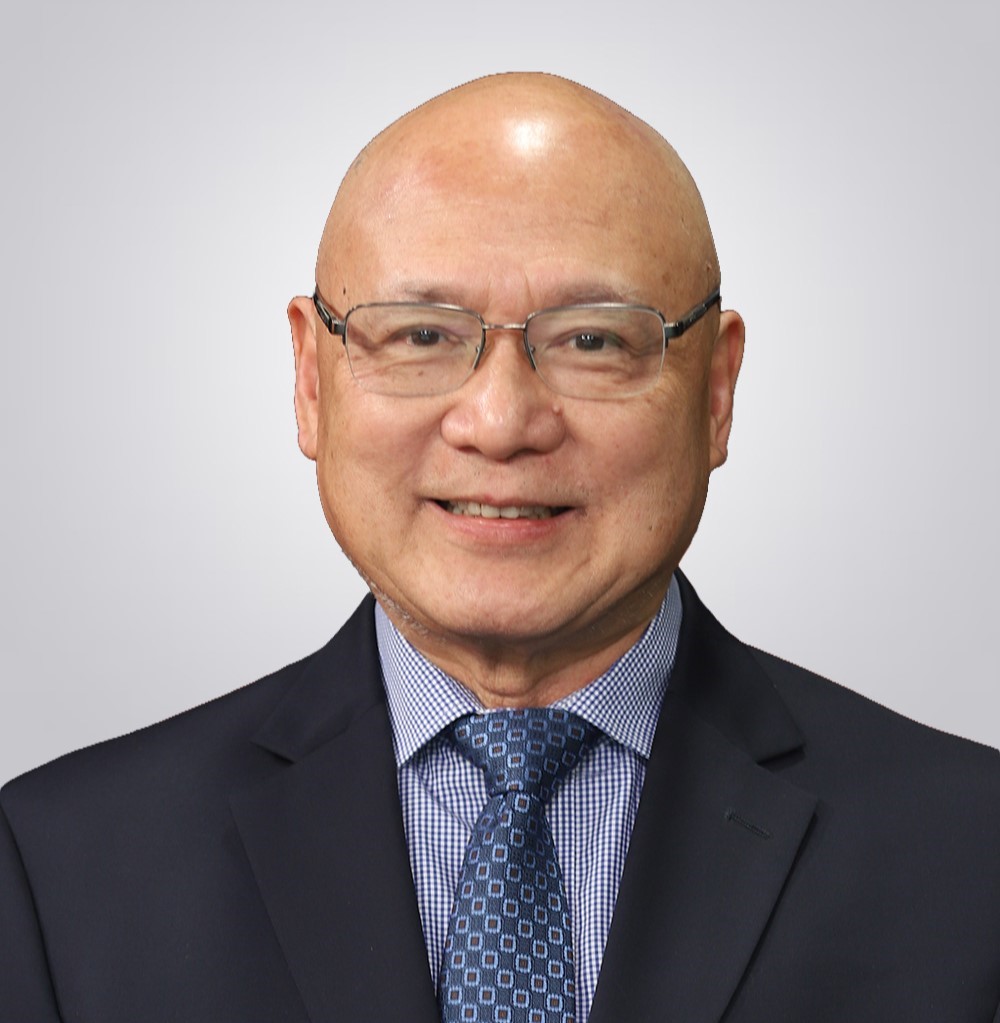
Hinh T. Dinh
Senior Fellow
Hinh T. Dinh is a Senior Fellow at the Policy Center for the New South, Morocco and President of Economic Growth and Transformation, LLC., VA, USA. Previously, he worked at the World Bank Group where his last position was Lead Economist in the Office of the Senior Vice President and Chief Economist. He has authored and co-authored books published by the World Bank, Oxford University, and the Policy Center for the New South, and has written articles in professional journals covering public finance, international finance, and industrialization. His latest books include Tales from the Development Frontier (2013), Light Manufacturing in Vietnam (2013), Jobs, Industrialization, and Globalization (2017), Morocco (2020), COVID-19 and Developing Countries (2022), and Vietnam’s Economi ...
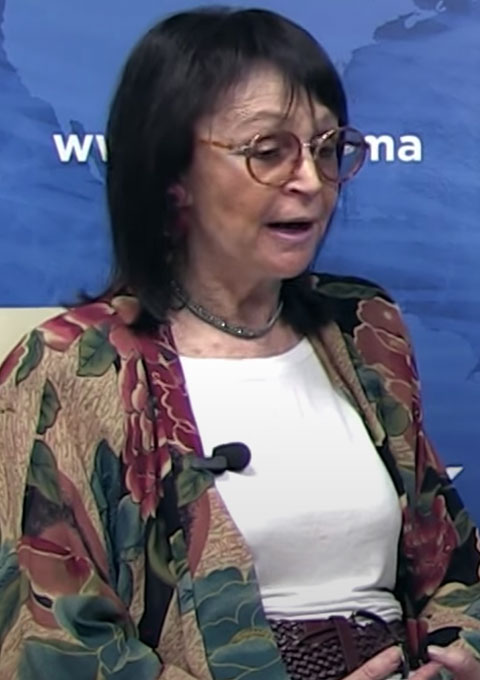
Helyette Geman
Senior Fellow
Helyette Geman is Senior Fellow at the Policy Center for the New South, Director of the Commodity Finance Center at Birkbeck, University of London, and a Research Professor at the Johns Hopkins University, who focuses on Probability, Commodities and Finance. She was Chairman of the Finance Department at ESSEC Business School from 1988 to 1995, and the Director of Dauphine Master 203 at the University of Paris Dauphine from 1995 to 2005. Helyette Geman is a Graduate from Ecole Normale Supérieure in Mathematics and holds a PhD in Probability and a PhD in Finance. She worked as a scientific expert for EDF Trading, Louis Dreyfus, BMP Billiton, Bunge Invivo and financial institutions. Her book “Commodities and Commodity Derivatives” published in 2005 by Wiley Finance has become th ...
Fatima Hewaidi
Atlantic Dialogues Emerging Leaders Programme Alumna
Fatima Hewaidi currently leads the Market Intelligence office for the Middle East at Barclays Private Bank in Switzerland. For the past four years, she was a Business Engagement Lead at the World Economic Forum, where she developed partnerships and curated dialogues among business leaders in the Middle East and North Africa. Prior to this, she measured and analyzed the ease of starting a business across the Middle East and Africa as a Consultant in the World Bank's Doing Business project. Fatima holds an MA in International Economics from the Johns Hopkins University - School of Advanced International Studies (SAIS), and a BA in International Relations from the University of British Columbia. She also studied at Sciences Po Paris - Menton Campus for Middle East and Mediterran ...

RELATED CONTENT

  • August 25, 2026
    Predictions of American decline have become increasingly prevalent. The United States has run persistent trade deficits for decades, but its public debt now exceeds its annual economic output. Meanwhile, and new centers of industrial and technological power continue to emerge across Asia. Yet despite these developments, no country has so far replaced the United States as the main organizing power of the international economy. Conventional explanations explain this in terms of U.S. m ...
  • Authors
    Meryam Amarir
    August 13, 2026
    Les crises récentes au Moyen-Orient, notamment les attaques ciblant les navires commerciaux en mer Rouge et les tensions autour du détroit d'Ormuz, ont mis en évidence la vulnérabilité des principaux corridors stratégiques du commerce mondial. Plus qu'un bouleversement de l'organisation des échanges, elles accélèrent une transformation déjà engagée, fondée sur la recherche de chaînes de connectivité plus résilientes, la diversification des itinéraires commerciaux et le développement ...
  • Authors
    August 11, 2026
    Lorsqu’une crise éclate, elle donne lieu à l’actionnement des réflexes pour sa gestion et la limitation de ses effets. Commencent, alors, les analyses et les suppositions sur les dysfonctionnements, les manquements et les défaillances ayant entrainé ladite crise. Dans certains cas, la théorie du complot s’ingère et les hypothèses cherchent les auteurs ayant provoqué la crise, leurs desseins et leurs buts.Cependant, la théorie de gestion des crises nous apprend qu’une crise inte ...
  • August 3, 2026
    This policy paper explores how China’s economic development model—rooted in pragmatism, long-term planning, and civilizational renewal—has become its most compelling soft power asset, particularly in the eyes of the Global South. While critically engaging with Joseph Nye’s original conception of soft power as a primarily cultural and normative force, the paper argues that China’s ability to transform itself from an impoverished postimperial state into the world’s largest trading nat ...
  • July 10, 2026
    For much of the post-war period, the Global South was framed as an object of history, defined by dependency, constrained by structural asymmetries, and confined to the margins of global decision-making. That narrative, once empirically grounded, is now no longer adequate. A profound yet uneven transformation is underway. The Global South is no longer only reacting; it is increasingly shaping rules, institutions, and narratives.This Policy Brief argues that the Global South is thus t ...
  • July 3, 2026
    Ce Policy Paper a également été publiée en anglais et en espagnol par Le Grand Continent Le Maroc offre un exemple éclairant parmi les pays à revenu intermédiaire, dans un contexte marqué par une fragmentation croissante de l’environnement international, une croissance mondiale atone et un ralentissement de la convergence. Depuis 2022, sa trajectoire se distingue par une certaine robustesse, avec un rythme d’expansion supérieur à celui des autres économies de même catégorie. Dé ...
  • July 3, 2026
    This Policy Paper has also been published in French and Spanish by Le Grand Continent Morocco offers a compelling example of how a middle-income economy can navigate a more fragmented global environment, characterized by weak growth and slower convergence. Since 2022, economic activity has remained relatively strong, with growth exceeding that of many comparable economies. Non-agricultural growth has averaged 4.4% since 2022, around 1.3 percentage points above its historical av ...
  • July 3, 2026
    Este Policy Paper también ha sido publicado en inglés y francés por Le Grand Continent La economía marroquí constituye un caso ilustrativo entre las economías de renta media, en un contexto marcado por una creciente fragmentación del entorno internacional, un crecimiento mundial anémico y una desaceleración de la convergencia. Desde 2022, su trayectoria se caracteriza por una relativa solidez, con un crecimiento superior a la media de las economías de la misma categoría. Superi ...
  • June 22, 2026
    History devotes considerable attention to the rise and fall of great powers. Scholars have spent centuries analyzing why empires collapse, why nations decline, and why dominant states eventually lose their position. By comparison, relatively little attention has been devoted to a different question: what happens when a country succeeds beyond its own expectations? ...
  • Authors
    Diogo Ramos Coelho
    Bruno Saraiva
    June 22, 2026
    Global imbalances are back—and this time the risks look different. The 2008 financial crisis showed how persistent current-account deficits and surpluses between major economies can fuel financial instability and trigger sudden, severe reversals of capital flows. After almost two decades, many thought that episode had been resolved. It had not. New imbalances have built up, with a familiar cast: China, Germany, Japan, and oil exporters running large surpluses, and the United States ...