Publications /
Opinion

Back
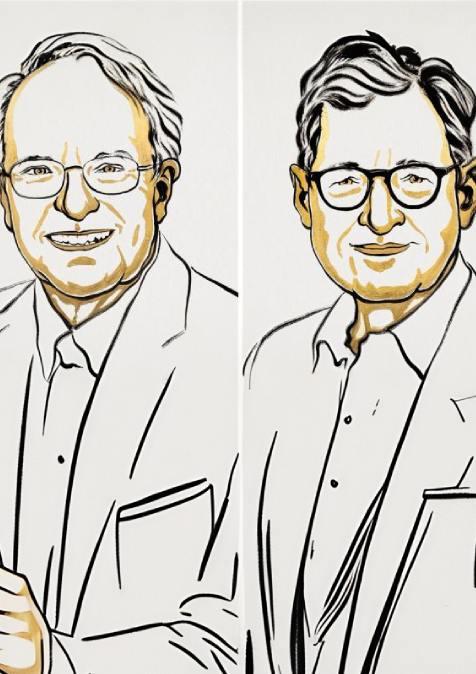
Robert E .Hall et Michael Woodford, Prix Nobel d’Économie 2026
October 26, 2026

Depuis que l’économie a été reconnue par les Nobel en 1969, il revient à cette discipline de clore les cérémonies annuelles d’attribution des Prix aux lauréats. C’est le 12 octobre 2026 que le jury du prix de la Banque de Suède, en sciences économiques en mémoire d’Alfred Nobel, a consacré deux Américains Prix Nobel de l’économie : Robert E. Hall et MichaelWoodford, pour leur contribution aux « fondements microéconomiques de la stabilisation macroéconomique de la stabilisation ».

Le choc pétrolier de 1973, aboutissant à la stagflation, va mettre à mal les recettes keynésiennes de l’après-guerre. Mais, à la différence de nombreux   Keynésiens qui désiraient tourner la page du Maitre de Cambridge, nos deux lauréats vont chercher à donner une nouvelle dimension à son analyse, à partir d’une approche micro économique comportementale des individus et des entreprises. Et ils vont agir en complémentarité, Robert E .Hall, en privilégiant la demande, Michael Wood, l’offre.

Robert E .Hall enseigne toujours à l’université de Stanford (Californie), aux États-Unis, après avoir soutenu sa thèse de doctorat, sous la direction de Robert Solow, Prix   Nobel d’Économie en 1987. Ses travaux vont porter principalement sur la prise en compte des anticipations dans la décision   de consommer ou de ne pas consommer. Avant sa contribution, on considérait que la consommation dépendait du revenu disponible et de lui seul. Hall va montrer qu’on ne peut comprendre l’évolution de la consommation sans prendre en compte les anticipations individuelles du consommateur, par exemple celle qui concerne son salaire ou son pouvoir d’achat. Dans un article fondateur de 1978, il montre que le changement de consommation est imprévisible, ce qui le conduit à conclure que la meilleure prédiction de la consommation ne peut se fonder que sur la consommation du moment, à une variation imprévisible près. (Son ouvrage de   référence : ‘’The 

Rational Consumer :Theory  and Evidence ‘’, MIT Press /Cambridge, Massachusetts 1990)

Michael Woodford enseigne à l’université de Columbia (New York). Ses travaux concernent la version offre de la problématique. Et ce, en analysant la fixation des prix par les entreprises, et plus particulièrement les raisons pour lesquelles , en cas de choc, les prix ne s’ajustaient pas rapidement. Il va montrer que si ces prix pouvaient baisser, cela ne pouvait être que très lentement, leur adaptation au choc nécessitant de multiples, et parfois couteuses, micro-décisions. À partir de ce constat, il va développer, en y intégrant, les travaux de Hall sur la consommation, un modèle macroéconomique beaucoup plus efficace, montrant, par exemple, que l’inflation globale est fonction des anticipations et du niveau actuel de la production, qu’il va intégrer à celui de Hall. Woodford va ainsi influencer les politiques économiques et monétaires du monde entier. Ce qui lui vaudra d’être qualifié par certains du « plus grand économiste monétaire de son temps ». ( Son ouvrage de référence : ‘’ Interest   and Prices :Foundations  of a Theory of Monetary Policy ‘’ Princeton University Press   2003 )

En distinguant un champ de recherche, celui de la nouvelle économie keynésienne, le jury ne pouvait en ignorer le pionner :Robert E .Hall , et celui qui va le plus contribuer à la faire progresser, allant jusqu’à la modéliser avec des applications concrètes : Michael Woodford.



RELATED CONTENT

  • May 6, 2025
    في بداية شهر أبريل، أعلن الرئيس الأمريكي دونالد ترامب عن سلسلة من الإجراءات التجارية الجديدة، أبرزها فرض رسوم جمركية بنسبة 10% على معظم الواردات الأمريكية، مع زيادات تصل إلى 145% على بعض المنتجات القادمة من دول محددة، خاصة الصين. هذه القرارات أثارت مخاوف واسعة في الأوساط الاقتصادية بشأن...
  • Authors
    May 5, 2025
    Last week marked my twenty-third consecutive week attending the World Bank and IMF Spring Meetings in Washington, DC. While I no longer participate in the official sessions, I continue to be invited to the many side conventions and debates that surround them.A key moment is always the release of the IMF's World Economic Outlook report. This year, it drew particular attention due to curiosity about how the institution would project the impacts of the tariff war initiated by Trump’s s ...
  • May 2, 2025
    This Opinion was originally published in Project Syndicate As the US-China rivalry intensifies, both powers are courting mineral-rich African countries in an effort to secure critical raw materials. Translating Africa's vast natural-resource wealth into lasting development requires an infrastructure-led strategy that delivers long-term value for local communities. ...
  • Authors
    Danielle Alakija
    May 1, 2025
    The author of this opinion, Danielle Alakija, is a 2024 alumna of the Atlantic Dialogues Emerging Leaders Program. Once upon a time—or so the story went—the Global South was cast to the margins of the global development narrative. Assigned a supporting role in someone else’s story, it was exploited for its resources and subdued by the authoritative tone of external narrators. This image, painted in tones of crisis and dependency, continues to echo through textbooks and news cy ...
  • Authors
    Isabela Carvalho
    April 30, 2025
    The author of this opinion, Isabela Carvalho, is a 2018 alumna of the Atlantic Dialogues Emerging Leaders Program. In today’s interconnected world, knowledge plays a vital role in driving change and shaping solutions. Yet despite the rise of digital tools and global collaboration, persistent gaps in how knowledge is managed and shared continue to limit the Global South’s ability to fully harness its potential. Strengthening resilient knowledge ecosystems fosters inclusive ...
  • April 29, 2025
    At the recent World Bank and IMF Spring Meetings, heightened attention focused on the IMF’s downgraded global economic forecasts. Global growth is now projected at 2.8% for 2025 and 3% for 2026, down from 3.3% in 2024, largely due to rising trade barriers initiated by Mr. Trump’s second...
  • April 28, 2025
    In this episode, we discuss the Economic Report on Africa 2025, focusing on the African Continental Free Trade Area (AfCFTA) and its transformative potential. We explore how North African ...
  • April 23, 2025
    The United States is at a critical juncture, facing a pivotal dilemma: preserving global leadership in a world it no longer fully controls. While it proclaims its primacy in the liberal international order, its actions tell a different story—one marked by tariffs, reshoring policies, and an open attempt to contain China’s rise. This strategy is driven less by long-term vision than domestic political calculus, underscoring the urgent need for strategic recalibration. ...