Publications /
Policy Brief

Back
Reforming International Financial Institutions: Why Good Policies Matter More for Developing Countries
March 20, 2025

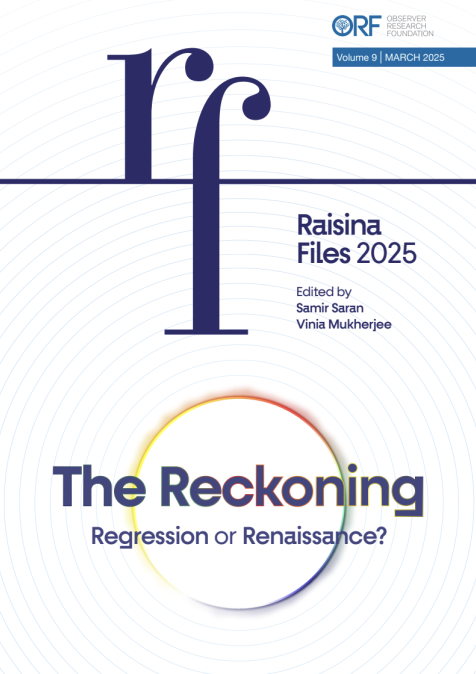
This paper (see pages: 152-164), included in the report 'The Reckoning Regression or Renaissance?' was originally published on orfonline.org


Calls for reforms of the International Financial Architecture (IFA) are foregrounded by the growing financing needs of developing countries, driven by mounting climate-related challenges; conflict and violence; rising numbers of internally displaced persons (IDPs); and macroeconomic imbalances, including crippling debt service and debt distress. Debates on IFA reforms have particularly centred on International Financial Institutions (IFIs), including the two Bretton Woods Institutions (BWIs)—the International Monetary Fund (IMF) and the World Bank Group (WBG)—as well as other Multilateral Development Banks (MDBs).1 There are proposals to expand the financial firepower and lending capacity of these institutions through a combination of financial engineering, aimed at optimising MDB balance sheets, and increased capital commitments from developed nations. However, in the current global political landscape, these efforts face massive obstacles. Geopolitical competition may divert resources away from international cooperation, as advanced economies prioritise military spending and investments in infrastructure, manufacturing, and research, development, and innovation (RD&I) in biomedical, digital, and green technologies. Great-power rivalries could weaken multilateral institutions and governance mechanisms by reducing the willingness to compromise and negotiate. This essay argues that IFI resources are unlikely to increase remarkably in the short to medium term, even as the financial needs of developing countries continue to grow. Developing nations must therefore mobilise alternative resources beyond traditional official development assistance (ODA), including international private capital and domestic savings. In this context, IFIs play an increasingly vital role. Over the years, they have accumulated unparalleled knowledge of the policy environments and institutional frameworks necessary for success. This expertise, derived from deep and practical experience across diverse economies, offers developing countries valuable, impartial insights. Developing nations can leverage this expertise to strengthen domestic capabilities, frameworks, institutions, policies, and projects that attract international private investment, enhance the effectiveness of public spending, and mobilise…


RELATED CONTENT

  • July 15, 2026
    تناقش هذه الحلقة واقع المنافسة في الأسواق المغربية وعلاقتها بتطور الأسعار والقدرة الشرائية للمواطنين. كما تسلط الضوء على أبرز العوامل المؤثرة في الأسعار، سواء المرتبطة بالمنافسة أو بتكاليف الإنتاج وسلاسل التوزيع. ويتناول الحوار دور مجلس المنافسة والسلطات العمومية والفاعلين الاقتصاديين ف...
  • Authors
    July 13, 2026
    This paper provides a structural assessment of India’s services-led development trajectory, and its integration into global value chains (GVCs) between 2012 and 2022. Applying an analytical framework that categorizes services into knowledge (KS), enabling (ES), and local (LS) sectors, the study utilizes sixteen OECD indicators to move beyond the narrative of India as a ‘services champion’ and reveal a more complex economic reality. The analysis identifies three central structur ...
  • Authors
    July 13, 2026
    This paper examines the evolution of China’s services sector between 2012 and 2022, analyzing the country’s structural transformation based on a novel three-tier taxonomy: knowledge services (KS), enabling services (ES), and local services (LS). Using sixteen quantitative indicators from OECD databases, the study evaluates China’s transition in comparison to the EU15 benchmark, highlighting three core challenges: manufacturing rebalancing, labor absorption, and global integration.Th ...
  • Authors
    Edited by
    July 13, 2026
    Available soon on livremoi. The 2026 edition of the Annual Report on the African Economy examines the issue of the valorization of Africa’s natural resources, particularly its mineral wealth. While the continent holds some of the world’s largest known reserves of a wide range of minerals and metals, the objective is not merely to catalogue these resources, but rather to explore the conditions under which natural resource endowments can be transformed into drivers of Africa’s in ...
  • July 6, 2026
    Cette interview explore les grands enjeux de l’urbanisation au Maroc, en mettant l’accent sur les défis de gouvernance, de planification et de politiques publiques. Elle revient sur l’évolution des modèles de développement urbain, les effets du changement climatique sur les villes, ains...
  • July 3, 2026
    Ce Policy Paper a également été publiée en anglais et en espagnol par Le Grand Continent Le Maroc offre un exemple éclairant parmi les pays à revenu intermédiaire, dans un contexte marqué par une fragmentation croissante de l’environnement international, une croissance mondiale atone et un ralentissement de la convergence. Depuis 2022, sa trajectoire se distingue par une certaine robustesse, avec un rythme d’expansion supérieur à celui des autres économies de même catégorie. Dé ...
  • July 3, 2026
    This Policy Paper has also been published in French and Spanish by Le Grand Continent Morocco offers a compelling example of how a middle-income economy can navigate a more fragmented global environment, characterized by weak growth and slower convergence. Since 2022, economic activity has remained relatively strong, with growth exceeding that of many comparable economies. Non-agricultural growth has averaged 4.4% since 2022, around 1.3 percentage points above its historical av ...
  • July 3, 2026
    Este Policy Paper también ha sido publicado en inglés y francés por Le Grand Continent La economía marroquí constituye un caso ilustrativo entre las economías de renta media, en un contexto marcado por una creciente fragmentación del entorno internacional, un crecimiento mundial anémico y una desaceleración de la convergencia. Desde 2022, su trayectoria se caracteriza por una relativa solidez, con un crecimiento superior a la media de las economías de la misma categoría. Superi ...