Publications /
Policy Brief

Back
Minerales críticos: posicionar a África en la reestructuración mundial
December 20, 2024

Este artículo se publicó originalmente en legrandcontinent.eu


Varios países africanos están ascendiendo silenciosamente en la cadena de valor de los vehículos eléctricos.

Campo de batalla de la rivalidad sino-estadounidense por los materiales críticos, África podría encontrar una oportunidad en la nueva fragmentación mundial de las cadenas de suministro.

Estudio de caso de la República Democrática del Congo.

Las sucesivas perturbaciones de las cadenas de suministro durante la década de 2010 y los primeros años de la de 2020 han llevado a los responsables políticos y económicos, especialmente en Estados Unidos y Europa, a plantearse formas de mitigar los riesgos asociados a la fuerte dependencia de un número limitado de proveedores, especialmente China.
RELATED CONTENT

  • July 3, 2026
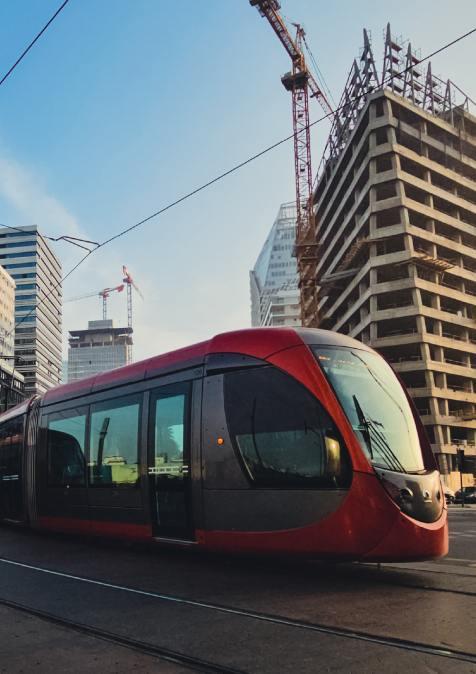
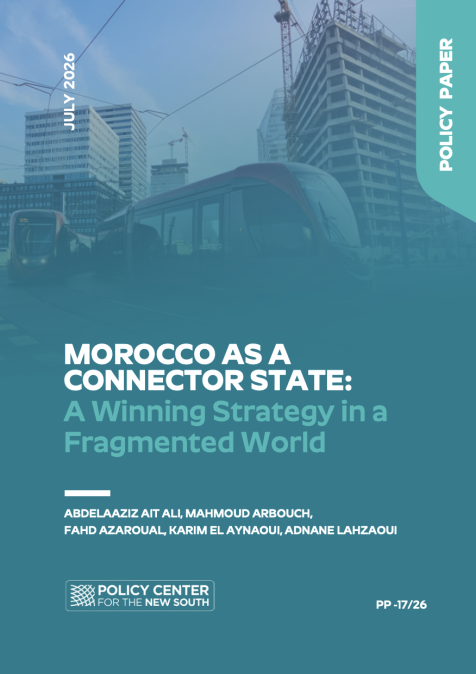
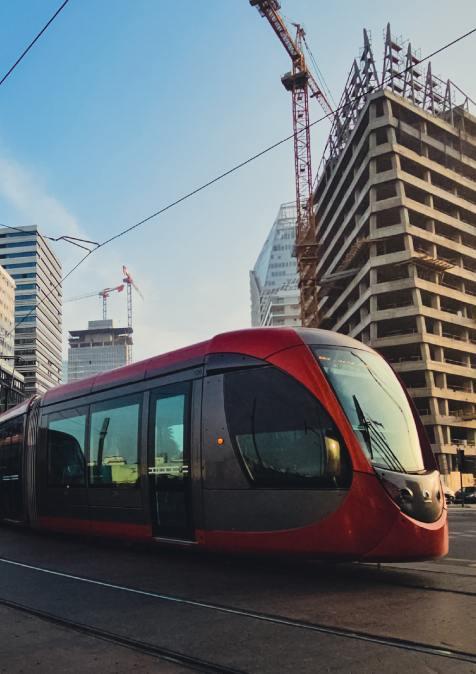
    This Policy Paper has also been published in French and Spanish by Le Grand Continent Morocco offers a compelling example of how a middle-income economy can navigate a more fragmented global environment, characterized by weak growth and slower convergence. Since 2022, economic activity has remained relatively strong, with growth exceeding that of many comparable economies. Non-agricultural growth has averaged 4.4% since 2022, around 1.3 percentage points above its historical av ...
  • Authors
    July 2, 2026
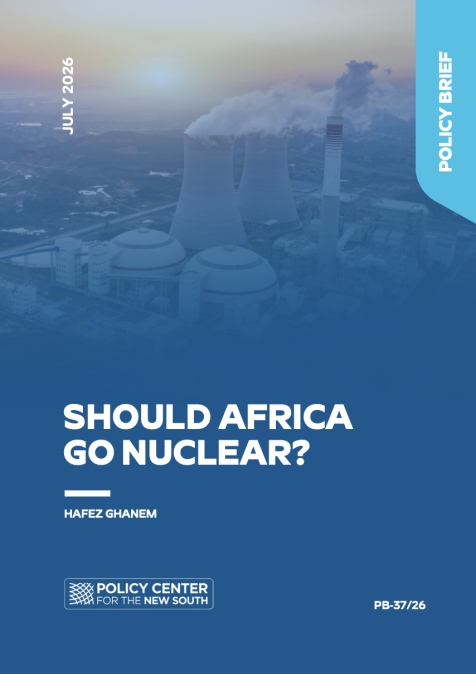
    Africa is facing a massive electricity deficit that is impacting its economic and social development, and its ability to catch up with the rest of the world. It is imperative that the continent increase its electricity production to connect the 600 million people who are currently without access and to improve the quality of service for the millions who are suffering from frequent blackouts and load-shedding. Economic development in the 21st century will crucially depend on the digi ...
  • Authors
    June 8, 2026
    The energy shock caused by the war between the United States and Israel and Iran has highlighted the need for Africa to refine more of its own crude oil. Africa is a net hydrocarbon exporter, but remains stuck in the old colonial economic model: it mostly exports raw materials and imports refined products. Africa exports about 2.6 billion barrels of crude oil every year, and imports about 1.4 billion barrels of refined products. This is a problem for two reasons. First, Africa ...
  • June 5, 2026
    Driven by its mission to reflect on and analyze the major geopolitical, economic, and societal transformations shaping the contemporary world, and with a view to contributing to knowledge-sharing and disseminating the main outcomes of its research program, the Policy Center for the New South regularly publishes collective volumes addressing issues of particular importance to Morocco, Africa, and the broader Global/New South. In this spirit, the Center has recently released two volum ...
  • May 29, 2026
    This Paper was originally published on tandfonline.com This paper examines how reductions in transportation costs reshape regional economic and environmental outcomes in Morocco. We simulate a reduction in delivered (purchasers’) costs via a transport-margin efficiency improvement – implemented as a margin-saving technical change in the transport sector – within a province-level Spatial Computable General Equilibrium (SCGE) framework. Simulating a 1% decline in transport costs, ...
  • April 30, 2026
    يشهد المغرب تحولًا سريعًا في صناعة السيارات الكهربائية، مدفوعًا باستثمارات كبيرة وطموح للانتقال من مجرد منصة تركيب إلى فاعل صناعي متكامل. وبين فرص بناء صناعة بطاريات محلية وخلق وظائف جديدة، تبرز أيضًا تحديات مرتبطة بنقل التكنولوجيا، والتشغيل، والاستدامة. في هذه الحلقة، نفكك هذا التحول و...
  • Authors
    January 23, 2026
    Introduction: COP30 as a Test of Reality, Not AmbitionCOP30 in Belém was never going to be a breakthrough. In a world marked by fiscal exhaustion, geopolitical rivalry, and eroding trust in multilateralism, expecting transformational climate cooperation bordered on denial. The choice of the Amazon as host carried symbolic weight, but symbolism does not override power, interests, or institutional capacity.The outcome of COP30 confirms a deeper truth: the global climate regime has ent ...
  • Authors
    January 13, 2026
    This policy brief was originally published on : euromesco.net This paper examines the nexus between governance structures, digital transformation, sustainability, and port service efficiency through an international comparative lens, with a specific focus on the Tanger Med–Algeciras corridor in the strait of Gibraltar. Using global best practices—from Singapore to Busan and Kaohsiung—it explores how public-private coordination, digital innovation, and green transition policies ...
  • January 2, 2026
    Ce Policy Paper analyse les enjeux politiques, économiques et opérationnels du Fonds pour les pertes et dommages, créé pour répondre aux impacts climatiques irréversibles subis par les pays les plus vulnérables. Il clarifie d’abord la notion de pertes et dommages, qui mêle effets économiques et non économiques, et souligne les défis d’attribution liés à la superposition entre chocs climatiques et fragilités structurelles. L’analyse met ensuite en lumière les tensions d’économie poli ...