Publications /
Opinion

Back
Les services peuvent-ils remplacer l'industrie manufacturière dans les économies en développement ?
April 29, 2026

Cette chronique a été initialement publiée sur le site lesechos.fr


Les économies en développement font face à un double défi : créer des emplois à grande échelle tout en soutenant la productivité. Quels types de services permettent cette convergence ? Les économistes Hinh T. Dinh et Karim El Aynaoui répondent dans la chronique du « Cercle des économistes ».

Les services peuvent-ils se substituer à l'industrie manufacturière comme moteur du développement économique ? Longtemps, la question ne se posait guère. L'industrie constituait la voie éprouvée : elle absorbait une main-d'oeuvre peu qualifiée issue de l'agriculture, stimulait la productivité et fondait les chaînes d'approvisionnement permettant à des économies entières de se transformer. Les services suivaient, comme un sous-produit de l'industrialisation.

Cette logique est aujourd'hui bousculée. L'automatisation et l'intensification de la concurrence mondiale rendent le développement tiré par l'industrie plus difficile à réaliser à grande échelle. Dans l'ensemble des économies en développement, de nombreux pays connaissent une désindustrialisation précoce, avant même d'en avoir tiré parti. « L'escalator » manufacturier s'est rétréci.
RELATED CONTENT

  • Authors
    August 5, 2026
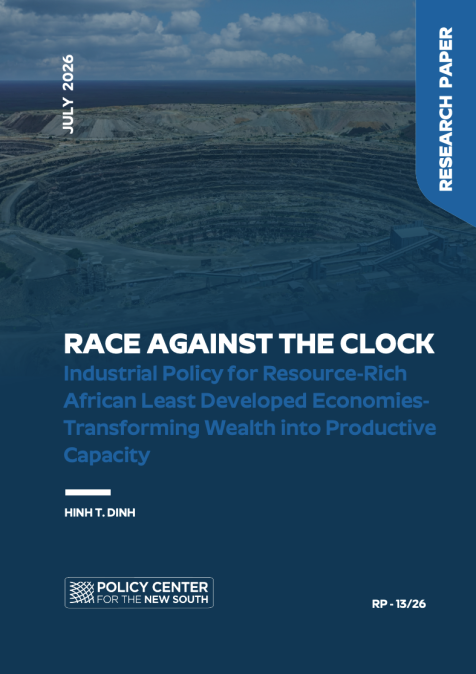
    This paper addresses the persistent challenge of resource dependence in the world's poorest countries, focusing on the ten poorest African nations where natural- resource rents average 14% of income. It argues that four decades of conventional policy advice, which treated resource dependence primarily as a revenue management problem, have failed to help these countries. While stabilization funds and permanent-income frameworks aim to smooth consumption, they do not answer the fundam ...
  • Authors
    Fatima Berahou
    July 28, 2026
    This Paper was originally published on cairn.infoL’insertion professionnelle des jeunes, et particulièrement des diplômés de l’enseignement supérieur, constitue un enjeu majeur pour le développement économique et la cohésion sociale de toute nation. Au Maroc, cette question revêt une acuité particulière et s’attache à un paradoxe persistant : malgré une démocratisation et une progression notable de l’accès à l’enseignement supérieur au cours des deux dernières décennies, le tau ...
  • Authors
    July 28, 2026
    The term “K-shaped recovery” was introduced to describe the economic recovery from the recession triggered by the Covid-19 pandemic. It refers to the uneven and divergent growth pattern between leading industries or sectors (the upper arm of the letter K—mainly the high-technology sector) and laggards, or the rest of the economy (the lower arm—the traditional industries). Since then the term has become popular in portraying divergent growth patterns within and between countries, esp ...
  • Authors
    July 13, 2026
    This paper examines the evolution of China’s services sector between 2012 and 2022, analyzing the country’s structural transformation based on a novel three-tier taxonomy: knowledge services (KS), enabling services (ES), and local services (LS). Using sixteen quantitative indicators from OECD databases, the study evaluates China’s transition in comparison to the EU15 benchmark, highlighting three core challenges: manufacturing rebalancing, labor absorption, and global integration.Th ...
  • Authors
    Edited by
    July 13, 2026
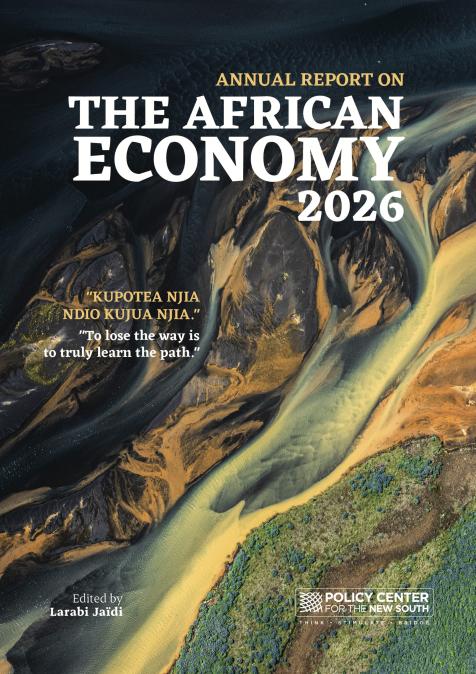
    Available soon on livremoi. The 2026 edition of the Annual Report on the African Economy examines the issue of the valorization of Africa’s natural resources, particularly its mineral wealth. While the continent holds some of the world’s largest known reserves of a wide range of minerals and metals, the objective is not merely to catalogue these resources, but rather to explore the conditions under which natural resource endowments can be transformed into drivers of Africa’s in ...
  • Authors
    July 13, 2026
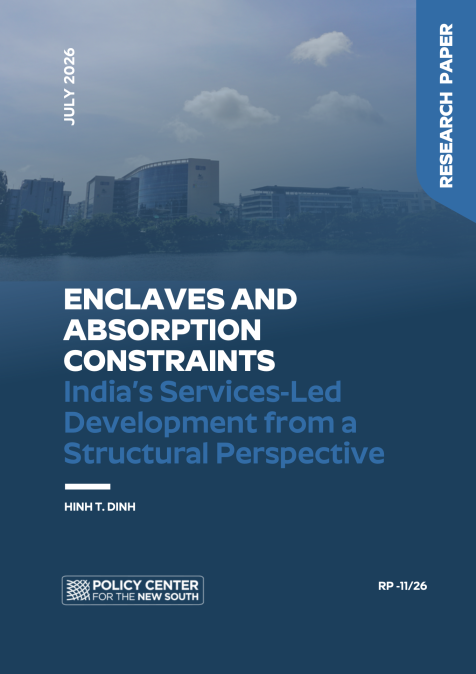
    This paper provides a structural assessment of India’s services-led development trajectory, and its integration into global value chains (GVCs) between 2012 and 2022. Applying an analytical framework that categorizes services into knowledge (KS), enabling (ES), and local (LS) sectors, the study utilizes sixteen OECD indicators to move beyond the narrative of India as a ‘services champion’ and reveal a more complex economic reality. The analysis identifies three central structur ...
  • July 3, 2026
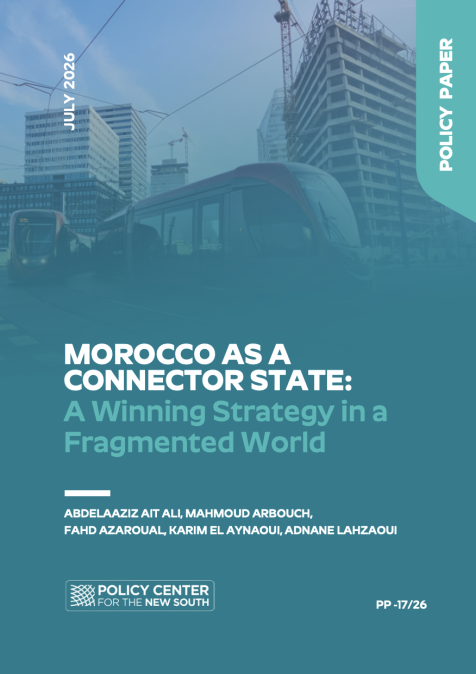
    This Policy Paper has also been published in French and Spanish by Le Grand Continent Morocco offers a compelling example of how a middle-income economy can navigate a more fragmented global environment, characterized by weak growth and slower convergence. Since 2022, economic activity has remained relatively strong, with growth exceeding that of many comparable economies. Non-agricultural growth has averaged 4.4% since 2022, around 1.3 percentage points above its historical av ...
  • July 3, 2026
    Este Policy Paper también ha sido publicado en inglés y francés por Le Grand Continent La economía marroquí constituye un caso ilustrativo entre las economías de renta media, en un contexto marcado por una creciente fragmentación del entorno internacional, un crecimiento mundial anémico y una desaceleración de la convergencia. Desde 2022, su trayectoria se caracteriza por una relativa solidez, con un crecimiento superior a la media de las economías de la misma categoría. Superi ...