
Publications /
Paper in Academic Journals
Back
Integrated Transition Toward Sustainability: The Case of the Water-Energy-Food Nexus in Morocco
March 1, 2022

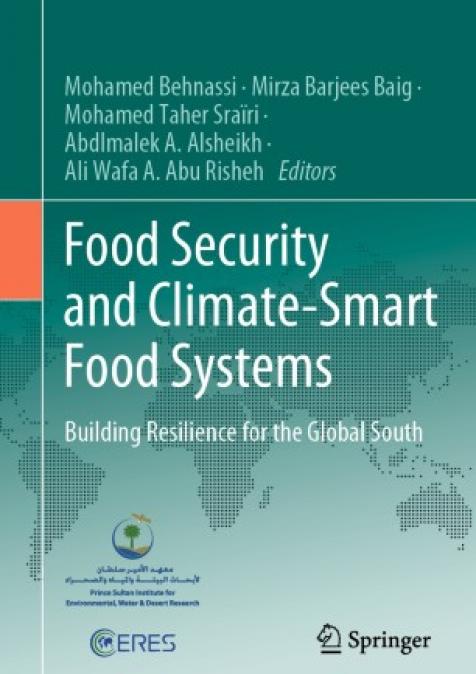
Known for being a climate change hotspot, Morocco is at the forefront of a climate disaster. Consequences are already being felt, whether in the form of increasing temperature or a downward trend in precipitations, which directly threaten the water security and, by extension, the social-ecological systems of the country. The systems by which food, energy, and water are produced, distributed, and consumed heavily depend on one another. Their implicit feedbacks and links are not linear, but are rather highly complex, and are at the intersection of numerous disciplines. It is a complicated and delicate equation of multiple inputs that guarantees certain outputs. With the current conditions of water being no longer those that prevailed during the past century, when water resources were much more abundant and much less demanded, it has now become essential to manage it carefully. This chapter first outlines the physical limitations of available resources in Morocco, and determines physical areas of intersection between the food-energy-water sectors. It also explores the existing sectoral policies and adaptation strategies employed in the three sectors in order to evaluate them and assess whether they are evolving separately or co-evolving as part of a nexus system approach. Finally, it investigates seawater desalination as a drought-proof and economic alternative that Morocco can utilize to face climate change-induced water scarcity.
RELATED CONTENT

  • Authors
    Pierre-Richard Agénor
    January 24, 2015
    The Moroccan economy is currently facing the risk of becoming caught between the rapid-growing low-income countries with abundant and cheap labor, and middle-income countries that are able to innovate quickly. In addition, China’s massive investments in Sub-Saharan Africa have accelerated the participation of some countries in the region in a new international division of labor, especially in low-skill-intensive light manufacturing. In parallel, through the structure of its trade a ...
  • From

    17
    3:00 pm November 2026
    The Oxford Handbook of the Moroccan Economy propose une analyse approfondie, structurée et rigoureuse de la trajectoire économique du Maroc de 1960 à 2025. Réunissant 53 contributeurs autour de 34 chapitres, l’ouvrage se présente comme une référence académique et analytique majeure, fondée sur l’étude des tendances de long terme, des faits stylisés, des transformations sectorielles et des principaux défis de politiques publiques qui façonnent le développement économique du Royaume.Au-delà d’une lecture centrée uniquement sur les agrégats macroéconomiques ou les indicateurs de progrès social, le Handbook interroge les ressorts profonds de la transformation structurelle de l’économie marocaine : dynamiques de productivité, diversification du tissu productif, qualité de l’emploi, ...
  • From

    10
    5:30 pm November 2026
     يناقش هذا الحوار أبرز التوجهات الاقتصادية والاجتماعية لمشروع قانون المالية لسنة 2027 في المغرب، في ظل الحاجة إلى التوفيق بين دعم النمو والاستثمار وخلق فرص الشغل، وتعزيز الحماية الاجتماعية، والحفاظ على التوازنات المالية. كما يتناول شروط فعالية المجهود الاستثماري، وسبل تمويل الأولويات الاجتماعية، والمعايير التي يمكن من خلالها تقييم أثر قانون المالية على مستوى عيش الأسر وتقليص الفوارق الاجتماعية والمجالية. ...
  • From

    16
    5:30 pm June 2026
    تتناول هذه الحلقة واقع صناعة الألعاب الإلكترونية في المغرب، في ظل الاهتمام المتزايد بهذا القطاع الواعد وما يتيحه من فرص اقتصادية وإبداعية. كما تناقش التحديات التي تواجه المطورين والمقاولات الناشئة، من حيث التكوين والتمويل والولوج إلى الأسواق، مع تسليط الضوء على الإمكانات التي يمتلكها المغرب لتعزيز حضوره في هذه الصناعة العالمية وجعلها رافعة للابتكار وخلق فرص الشغل وجذب الاستثمارات الرقمية  ...