Publications /
Policy Brief

Back
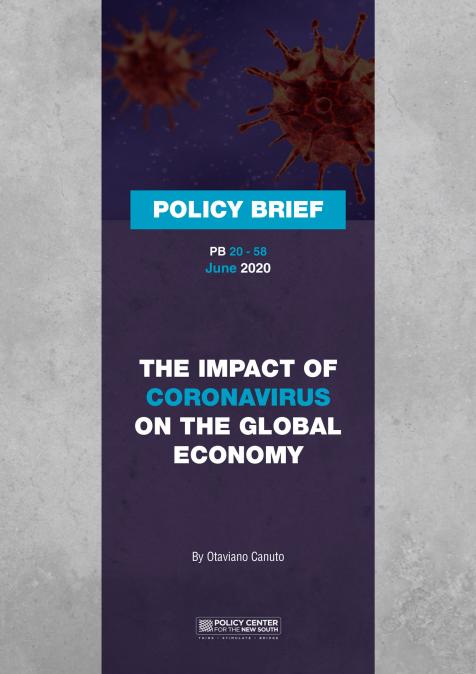
The Impact of Coronavirus on the Global Economy
Authors
June 22, 2020

COVID-19 brought the global economy to a sudden stop, causing shocks to supply and demand. Starting in January 2020, country after country suffered outbreaks of the new coronavirus, with each facing epidemiological shocks that led to economic and financial shocks as a consequence. How quickly and to what extent will national economies recover after the pandemic has passed? This will depend on success in containing the coronavirus and on exit strategies, as well as on the effectiveness of policies designed to deal with the negative economic effects of the coronavirus. The impact of coronavirus on the global economy will extend beyond 2020. According to forecasts from the International Monetary Fund and World Bank, GDP per capita at the end of 2021 is still expected to be lower than December 2019 in most countries. Emerging markets and other developing countries, in addition to facing difficulties in dealing with their own coronavirus outbreaks, have suffered additional shocks from abroad. In their cases, the new coronavirus brought a perfect storm. One can foresee a post-coronavirus global economy marked by higher levels of public and private debt, acceleration in digitization processes, and less globalization.

RELATED CONTENT

  • Authors
    Clémence Vergne
    November 19, 2015
    Au cours de la dernière décennie, le Ghana a enregistré des taux de croissance moyens supérieurs à 7 % par an, ce qui lui a permis d’accéder au statut de pays à revenu intermédiaire de la tranche inférieure. Toutefois, la croissance a récemment marqué le pas pour s’établir à 4,2 % en 2014, ce qui soulève la question de la pérennité du modèle de développement du pays. Le Ghana se trouve désormais à un stade critique de son processus de développement. Une transformation structurelle ...
  • November 5, 2015
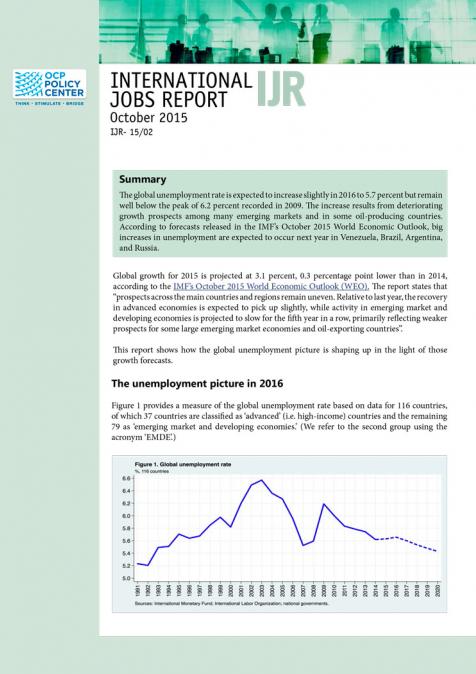
    The global unemployment rate is expected to increase slightly in 2016 to 5.7 percent but remain well below the peak of 6.2 percent recorded in 2009. The increase results from deteriorating growth prospects among many emerging markets and in some oil-producing countries. According to forecasts released in the IMF’s October 2015 World Economic Outlook, big increases in unemployment are expected to occur next year in Venezuela, Brazil, Argentina, and Russia. ...
  • Authors
    Saurabh Mishra
    September 1, 2015
    Les fonds souverains, objet de toutes les attentions au cours des années 2000, devraient voir leur rôle de « stabilisateur » de l’économie se renforcer dans les mois à venir, en raison de la chute du prix des matières premières. Ces véhicules d’investissement doivent cependant être coordonnés avec les outils traditionnels de la politique fiscale et ne peuvent affranchir les pouvoirs publics d’effectuer à plus ou moins long terme les ajustements budgétaires que ce nouvel environnemen ...
  • Authors
    July 10, 2015
    Greek Prime Minister Alexis Tsipras has already completed two notable labors. First, he led his radical left-wing Syriza party to an improbable election victory in January 2015. Then, also improbably, he won a resounding no vote in a referendum on July 5 on accepting the terms of Greece’s international creditors for a new bailout package. According to Greek mythology, there are ten more labors to go, and indeed, it will probably take that many to redeem the Greek eco ...