Publications /

Back
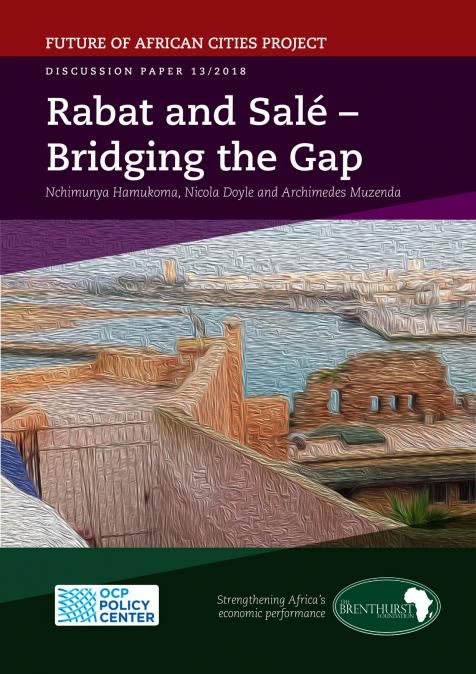
Future of African Cities Project: Rabat and Salé – Bridging the Gap
Authors
Nchimunya Hamukoma
Nicola Doyle
Archimedes Muzenda
November 29, 2018

The twin cities of Rabat and Salé on Morocco’s west coast embody prominence in Morocco’s past and present, Rabat as capital and Salé as the third most populous city. Less than 20 years ago, however, Salé was charac¬terised by large slums, high unemployment, poor service delivery and limited mobility. Today, it is a changed city, providing housing to the majority of Rabat’s working class, with a modern tram linking the two cities.

Morocco’s ‘Cities without Slums’ programme, launched in 2004, has changed the face of cities across the country. With 60 per cent of the population now living in urban areas, this heroic effort, underpinned by strong economic growth, offers lessons to other African cities facing rapid urbanisation and social unrest. In Rabat and Salé, a shift towards decentralised governance and a clear focus on encouraging private invest¬ment in infrastructure projects have also contributed to rapid improvement.

This Paper investigates the success and shortcomings of Rabat and Salé in the areas of governance, security, economic growth, housing, transportation and service delivery. The story of these cities show that while history is important, it is not deterministic, and that with a combination of consistent urban policy, strong leadership and effective public-private partnerships, it is possible to turn a city around within 20 years.
RELATED CONTENT

  • Authors
    Khalid R. Temsamani
    February 26, 2026
    La multiplication des crises systémiques à l’échelle mondiale – qu’elles soient environnementales, sanitaires, énergétiques ou liées aux enjeux de sécurité globale – impose une évolution profonde des modes d’action diplomatique. Dans ce contexte, l’intégration structurée des connaissances scientifiques dans les relations internationales apparaît comme une condition déterminante pour la formulation de réponses collectives efficaces et légitimes. La diplomatie scientifique s’inscrit a ...
  • February 26, 2026
    تتناول هذه الحلقة موضوع سياسة إعداد التراب بين الطموحات والإكراهات من خلال تفكيك المفاهيم الأساسية المرتبطة بالمجال، من قبيل إعداد التراب، التنمية المستدامة، والتخطيط الاستراتيجي الترابي، قبل التوقف عند الخصائص البنيوية للتراب المغربي من حيث المساحة، الدينامية الديمغرافية، التمركز الحضر...
  • Authors
    February 24, 2026
    Mois sacré, quatrième pilier de l’islam, le Ramadan commémore la révélation du Coran au Prophète. Ce mois est marqué par des pratiques complémentaires : une intensification de la prière (notamment les tarawih), la récitation  complète du Coran, le renforcement de la charité envers les plus démunis et une dimension communautaire forte. Le jeûne n’est pas uniquement en termes de nourriture, un renoncement obligatoire du lever au coucher du soleil, mais une période propice à la pu ...
  • January 5, 2026
    This Paper was originally published on sciencedirect.com This study provides an original and significant contribution to evaluating educational service quality in Morocco by leveraging, for the first time, microdata from the Service Delivery Indicators (SDI) survey. The survey covers a nationally representative sample of 300 public and private primary schools across rural and urban areas. The use of SDI data represents a major methodological advancement, shifting away from perc ...
  • Authors
    Ahmed Ouhnini
    December 5, 2025
    L’« uberisation », terme né du nom de l’entreprise américaine Uber au début des années 2010, désigne initialement un modèle économique fondé sur la mise en relation directe entre offre et demande via des plateformes numériques. Rapidement popularisé, le concept s’est élargi, avec Airbnb dans l’hébergement, puis à une multitude d’autres secteurs : livraison de repas, services à domicile, commerce en ligne, voire des métiers traditionnellement régulés ou corporatistes. Ce néologisme t ...
  • Authors
    December 2, 2025
    This paper assesses the economic and environmental implications of Morocco’s strategic transition from internal combustion engine vehicle (ICEV) manufacturing to electric vehicle (EV) production, with a particular focus on the regional impacts of localizing high-value battery manufacturing. Using an interregional input-output model, extended with environmental satellite accounts, the study simulates a structural shock related to the wholesale substitution of ICEV-specific inputs wit ...
  • November 05, 2025
    Cet épisode revient sur la trajectoire politique et économique de l’Algérie depuis le mouvement du Hirak en 2019. Il analyse la consolidation du pouvoir militaire, les limites de la trans ...
  • October 21, 2025
    في ظل النقاش حول إعداد مشروع قانون يؤطر تطوير واستخدام الذكاء الاصطناعي في المغرب، تناقش هذه الحلقة مدى حاجة البلاد إلى إطار قانوني خاص ينظم هذا المجال سريع التطور، والتحدي المتمثل في تحقيق التوازن بين التشريع والابتكار. كما تتناول المبادئ التي ينبغي أن يقوم عليها المشروع لضمان مساهمته ...
  • October 14, 2025
    تشهد المستشفيات العمومية في المغرب أزمة حادة تؤثر على جودة الخدمات الصحية بسبب نقص الموارد البشرية وضعف البنية التحتية، ما يزيد الفجوة مع المراكز الخاصة. تتناول الحلقة أسباب الأزمة، آثارها على المرضى، مع التركيز على الحلول الممكنة لضمان مستشفى عمومي فعال وعادل لجميع المواطنين ...