Publications /
Policy Paper

Back
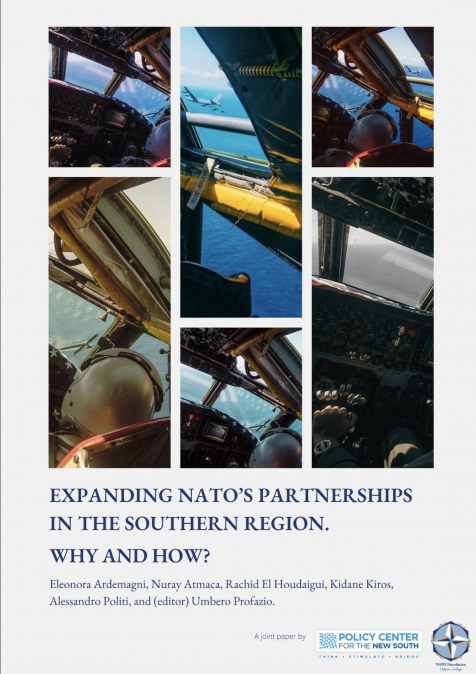
Expanding NATO’s Partnerships in the Southern Region. Why and How?
October 18, 2021

In the last few months, the global order has been going through some fundamental changes which are affecting the competition between the great powers and have a direct impact on their relations with regional partners. Emerging challenges such as the climate change, cyberwarfare and artificial intelligence, hybrid warfare and non-state actors are shaping a new world that is profoundly different compared to the post-9/11 era, where the war on terrorism opened the gates to what have been successfully described as ‘forever wars’, which have forced the US and its allies to be engaged in the greater Middle East indefinitely.
RELATED CONTENT

  • Authors
    Kassim Bouhou
    September 17, 2010
    Before the 9/11 events, US-Maghreb relations were growing stronger, especially after the United States had long left the floor to the Maghreb’s “natural” European partner. Therefore the American action in this region was in line with a mechanism previously set off by Clinton Administration member, Stuart Eizenstat, which aimed at reducing intra regional obstacles and stimulating American investments towards an area where Americans were little-represented. Hence Washington seemed mor ...
  • Authors
    Radhi Meddeb
    September 17, 2010
    The Gulf Cooperation Council (GCC) is a regional organization which was created in 1981, reassembling six Arab countries together: Saudi Arabia, Kuwait, Bahrain, Oman, Qatar, and the United Arab Emirates (UAE). Thanks to their oil income, GCC countries have enjoyed economic boom since 2002, hence breaking with the 1990s economic slow-down. The year 2002 corresponds to the oil prices’ entry in an upward spiral which has resulted in an increase of both income and foreign assets. This ...