Publications /
Opinion
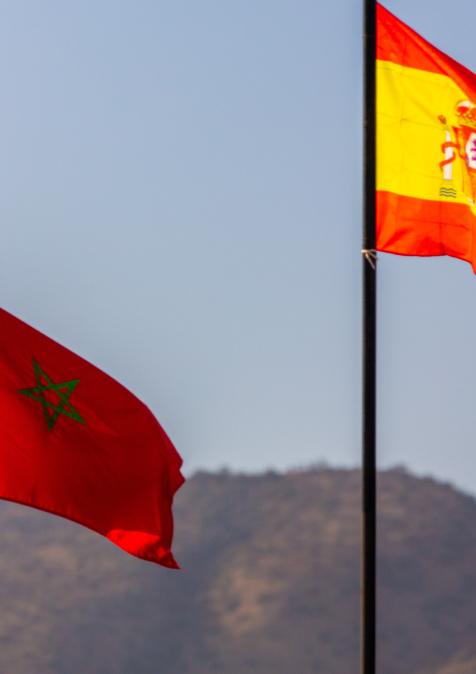
The Resolution adopted by an overwhelming majority of elected European officials in Strasbourg on June 10, 2021, on "the violation of the UN Convention on the Rights of the Child and the exploitation of minors by the authorities in the migration crisis in Ceuta" (2021/2747/RSP), could not fail to leave its mark.
Decoding the Resolution
The Resolution shocked Moroccans to such an extent that it was quickly set aside at the time, as if there were a wish to forget it as fast as possible. There were indeed a few vocal reactions, but ultimately there were few reflective responses that were duly recorded and published. However, over the course of summer 2022, as things had more or less returned to normal, the Resolution and what it signifies—the questions and challenges it posed to us—eventually resurfaced.
The circumstances surrounding the drafting and adoption of this Resolution, its content, its tone, and its meaning could not be so simply relegated to oblivion, nor could they clearly be concealed, especially after the violent assaults launched since then against the border fences of Melilla on July 23, 2022, by sub-Saharan migration candidates seeking to reach Europe—a major event in the chronicle of migration affairs. These events revived bad memories of previous, more or less bloody attempts, particularly the events of May 2021, during the Moroccan-Spanish crisis.
To this must be added the contradictory statements and decisions of the European Union's High Representative for Foreign Affairs and Security Policy, the Spaniard Josep Borrell, as well as the impact of unprecedented electoral campaigns marked by the high degree of intolerance in their speeches, platforms, debates, and interviews (local, legislative, and presidential elections) across Europe; the rise and consolidation of far-right parties in several countries of the Old Continent; the ideological disorder generated by the desire for renewal on the part of certain left-wing movements; and the ambient populism that has become commonplace in these times and that seems to spare no country.
Thus arose the need to revisit this widely consumed position of the European Union, to decode it, and to explore ways of moving beyond it.
According to the European narrative, in May 2021, some 9,000 people entered the city of Ceuta. According to several accounts, most of them were apparently Moroccan. According to other information, it was not only the presidio: similar events were reportedly recorded along the country's entire southern Atlantic coast. Moroccan authorities allegedly "relaxed" border controls, opened the barriers, and neglected to take measures to stop illegal entries. The flow appeared spontaneous; 1,200 of the 9,000 were unaccompanied minors. Among them were numerous families, entire families, and undocumented children.
The European Parliament's Resolution holds that the massive migratory flow was triggered by Morocco in connection with a bilateral political and diplomatic crisis unrelated to the migration issue, and also because of Spain's position on the Sahara, which Morocco deemed ambiguous.
A pivotal event
These elements, many of which were reported by the European narrative, fully echo the Spanish version: the text is unstinting in its praise of Spanish conduct, which it regards as civilized. The Spanish armed and security forces allegedly carried out humanitarian interventions, the Resolution emphasizes. Conversely, this same Resolution directly incriminates Morocco for misconduct with respect to relations with a European country, and with respect to international law and morality. According to this Resolution, children's rights were deliberately trampled by the Kingdom, which allegedly engaged in the political instrumentalization of children in its conflict with its northern neighbor.
The overall tone is accusatory, aggressive, inquisitorial, and often borders on a certain political vulgarity. The European Parliament's Resolution is genuinely at odds with, if not opposed to, the long, laboriously built and long-followed course of Moroccan-European relations.
In any case, the Resolution appears as a moment of truth for Moroccan-European relations, beyond the diplomatic turns of phrase it occasionally slips in.
The European MPs' Resolution against Morocco came down on June 9, 2021, constituting for a great many Moroccans a humiliation—a violent rupture in the long, cumulative history of perceptions, practices, and interactions that seemed to bring the interests of the two parties closer together, even to intertwine them.
The Resolution marks a break from a series of cycles in which Moroccans watched with admiration the building of Europe in its dynamics of regional integration, its ever-open institutionalization, its economic achievements, its enlargements, its cooperative ventures, and its general approach toward societies of the South.
The watchwords of doing things like and with Europe represented a serious and credible opportunity to achieve progress on the political, economic, and cultural fronts. Did we expect too much of this Europe? This cult of Europe, as a sense of historical direction, has permeated—and continues to permeate—broad categories of Moroccan intellectuals across various fields. It seemed to them that Europe was very close to them, even though they were keenly aware they were not part of it. It represented their future, their destiny.
And indeed, for decades, many elements of national life have been organized, even structured, around relations with Europe, in the fields of agriculture, the economy, trade, institutions, law, and in many areas of culture and communication. For their part, Europeans generally seemed to develop a rather positive image of the Kingdom and its approach, as attested by a substantial body of studies and reports.
Without retracing here the detailed history of Moroccan-European relations through a constantly changing context—enlargements, openings, closings, the setting of priorities, the renewal of commitments—the strategic option of strengthening relations with Europe seemed to nourish both national political life and individual concerns. It constituted one of the most significant subjects of Moroccan public life. Nor were reference points lacking: the impressive body of agreements (the EU-Morocco Agreement, a variety of accompanying conventions, notably those relating specifically to emigration...), the privileged statuses, the Advanced Status, the institutional meetings, the annual action programs (such as the European Neighbourhood Instrument and the Global Europe program)…
The pretext of childhood
Against this impressive accumulation, the Resolution represents an exceedingly harsh stopping point:
- European parliamentarians denounce what they call the use of border and migration controls as a means of political pressure on an EU member state. They deplore the massive crossing of the border and describe what happened as an unjustifiable incident, contrary to the spirit of long-established cooperation and the relationship of trust between the two parties, particularly in the field of migration. The Resolution calls on Morocco to honor its commitment to enhanced cooperation on border management and migratory mobility in a spirit of goodwill and dialogue. The language recalls attitudes recently adopted by many European politicians toward Turkey at the time of the Syrian and other migration flows;
- furthermore, Morocco is accused of violating the UN Convention on the Rights of the Child and of having instrumentalized minors in the May 2021 migration crisis in Ceuta. It allegedly deliberately disregarded the notion of the best interests of the child. The Resolution does not fail to refer to the additional risk this type of situation poses to the physical, moral, spiritual, and social development of children.
The Resolution devotes a prominent place to this alleged use of children. It recalls the relevant body of law: the agreement between Spain and Morocco on cooperation in preventing the illegal emigration of unaccompanied minors, their protection, and their coordinated return (March 2007). Morocco has of course been a signatory since 1990 and duly ratified it in 1993.
This thesis of the Kingdom's instrumentalization of children is oddly counterbalanced within the very text by a strange assertion from the European parliamentarians: the children's arrival took the form of a school outing to Ceuta, on the pretext that a football match featuring famous players was to be held there. Despite this element, the Resolution nonetheless maintains the accusation of instrumentalization.
In reality, although much remains to be done, Morocco's commitment to children's rights is far from insignificant, given its observatories, the conventions signed and ratified, the laws drafted, the Children's Parliament, the number and nature of the conferences organized, numerous initiatives aimed at protecting and promoting childhood, and the variety of public policies involved…. It is curious how highly visible unaccompanied minors are in Europe: in Paris, for example, they rank twelfth in the statistics but are considered among the most dangerous.
The bulk of the effort is more or less driven by initiatives from Moroccan civil society or the Moroccan state: child labor, sexual exploitation of children, their legal protection, the fight against exclusion or poverty, the care of street children, violence against children…
Assessments show that, with regard to children's conditions, public policy on childhood has suffered, among other things, from the lack of a territorial branch structure within the relevant department (the Ministry of Solidarity…), and consequently from a lack of coordination among the public policies at work in this area.
Praise for Europe, accusations for the Kingdom
The Resolution highlights the highly humanistic (highly civilized) dimensions of Spanish and European conduct, particularly commending the interventions of the Spanish armed and security forces to prevent an actual tragedy. Spanish authorities reportedly set up a hotline to bring back children and unaccompanied minors. Many children were placed in the Tarajal warehouse and the migrant reception centers of Liniers, Ceuta, and Melilla. The Resolution also reports that, according to the International Organization for Migration (IOM), many of them were repatriated through family reunification and family-tracing mechanisms. The text does, however, note that Moroccan authorities decided to facilitate the readmission of all unaccompanied but identified children found illegally on the territory of the presidios. It also notes the directives given by the sovereign to repatriate unaccompanied Moroccan children found in EU member states.
Despite this, and for purposes of political rhetoric, and no doubt to tarnish the Kingdom's image, the Resolution dwells at length on the issue of exploited childhood. While it is unstinting in its praise for Spanish conduct—civilized, humane, generous in the highest degree—it incriminates Morocco for misconduct on political, legal, and moral grounds. The intent to inflict harm, to strike at the sensitive parts of the Moroccan body politic, is clear at a particularly fragile moment.
Let us note in passing that EU institutions have reacted very little in the past to the ideological and military indoctrination of children in the Tindouf camps. But that is not the main subject of this text.
- Beyond what relates to the May 2021 Ceuta crisis, the Resolution obsessively takes up other matters as well. It brazenly demands that Moroccan authorities, as one might demand of an unruly, ill-intentioned, and stubbornly wayward youngster, facilitate the return, in the coming weeks, of nearly 13,000 seasonal workers stranded in southern Spain…
- Faced with unprecedented political and diplomatic tensions between Morocco, Spain, and the European Union, the Resolution recalls the unreserved support given to Spain by European institutions: the Foreign Affairs Council of May 18, 2021, and the European Council of May 24–25, 2021. It likewise expresses solidarity with the Spanish army and security forces and with the residents of the Ceuta presidio.
It affirms the inviolability of national borders and regards respect for territorial integrity as essential. Departing notably from its earlier caution, it asserts that Spain's borders form part of the external borders of the European Union. Thus the occupied territories (Ceuta, Melilla, and other Moroccan territories, ellipsis) would fall under the territorial sovereignty of the Spanish state, an EU member state. For the European parliamentarians, nothing could be simpler.
The Strasbourg parliamentarians also presume to lecture the Kingdom on international law, portraying it as a deviant state. The Resolution calls on Morocco to respect international law, UN Security Council resolutions, and the UN political process, as though it were violating this body of law.
The use of border and migration controls, the instrumentalization of childhood, and actions and reactions bordering on the limits of law and morality constitute the heavy indictment leveled against Morocco—an indictment that seemingly disregards sixty years of extensive relations. Entire passages nonetheless remain conciliatory, encouraging negotiation and compromise. Indeed, despite all its highly Eurocentric, unilateral, biased accusations—bordering on discrimination in the name of civilization—the European parliamentarians express the hope that the crisis will not harm the "strategic," "multidimensional and privileged neighborly relations" between Morocco and the European Union and its members, nor the long-standing cooperation built on trust in the fields of counterterrorism, human trafficking, drugs, illegal migration, and trade policy. They wish to see tensions ease and a return to a constructive and reliable partnership between the Union and Morocco. Is Morocco not a privileged partner of the European Union in political, economic, technical, and development cooperation?
In their view, Moroccan-European relations must be preserved and return to what they were before the crisis, so as to help foster mutually beneficial relations by implementing the new Mediterranean agenda recently presented as part of a renewed partnership with the Southern Neighbourhood, under which Morocco is invited to deepen its partnership with the European Union in various fields.
European MPs go further still, proposing to address the root causes of illegal migration by strengthening economic development and investment, creating new job opportunities, and promoting quality education for all children in the region south of the Mediterranean.
It is well known that the European Parliament is not a decision-making body, that its functions are above all tribunicial in nature, and that the actual decision-making process lies elsewhere. Yet, suddenly and brutally, its "resolution" reveals that the supposed Moroccan-European intimacy, which many analysts perceived as real and closely woven, has effectively broken down, if not evaporated entirely. Gone was the image of a gentle, moderate, tolerant Kingdom, seen only yesterday as a friendly and close country, appreciated for its reforms, a good student in carrying out its reforms, a state that could belong to the ranks of the world's most civilized nations. Under the pen of the European MPs, distrust, hostility, and animosity have risen by several degrees. The Resolution establishes distance from the Kingdom by emphasizing what it perceives as indecent, lawless, and inhuman conduct. It does not hesitate, on this occasion, to nearly cast it as a kind of rogue state.
Reinvigorating the multilateralist option
Based on the foregoing, a few directions might guide the management of the period ahead:
1. Maintaining ordinary relations with Europe. As good a relationship as possible with Europe must be pursued, given all that has been accumulated thus far—but without the fervor that once animated it, with less utopia, less sentiment, less idealism. The development of bilateral relations with the various European states must also continue under conditions as favorable as possible;
2. Rejecting the new European paternalism. The tone adopted in the Resolution is haughty, insolent, condescending, ostentatiously authoritarian, self-appointed as a repository of morality and a holder of truth, and contemptuous. The old European paternalism, reminiscent of the height of colonialism, seems to be back in new clothing, with new terminology and a new rhetoric. It should be rejected;
3. Taking into account the moral decline of the Old Continent. The political partiality (or the very limited politics) evident in the text toward a committed partner such as Morocco hardly matches the idea that many partner and associated states, neighbors, and others held of the Old Continent's moral standing and that of its institutions. Europe's abandonment of its normative role is blatant here. This struck Moroccans hardest on the days the Resolution was voted, and it can only be rejected—along with Europe's partial and unjust alignment with the positions of its own member state, at the expense of a loyal partner. This moral decline is now an essential factor to be taken into account in future dealings with this regional grouping, which is now indistinguishable from any other partnership;
4. The need for an effective multilateralist option. Beyond an approach in which one-on-one dealings with Europe have occupied too central a place—having dominated the country's international relations for too long—a genuine multilateralist option is more necessary than ever. This multilateralist option cannot be reduced to mere statements of intent. The multiplication of strategic partnerships must take on real substance, to the point of ensuring the country is no longer dependent on one or several powers. Nor can it be limited to symbolic invocation or an embryonic approach. The option cannot remain timid, discursive, piecemeal, fragmentary, unfinished, and discontinuous. It must become substantial, strong, broad, proactive, and driven by deep underlying forces;
5. Moving beyond national universalism. The European approaches to the values invoked on the occasion of this affair (as in others) in fact deny any true universality. Europeans act as though they were elevating their own national values—and above all their own interests—into supposedly universal values to which the rest of humanity would have no choice but to conform. It is important no longer to accept that Europe alone should set, in the name of the common interest and the universality of its values, the agenda and rules for all action in the rest of the world. The societies of the South, including Moroccan society itself, must undertake a genuine appropriation of universally applicable values, whatever they may be, and move beyond the various forms of provincialism that, as the current actors of this regional grouping are doing, attempt to seize hold of them.