Publications /
Opinion
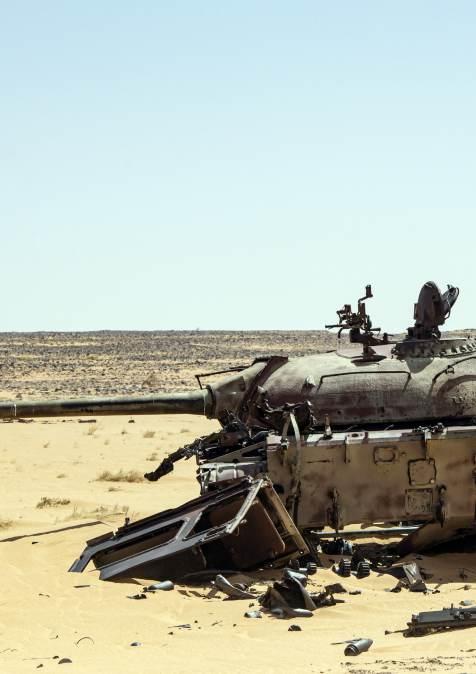
The security landscape in the Sahel region has undergone significant changes in recent years. From the emergence of Russia as an actor in the region to the persistent issue of trafficking, and the challenges of political transitions in countries including Chad and Sudan, the Sahel faces complex and interconnected security challenges. This insight summarizes our biannual Strategic Dialogues, focusing on the new security landscape in the Sahel, its regional developments, and its implications for international actors. With a particular focus on Western countries, Russia, and Africa, the presentations during this 14th edition of the Strategic Dialogues shed light on the dynamics and competition for security influence in the Sahel, emphasizing the need for a comprehensive and objective approach.
The Russian Factor in the Sahel
Russia and European countries are aware of the geostrategic importance of the Sahel region. Their competition to strengthen their positions in the international system through investment, and strategic positioning close to influential areas such as Libya and the Eastern Mediterranean, and waterways like the Red Sea, along with their concern for crucial regional issues including terrorism and irregular migration, amplify the geopolitical competition in the Sahel between international actors in the Sahel.
In this context, the security variable constitutes a fundamental basis for Russian policy in its attempts to exert influence in the Sahel. Similar to its role in Libya, Eastern Ukraine, and Syria, Moscow has signed numerous security and military cooperation agreements as the basis for sales of Russian arms to Sahel countries, including the Central African Republic, Mali, Burkina Faso, and Niger. Additionally, the Wagner Group's role has been strengthened in several countries in the region, including the Central African Republic, Libya, and Mali.
Understanding the increasing importance of Russia in both European and African strategies is crucial to grasp its role in the Sahel. Africa's diplomatic narrative emphasizes self-assertion at both continental and national levels, pragmatic foreign policies, and a mix of cooperation and rivalry in pursuing security interests. Russia's role as a ‘spoiler’ in the region jeopardizes the efforts of European countries and the United States along the southern shore, and undermines stability in the area. Given their concerns about the war in Ukraine, European nations should monitor Russian involvement in the Sahel closely.
Russia's comprehensive approach in the Sahel covers a range of activities, including provision of security services, political ‘advice’, media campaigns, disinformation, and arms sales. In return, entities such as the Wagner Group gain political influence and a gateway to exploit the region's rich natural resources. The utilization of private military companies (PMCs) like Wagner by Russia to advance its geopolitical objectives is not a new phenomenon. These PMCs offer a cost-effective means for countries to exert influence, while denying direct involvement. It is important to note, however, that Wagner does not possess its own ideology and primarily operates for profit.
The Many Security Actors: Implications and Challenges
The challenges in the Sahel are complex and multifaceted, including controversial colonial legacies, persistent economic instability, extreme poverty, climate change, drought, desertification, population growth without adequate educational prospects, youth unemployment, political and social fragility, and growing terrorist threats. This unfortunate combination can be described as a ‘perfect storm’ in which insecurity and poverty reinforce each other.
The instability in the Sahel has far-reaching implications for various stakeholders. The region is strategically significant for Europe and North Africa because of the migration routes passing through countries like Niger to Libya. The security risks in the Sahel have the potential to create a domino effect, undermining the credibility of international actors and their influence in Africa. The presence of multiple actors, including governments, armed groups, and international organizations, further complicates the security landscape.
While instability has been a recurring theme in the Sahel and West Africa, violent events have become more frequent and intense in recent years. The underlying dynamics have become more complex. Regional cooperation, trade, and free movement are taking place in a more precarious and unstable context, requiring policymakers to adapt. Accurate information is needed to better understand these unstable dynamics and their geographical dimensions, particularly how decisions made at different levels of governance can impact events locally, nationally, and regionally.
The Sahel region is characterized by a multitude of supranational security actors, including international organizations like the United Nations (UN), the African Union (AU), the Economic Community of West African States (ECOWAS), and the G5 Sahel, plus regional bodies including the Liptako-Gourma Authority, the CEN-SAD, and the Sahel Drought Combat Council. Foreign actors such as France and the European Union, or collective operations and taskforces such as Barkhane and Takuba, also contribute to the shifting security landscape. The coexistence of these actors creates a complex environment that demands enhanced coordination and cooperation between them.
Several international initiatives have been launched to stabilize the situation. Some focus on the military dimension of counterterrorism, while others concentrate on the relationship between security and development. However, in the absence of coordinated institutions, the nexus between security and development needs to be re-evaluated. In fact, the application of an integrated approach to enhance governance potential is not supported consistently with sufficient resources and political commitment. This limitation in the regionalization process can also be attributed to an inclination towards ad-hoc solutions and short-term planning, especially during times of crisis, and to the challenges encountered in implementing a comprehensive integrated approach.
Recommendations
Years of military and financial assistance have been unable to eliminate the underlying causes of conflict in the Sahel. International action in relation to this has intensified, but the situation continues to deteriorate. One of the major issues that persists, if not the main issue, is the proliferation of overlapping initiatives that overwhelm the state structures intended to benefit from them. The lack of coordination between actors hampers the fight against terrorism and complicates the elimination of its root causes in this part of the world. Therefore, it is essential to undertake in-depth consultations with Sahelian countries to facilitate the coordination of actions by international actors, ensuring that peacekeeping efforts yield results.
To address the security challenges in the Sahel effectively, the following recommendations were proposed during this 14th edition of the Strategic Dialogues:
- Strengthen regional cooperation: Encourage closer collaboration and information-sharing between regional organizations including the G5 Sahel, ECOWAS, and the AU. By working together, these organizations can collectively address security challenges and promote stability in the region.
- Engage with Russia constructively: Develop a comprehensive approach towards Russia's presence in the Sahel. This approach should involve constructive dialogue, diplomatic engagement, and monitoring of Russia's activities to safeguard regional stability and counterbalance any potential negative impacts.
- Enhance support for governance and development: Emphasize long-term strategies that focus on addressing the root causes of instability in the Sahel, including governance deficits, poverty, and socio-economic disparities. By prioritizing governance reforms and sustainable development, the region can build resilience and reduce the drivers of conflict.
- Promote dialogue and inclusivity: Encourage inclusive political processes that involve all relevant stakeholders, including governments, armed groups, and local communities. Facilitating peaceful resolution of conflicts and building sustainable peace requires the active participation and representation of all those affected by the security challenges in the Sahel.