Publications /
Opinion

Back
The Case of Rabat as a Sustainable City 
November 20, 2024

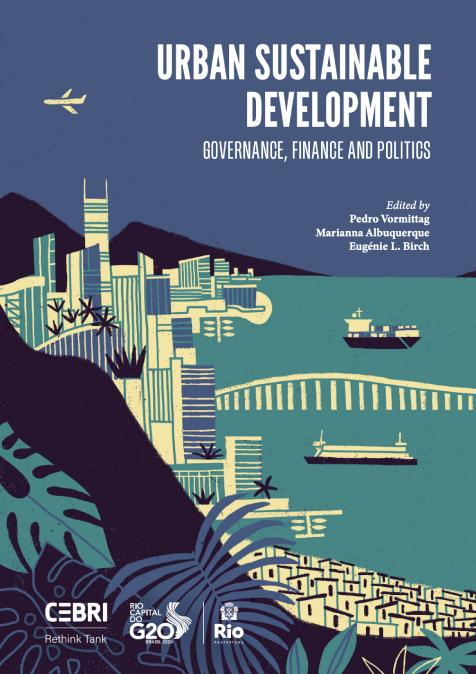
This blog was originally published in the book Urban Sustainable Development: Governance, Finance, and Politics, a collaborative effort by the Brazilian Center for International Relations (CEBRI) and the Rio de Janeiro City Hall. The Policy Center for the New South has contributed as a Knowledge Partner to this work.


I belong to a city that has been evolving positively for 20 years. Rabat has one of the world’s highest rates of green space per square meter per capita. This focus on sustainability is linked to the city’s heritage and geographical position. A forest surrounds the city, the world’s largest natural cork oak forest, which is a significant asset.

Greening cities through urban green spaces is critical, and Rabat has one of the world’s highest rates of green spaces. This has been a long tradition since the early 20th century, but it has been strengthened recently, especially with the “Rabat, City of Light, Cultural Capital” vision. Here in Rabat, there is a dialectical link between interest in history, culture, and the environment.

The environment concerns both the past and the future. Still, if we connect it to culture and root it, it gives a kind of essential legitimacy to any pro-environmental policy.

Rabat has an environmental and historical dimension, and as a capital, it promotes partnerships with other cities. Since its designation as a United Nations Educational, Scientific and Cultural Organization (UNESCO) Heritage Site in 2012, Rabat has had a dual obligation: to safeguard its cultural heritage—Roman, Almohad, Marinid, and Alawite—and to preserve its space. Rabat has always tried to create a dialogue between the heritage of the past and the spatial determinants between geography and history.

In the Moroccan context, like other cities in developing economies, the big issue is that cities lack financial resources. Therefore, the state needs to transfer financial resources to cities. Still, it is also important to have tax reforms that provide local authorities with the resources they currently lack to introduce the sustainability factor. There needs to be mediation between state financing and city financing; otherwise, cities will remain in a state of dependence, waiting for state support for their budgetary policies.

The first challenge is that poor and developing countries do not have the means to adapt to the risks of climate change. Therefore, developed countries must transfer resources to developing countries to help them participate in the sustainability of the economy, especially since these countries are not responsible for pollution or environmental degradation. There has been an international commitment on this issue since 2015.

Additionally, the issue of slums is crucial. In a city like ours, there are two types of pollution: pollution from development (industrialization, transport, etc.) and pollution from poverty, which comes from slums and marginalized neighborhoods. Addressing sustainability means tackling both types of pollution.


RELATED CONTENT

  • June 15, 2026
    Cette interview revient sur le rôle structurant des infrastructures portuaires dans l’industrialisation du Maroc, à travers l’exemple de Tanger Med. Elle souligne aussi l’importance de la digitalisation, de la formation et de la connexion des régions intérieures pour renforcer la compét...
  • Authors
    Karim El Mokri
    Idriss El Abbassi
    June 8, 2026
    Le monde du travail est engagé dans un processus de mutation sans précédent. La quatrième révolution industrielle, portée par l’intelligence artificielle (IA) et la robotisation, a été le point de commencement d’une ère nouvelle où les repères économiques et sociaux se redéfinissent à une vitesse inédite. Ces technologies suscitent un engouement légitime et offrent des perspectives prometteuses, mais requièrent une vigilance accrue face aux incertitudes qui les entourent.Bien que, à ...
  • June 5, 2026
    Driven by its mission to reflect on and analyze the major geopolitical, economic, and societal transformations shaping the contemporary world, and with a view to contributing to knowledge-sharing and disseminating the main outcomes of its research program, the Policy Center for the New South regularly publishes collective volumes addressing issues of particular importance to Morocco, Africa, and the broader Global/New South. In this spirit, the Center has recently released two volum ...
  • June 3, 2026
    تقدّم هذه الحلقة قراءة حليلية لتطور السياسة النقدية في المغرب في سياق دولي يتسم بارتفاع معدلات التضخم وتزايد التقلبات الاقتصادية والجيوسياسية. وتهدف إلى تسليط الضوء على دور بنك المغرب في إدارة التوازنات الاقتصادية الكبرى، من خلال أدواته النقدية الرامية إلى كبح التضخم، ودعم النمو الاقتصا...
  • May 20, 2026
    La participation des femmes au marché du travail au Maroc demeure l'un des défis les plus structurels du développement économique et social du pays. Avec un taux d'activité féminin de seulement 19 % en 2023, contre 69 % pour les hommes (HCP, 2024), le Maroc présente l'un des écarts de genre les plus prononcés parmi les économies en développement (Banque mondiale, 2024). Ce Research Paper propose une analyse économétrique rigoureuse et multiniveaux des déterminants de cette participa ...
  • May 20, 2026
    تتناول هذه الحلقة واقع المنظومة المينائية في المغرب ودورها الاستراتيجي في تعزيز مكانة المملكة كفاعل رئيسي في الاقتصاد الأزرق على مستوى أفريقيا. وتسلط الضوء على تطور البنيات التحتية المينائية، خاصة مع مشاريع كبرى مثل ميناء طنجة المتوسط، التي تساهم في تعزيز الربط التجاري واللوجستي بين أفر...
  • Authors
    Eugène Berg
    May 19, 2026
    L’Organisation pour la coopération et le développement économiques (OCDE), forte de 38 membres, a longtemps fait figure d’Organisation regroupant les « démocraties industrielles développées ». Cette image n’est plus vraie, du fait de l’adhésion en son sein de pays, qualifiés jadis en développement, et que l’on considère souvent comme faisant partie du « Sud global ». C’est ainsi que l’ont intégrée : le Mexique (1994), qui lui a donné un Secrétaire général, Angel Gurria, la Corée du ...
  • Authors
    May 15, 2026
    This paper is the third in a series of country and comparative studies that together comprise a research program on services as drivers of economic growth and structural transformation in the Global South. The paper analyzes the pattern of Tunisia's services-led economic growth from 2012- 2022 using a specialized three-category framework: knowledge services (KS), enabling services (ES), and local services (LS). Using data from the OECD Trade in Value Added (TiVA), Trade in Employmen ...
  • Authors
    Hajar Kabbach
    May 11, 2026
    Closing Morocco's gender employment gap could increase GDP per capita by 40-50 percent; yet female labor force participation stands at just 19 percent—among the lowest in the world and still declining. This policy paper argues that investing in the care economy is not merely a social expenditure, but a productive economic strategy with measurable returns. Drawing on international evidence from Uruguay, Mexico, Colombia, and India, the brief demonstrates that well-designed care syste ...