Publications /
Opinion

Back
The Case of Rabat as a Sustainable City 
November 20, 2024

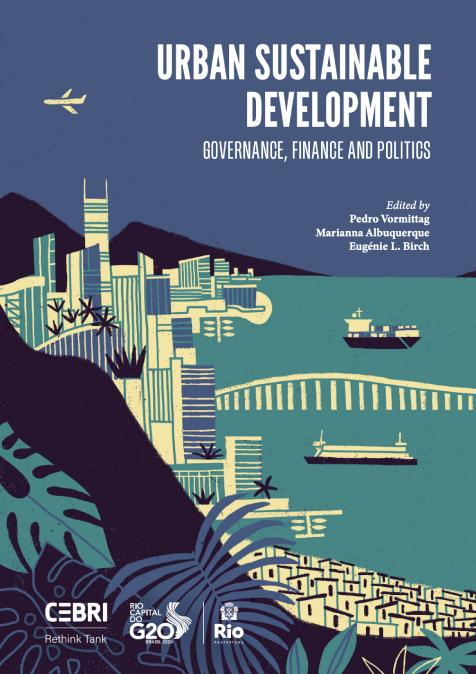
This blog was originally published in the book Urban Sustainable Development: Governance, Finance, and Politics, a collaborative effort by the Brazilian Center for International Relations (CEBRI) and the Rio de Janeiro City Hall. The Policy Center for the New South has contributed as a Knowledge Partner to this work.


I belong to a city that has been evolving positively for 20 years. Rabat has one of the world’s highest rates of green space per square meter per capita. This focus on sustainability is linked to the city’s heritage and geographical position. A forest surrounds the city, the world’s largest natural cork oak forest, which is a significant asset.

Greening cities through urban green spaces is critical, and Rabat has one of the world’s highest rates of green spaces. This has been a long tradition since the early 20th century, but it has been strengthened recently, especially with the “Rabat, City of Light, Cultural Capital” vision. Here in Rabat, there is a dialectical link between interest in history, culture, and the environment.

The environment concerns both the past and the future. Still, if we connect it to culture and root it, it gives a kind of essential legitimacy to any pro-environmental policy.

Rabat has an environmental and historical dimension, and as a capital, it promotes partnerships with other cities. Since its designation as a United Nations Educational, Scientific and Cultural Organization (UNESCO) Heritage Site in 2012, Rabat has had a dual obligation: to safeguard its cultural heritage—Roman, Almohad, Marinid, and Alawite—and to preserve its space. Rabat has always tried to create a dialogue between the heritage of the past and the spatial determinants between geography and history.

In the Moroccan context, like other cities in developing economies, the big issue is that cities lack financial resources. Therefore, the state needs to transfer financial resources to cities. Still, it is also important to have tax reforms that provide local authorities with the resources they currently lack to introduce the sustainability factor. There needs to be mediation between state financing and city financing; otherwise, cities will remain in a state of dependence, waiting for state support for their budgetary policies.

The first challenge is that poor and developing countries do not have the means to adapt to the risks of climate change. Therefore, developed countries must transfer resources to developing countries to help them participate in the sustainability of the economy, especially since these countries are not responsible for pollution or environmental degradation. There has been an international commitment on this issue since 2015.

Additionally, the issue of slums is crucial. In a city like ours, there are two types of pollution: pollution from development (industrialization, transport, etc.) and pollution from poverty, which comes from slums and marginalized neighborhoods. Addressing sustainability means tackling both types of pollution.


RELATED CONTENT

  • Authors
    Hajar Kabbach
    May 11, 2026
    Closing Morocco's gender employment gap could increase GDP per capita by 40-50 percent; yet female labor force participation stands at just 19 percent—among the lowest in the world and still declining. This policy paper argues that investing in the care economy is not merely a social expenditure, but a productive economic strategy with measurable returns. Drawing on international evidence from Uruguay, Mexico, Colombia, and India, the brief demonstrates that well-designed care syste ...
  • April 30, 2026
    يشهد المغرب تحولًا سريعًا في صناعة السيارات الكهربائية، مدفوعًا باستثمارات كبيرة وطموح للانتقال من مجرد منصة تركيب إلى فاعل صناعي متكامل. وبين فرص بناء صناعة بطاريات محلية وخلق وظائف جديدة، تبرز أيضًا تحديات مرتبطة بنقل التكنولوجيا، والتشغيل، والاستدامة. في هذه الحلقة، نفكك هذا التحول و...
  • Authors
    April 30, 2026
    This paper is the second in a series examining services-led development and global value chain (GVC) integration in the Global South. It applies a three-category analytical framework covering knowledge services (ICT and professional business services), enabling services (transport, logistics, and finance), and local services (retail, hospitality, health, and personal services), to OECD Trade in Value Added indicators. The paper thus  ...
  • Authors
    April 20, 2026
    This paper was published as a book chapter in “The Economic Potential of Islamic Countries, Part B: Sustainability, Governance, Energy and Digital Transformation,” released by Emerald Publishing. The COVID-19 pandemic exposed significant deficiencies within social protection systems worldwide, especially in Middle Eastern and North African (MENA) countries. This underscores the urgent need to fortify these social protection schemes to ensure resilience in the face of crises (Sa ...
  • April 13, 2026
    Résumé exécutif stratégiqueLe Maroc s’est engagé avec détermination dans une trajectoire de modernisation fondée sur la transition numérique, la transition verte et l’innovation. Ces dynamiques sont devenues des leviers stratégiques pour la compétitivité, l’attractivité et la création d’emplois à forte valeur ajoutée. Pourtant, l’analyse des données microéconomiques récentes révèle un paradoxe préoccupant : les entreprises les plus modernisées, moteurs de la croissance de demain, re ...
  • Authors
    Edited by Karim El Aynaoui
    Arkebe Oqubay
    April 1, 2026
    The Oxford Handbook of the Moroccan Economy provides a comprehensive and analytically grounded assessment of Morocco’s economic trajectory from 1960 to 2025. Bringing together 53 contributors across 34 chapters, the volume is conceived as a reference work, offering a structured analytical approach grounded in stylized facts, long-term trends, sectoral transformations, and the key public policy challenges shaping the country’s development path. It renews the stock of knowledge on the ...
  • March 31, 2026
    تتناول هذه الحلقة كيفية إعادة صياغة السياسة الصناعية في المغرب في ظل التحولات العالمية وإعادة تشكيل سلاسل القيمة، مع التركيز على الانتقال من موقع إنتاجي إلى فاعل صناعي استراتيجي. كما تسلط الضوء على دور قطاعات السيارات والطاقات المتجددة والصناعات التكنولوجية في تعزيز تموقع المغرب دولياً....
  • March 10, 2026
    بمناسبة اليوم العالمي لحقوق المرأة في 8 مارس، يتناول هذا اللقاء وضعية المرأة القروية في المغرب والتحولات التي عرفها دورها في التنمية الاقتصادية والاجتماعية خلال السنوات الأخيرة. كما يسلط الضوء على مساهمتها الكبيرة في الأنشطة الفلاحية والأسرية، رغم أن جزءاً مهماً من عملها يظل غير مرئي أو...