
Publications /
Annual Report
Book / Report
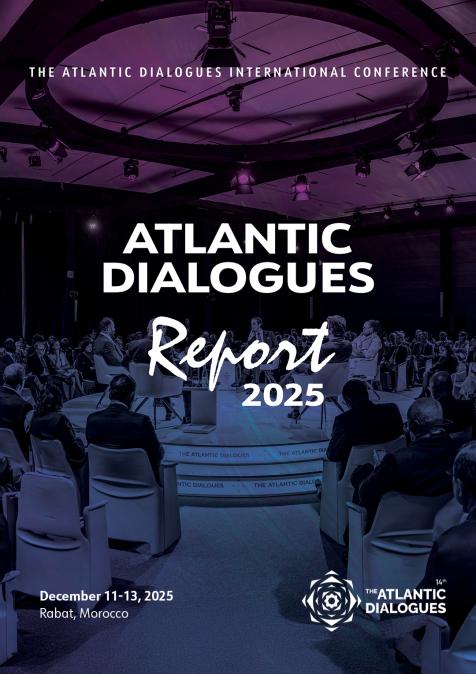
At a time when unpredictability has become a defining characteristic of international affairs, meaningful dialogue is both increasingly difficult to sustain and more essential than ever. Geopolitical rivalries, technological transformations, and mounting global fragmentation have challenged many of the assumptions that once underpinned international cooperation. In numerous instances, these developments have eroded confidence in institutions, strained partnerships, and weakened commitment to shared frameworks for collective action. Yet these very transformations have also underscored the importance of forums in which diverse perspectives can engage constructively, ideas can be critically examined, and mutual understanding can be cultivated over time.
Since its inception, the Atlantic Dialogues has sought to provide such a forum. More than a conference, it has evolved into a lasting and expanding community that brings together policymakers, business leaders, scholars, practitioners, and emerging leaders committed to engaging across disciplines, regions, and generations. Through initiatives such as the Atlantic Dialogues Emerging Leaders program, it continues to promote intergenerational dialogue while enhancing the diversity of perspectives, experiences, and expertise represented within its network. In so doing, it creates opportunities for both established and emerging leaders to contribute meaningfully to global discussions and to address collectively the complex geopolitical, economic, technological, and societal challenges shaping the contemporary world. At its core, the Atlantic Dialogues seeks to foster exchanges that deepen understanding of the complexities and interdependencies that characterize the current international landscape.
This ambition reflects a broader conviction: knowledge is a public good. At the Policy Center for the New South, we believe that think tanks have a vital role to play in generating ideas, informing public debate, and creating spaces where knowledge can circulate, be challenged, and contribute to collective understanding. In this sense, the Atlantic Dialogues is part of a wider effort to strengthen the intellectual foundations of constructive engagement across borders.
Throughout this edition, participants addressed a common question: how can societies preserve cooperation, legitimacy, and opportunity in an era increasingly shaped by disruption? Discussions explored the future of democracy and multilateralism, the transformative impact of artificial intelligence, shifting geopolitical and economic dynamics, and the growing importance of resilience in responding to climate, security, food, water, and development challenges. They also examined development strategies, the evolving role of international financial institutions, the strategic significance of maritime corridors, and the place of Africa and the wider Atlantic space within an increasingly contested global order.
Across these exchanges, a common theme emerged: the need to rebuild trust while strengthening the agency of Africa and the New South in shaping the institutions, partnerships, and narratives of the future.
Morocco provides a setting in which such exchanges can take place openly and constructively. As a crossroads connecting Africa, the Atlantic space, and the New South, it offers an environment conducive to the dialogue and engagement that the Atlantic Dialogues seeks to promote. The diversity of its participants and speakers remains one of the initiative’s defining strengths, reflecting a longstanding commitment to inclusivity, openness, and intellectual pluralism.
At the heart of this endeavor lies a simple yet demanding objective: building trust. In an increasingly polarized and fragmented world, trust cannot be imposed or hastened; it is cultivated gradually through sustained interaction, honest exchange, and a willingness to listen. The Atlantic Dialogues continues to invest in this long-term process, recognizing that trust is an indispensable foundation for meaningful cooperation.
This commitment extends beyond the present. By fostering a culture of learning and encouraging dialogue across generations, the Atlantic Dialogues contributes to the exchange of ideas and the transmission of knowledge and experience to those who will shape the future. Education, openness, and trust are enduring investments that strengthen societies and generate benefits across generations.
The reflections presented in this Atlantic Dialogues 2025 report bear witness to this shared endeavor. They highlight the diversity of perspectives that continues to define the initiative and reaffirm the value of sustained engagement across regions, sectors, and generations. The conversations captured in these pages remind us that, although unpredictability may shape the present, the future remains open to those willing to engage, listen, and help shape it together.
Karim El Aynaoui
Executive President, Policy Center for the New South


