Publications /
Book / Report
Text Book Series
Back
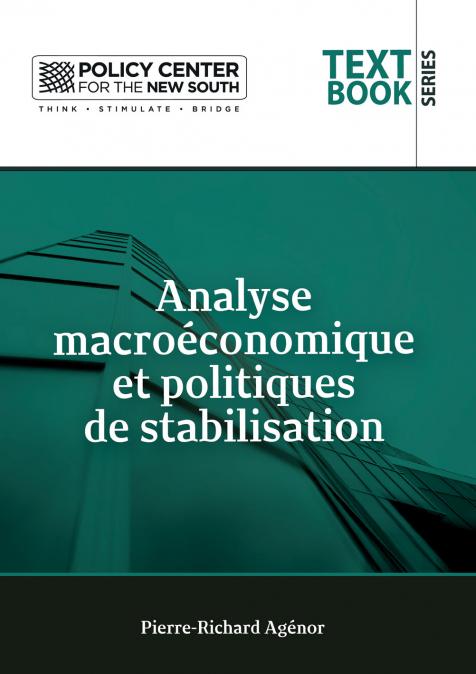
Analyse macroéconomique et politiques de stabilisation
Authors
Pierre-Richard Agénor
November 30, 2018

L'importance de la stabilité macroéconomique et financière pour l'amélioration à long terme des niveaux de vie a conduit à un profond renouvellement de l'analyse macroéconomique dans les pays en développement, tant sur le plan analytique qu'empirique.

Pour la première fois, le présent ouvrage fournit au public francophone un traitement approfondi et rigoureux des questions actuelles liées à l'analyse et à la gestion macroéconomique dans ces pays. Cette macroéconomie du développement souligne la nécessité de prendre systématiquement en compte les principales caractéristiques structurelles des pays en développement pour l'analyse économique. La perspective sous-jacente est que ces caractéristiques jouent un rôle essentiel à la fois dans la transmission des chocs de politique économique et dans la réponse des agents aux politiques macroéconomiques. Il est donc indispensable de les prendre en compte dans la conception des modèles destinés à guider la gestion macroéconomique.


RELATED CONTENT

  • Authors
    Pierre-Richard Agénor
    November 30, 2018
    L'importance de la stabilité macroéconomique et financière pour l'amélioration à long terme des niveaux de vie a conduit à un profond renouvellement de l'analyse macroéconomique dans les pays en développement, tant sur le plan analytique qu'empirique. Pour la première fois, le présent ouvrage fournit au public francophone un traitement approfondi et rigoureux des questions actuelles liées à l'analyse et à la gestion macroéconomique dans ces pays. Cette macroéconomie du développemen ...
  • Authors
    Axel Berger
    Andreas Freytag
    Simon J. Evenett
    Christian von Haldenwang
    Ricardo Meléndez-Ortiz
    Raul Ochoa
    Agustin Redonda
    Karl P. Sauvant
    November 26, 2018
    *The recommendations put forth below have been published, both print and online, in the Financial Times.  The leaders of the G20 will meet on 30 November and 1 December in Buenos Aires for their annual summit. They need to acknowledge that the last two years have been characterized by strong headwinds for the world economy. This time, however, it is not a mixture of poor macroeconomic policies and bad business decisions – as in 2008 when they met in Washing ...
  • Authors
    September 18, 2018
    If I were to synthesize the current situation of the Brazilian economy in one sentence, I would say: “it is suffering from a combination of ‘productivity anemia’1 and ‘public sector obesity2’". On the one hand, the mediocre performance of productivity in Brazil in recent decades has limited its GDP growth potential. On the other, the gluttony for expanding public spending has become increasingly incompatible with such limits in the potential expansion of GDP, particularly since ...
  • May 15, 2018
    Dans ce Podcast, nous avons sollicité l’avis de Mr. John Seaman, chercheur à l’Institut Français des Relations Internationales (IFRI), sur les investissements chinois en Europe. Les oppor ...
  • May 15, 2018
    Les réponses de l’expert John Seaman aux questions que nous lui avons posées, permettent de mieux cerner la réalité des investissements chinois en Europe. Ceci en évoquant les craintes qu ...
  • February 21, 2018
    تعتبر 2018 بلا شك نقطة تحول في تطور الاقتصاد العالمي. أوروبا، بعد أن بدأت في الخروج من الأزمة في عام 2017 ، من المرجح أن تدخل مرحلة نمو قوي ومستدام بفضل الزيادة الهيكلية في الإنت°اج الصناعي، إضافة الى الانعكاسات الإيجابي°ة للمشروع الإصلاحي المؤيد لأوروبا موحدة الذي يحمله الثن°ائي الفرنسي الألماني. كما ان آسيا تستمر في تأكيد مكانتها كمحرك رئيسي للاقتصاد العالمي، حيث اصبحت ثلاثة بلدان من اسيا )الصين واليابان والهند( تنتمي لقائمة أكبر خمسة اقتصادات عالمية في عام 2018 . هذه التطورات تدف ...
  • June 21, 2017
    Ce podcast est présenté par Moubarack Lo. Il y analyse l’apport de l’adhésion marocaine à la CEDEAO suite à l’accord de principe donné par ses membres au 51e sommet de Monrovia le 4 juin ...
  • Authors
    April 3, 2017
    Turkey has been approaching a crossroads for some time now. Soon enough it will have to choose a direction. On April 16, 2017 Turks will vote in a referendum on President Recep Tayyip Erdogan’s proposed constitutional amendment that would shift the country’s power center from a parliamentary system to a presidential one.  If successful, not only would this further consolidate power in the executive’s hands—in this case Erdogan himself—but it would also pave the way for him to ...