Publications /
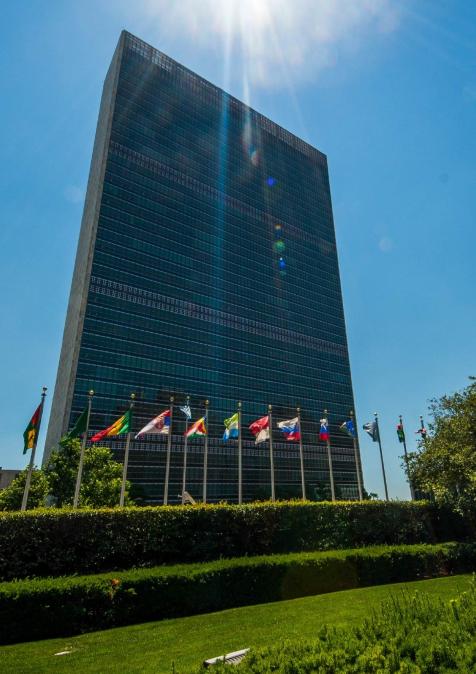
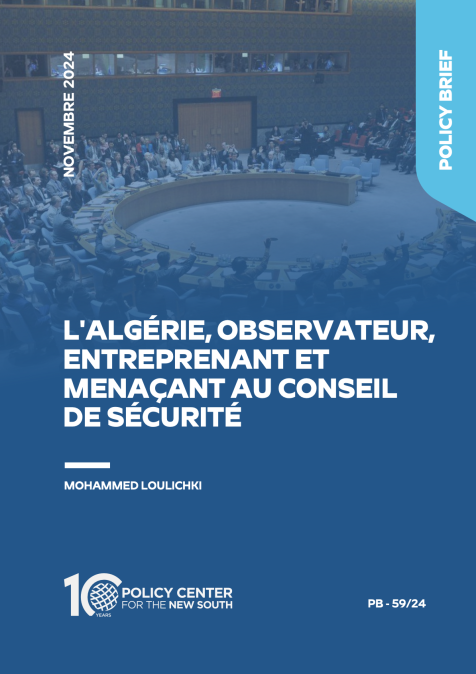
Since January 1, 2024, Algeria has held a non-permanent seat on the United Nations Security Council, an opportunity for the country to raise its profile in an international context dominated by the conflicts in Ukraine and Gaza. From the outset of its mandate, Algeria has been, by necessity, the spokesperson for both the Arab and African groups.
In its capacity as representative of Africa, Algeria has endeavored to promote coordination among the African members of the Council in an attempt to rally the other two African members to its position, and to transpose to the Security Council the decisions of the African Union on the issues on the Council's agenda.
Through its action within the Council, Algeria is seeking to regain lost prestige and recapture the role of influential player and regional, African, and international mediator that it was able to play in the 1980s and 1990s, during the Cold War and in the name of a revolutionary pan-Arabism and anti-imperialism in vogue in the 1960s and 1970s.
To support its ambition, Algeria has sought to position itself in Africa, announcing large-scale integration projects with the countries of the Sahel. This effort is now coming up against an unprecedented deterioration in Algeria's relations with its Sahel-Saharan neighbors, particularly Mali.
On the Sahara issue, Algeria stood out by declining to participate in the vote on the October 2024 resolution, due to the rejection of its request to extend MINURSO's mandate. With President Trump back in the White House, Algeria's room for maneuver on the Council is likely to shrink.
INTRODUCTION
Algeria assumed the rotating presidency of the Security Council on January 1, 2025, giving the country a month of visibility in an international context dominated by the conflicts in Ukraine and Gaza. Following an uncontested election held on June 6, 2022, Algeria joined Guyana, the Republic of Korea, Sierra Leone and Slovenia on the Council.
On the domestic front, the succession of President Tebboune to Abdelaziz Bouteflika—who had been weakened, faced growing opposition, and was finally ousted from power by the peaceful Hirak movement, which had become a threat to the military establishment—prompted the current regime to install a less charismatic but accommodating figure in the Al Mouradia Palace to begin building a "new Algeria", faithful to its founding myths of loyalty to the virtues of the struggle for independence, regional leadership and international influence. Faced with socio-economic difficulties during the first two years of President Tebboune's term of office, Algeria benefited from the upturn in oil and natural gas prices, generated by the war in Ukraine and Europe's boycott of Russian gas, to replenish state coffers and provide a lifeline to relaunch major projects, increase salaries and consolidate a welcome degree of social peace.
Over and above internal socio-economic concerns, the "new Algeria" had to achieve a diplomatic comeback - especially since its entry into the Security Council - by reasserting itself regionally and internationally. This objective, however, has come up against three major obstacles: the unprecedented deterioration in relations with Morocco, without which no meaningful process of Maghreb integration can take place; the deterioration in relations with France, Algeria's main partner and a permanent member of the Security Council; and the breakdown of a quasi-vassal relationship with the neighboring countries of the Sahel, whose situation is one of the Council's priorities.
Algeria's entry into the Council came during the war between NATO (North Atlantic Treaty Organization) and Russia, Algeria's main ally, and a few weeks after the outbreak of the war between Israel and Hamas, fought mainly in Gaza but with consequences felt from the outset in neighboring countries, particularly Lebanon, Jordan, and Syria.
From the outset of its mandate, Algeria has been the Arab group's spokesman on the Gaza conflict and, more generally, on the situation in the Middle East, including the Palestinian question. In this capacity, it has presented draft decisions on behalf of the Arab League member countries, most of which have been opposed by the United States. Likewise, as one of the African representatives on the Council, Algeria has endeavored to promote coordination between the African members of the Council in an attempt to rally the other two African members to its position, and to transpose to the Security Council the decisions of the African Union on the issues on the Council's agenda.
Halfway through Algeria's term of office, an examination of the objectives announced at the time of its election to the Council, and of the country's behavior within it, particularly with regard to the issues of Palestine, the Sahel and the Sahara, reveals the extent to which Algeria is using its representative function to serve its own image exclusively, and to appropriate Arab and African commitment to issues that affect the destiny of the Arab world and the African continent.
ALGERIA'S ELECTION TO THE SECURITY COUNCIL
Algeria was elected by the United Nations General Assembly on June 6, 2023, in the absence of any competing candidate from the North African region, with 184 votes, compared with 188 for Sierra Leone and 191 for Guyana out of the 193 member states of the Organization. It has been a non-permanent member since January 1, 2024, for a two-year term expiring on December 31, 2025. This is the fourth time the country has held this position, following terms from 1968 - 1969, 1988 - 1989, and 2004 - 2005.
According to the regional breakdown adopted in 1965, Africa is entitled to two or three seats on the Council, depending on the year, on behalf of the five sub-regions that make up the continent. The seat occupied by Algeria is both African and Arab. Since the Asian group split into an African and an Asian group in 1965, it has been agreed that, in order to defend the Palestinian cause, there should be a permanent Arab presence on the Security Council. As a result, the Arab seat is held alternately by an Arab country from the Middle East and one from North Africa.
While the UN Charter's reference to equitable geographical distribution (1) and the role played primarily by the African group in New York, and secondarily by the African Union in the nomination process, suggest that the African members of the Council are supposed to defend and implement the decisions and policy positions of the Pan-African Organization, the reality is quite different. In fact, since they are elected by the entire membership of the General Assembly, elected members tend to put their presence on the Council at the service of their national interests, even if this means going against an African Union position or decision.
In a press release issued the day after the elections, Algeria set itself the following objectives:
- to make the voice of the African continent and its legitimate demands heard, and to redress the historic injustice it has suffered by allocating it two permanent seats on the Security Council;
- to defend, as representative of the Arab group on the Council, the Palestinian cause and revive the issue of full UN membership for the State of Palestine;
- to combat the financing of terrorism, in particular kidnapping for ransom, through which terrorist groups demand payments or political concessions in exchange for the release of hostages;
- to assume its responsibilities as a reliable partner, by proposing ideas and initiatives to strengthen the role of multilateral action in preserving international peace and security;
- to advocate strengthening cooperation between the UN, on the one hand, and the Arab League and African Union, on the other.
In pursuit of these objectives, Algeria is seeking to regain lost prestige and resume its role as an influential player and regional mediator in Africa and internationally that it was able to play during the 1980s and 1990s, thanks to the Cold War and the reputation it earned for welcoming liberation movements, aircraft hijackers, and secessionist movements from Spain and Latin America, in the name of a revolutionary pan-Arabism and anti-imperialism in vogue in the 1960s and 1970s.
Brought to power by the army to succeed Abdelaziz Bouteflika, a president who had led Algerian diplomacy in the glorious 1970s, the "savior of 1999" and an interlocutor for the world’s great powers, President Tebboune needed to position Algeria on the international stage and revive a past era of influence among African and non-aligned countries and mediation in the service of the Great Powers.
IN SEARCH OF LOST PRESTIGE
On the diplomatic front, Algeria has tried to resume a policy of "good offices", enabling it to return to the forefront of the continental scene. Attempts have been made in Libya, between Egypt and Ethiopia, in Mali and Niger, with little effect.
This quest for an international role was forcefully demonstrated in June 2023, when President Tebboune expressed his "thanks" to President Putin for "accepting Algeria's mediation in the conflict between Russia, a friendly country, and Ukraine", telling his Russian counterpart that "Algeria will live up to this trust."
The election of Algeria as a member of the Security Council in 2022 was seen as a unique opportunity for Algerian diplomacy under the new presidency to regain its former verve and dynamism, particularly in the Arab world and on the African continent, and to take its place among the major powers. (2)
In response to the United Nations Secretary-General's congratulations, the Algerian Presidency's press release of June 6, 2023 stressed that "This election, which is a credit to our country's foreign policy, reflects the consideration and esteem in which the President of the Republic, Mr. Abdelmadjid Tebboune, is held by the international community, as well as its recognition of his contribution to international peace and security … this diplomatic success confirms the return of the new Algeria to the international stage, and endorses the vision and approach of the President of the Republic for the preservation of peace and security in the world, based on peaceful coexistence, the peaceful settlement of disputes and non-interference in the internal affairs of countries within the framework of a foreign policy which draws its principles, values and ideals from our war of liberation".
Following its unsuccessful bid for membership of the BRICS group in August 2023, Algeria has found the Security Council a propitious setting in which to give fresh impetus to its diplomacy, with the country's leadership hoping to reap some dividends in terms of strengthening the domestic front.
To support its ambition, Algeria has sought to position itself in Africa by announcing a series of integration projects such as the fiber optic link with Niger and Nigeria, the Nigeria-Europe gas pipeline via Algeria, the Algiers-Bamako-Niamey railway line, the opening of a free trade zone at the border with Mauritania, and the creation of free zones in collaboration with Mauritania, Tunisia, Libya, Mali, and Niger.
ALGERIA, THE ARAB VOICE AT THE SECURITY COUNCIL
Before joining the Council, Algeria sought to position itself on the Arab scene through two initiatives by its President: the first was the invitation, on July 5, 2022, of the President of the Palestinian Authority, Mahmoud Abbas, and the leader of Hamas, Ismaïl Haniyeh, to a formal meeting in Algiers aimed at reconciling the two camps, a meeting that culminated in the signing of a declaration that had no effect on relations between the two protagonists. The second was the Arab League summit held in early November 2022 in the Algerian capital under the theme of "Reuniting the Ranks," a summit which, among other things, renewed the full support of Arab countries for the Palestinians' bid to establish their state and achieve full UN membership.
Algeria began its mandate three months after the outbreak of hostilities between Israel and Hamas. As the only Arab representative on the Security Council, Algeria was ipso facto entrusted with the task of relaying the decisions of the Arab League and responding to Palestinian expectations that the war on Gaza should be brought to an end as soon as possible.
According to the head of Algerian diplomacy, his country "has made the Palestinian cause its main concern and the guiding principle of all its actions ... and will continue to strive until this Council assumes its responsibilities towards the Palestinian people fully and unambiguously."
Since joining the Council, Algeria has proposed several draft resolutions at the request of the Arab League and in coordination with the other members of the Arab Group in New York. These drafts have had varying fortunes, with some defeated by an American veto, others failing to secure the votes required for adoption, while minimalist drafts proposed by Algeria and some or all of the other non-permanent members were adopted by the Council.
On each occasion, the draft resolutions were attributed by the Algerian media not to the Arab Group or the Arab League, but to the Algerian delegation alone, and successive vetoes by the United States provided an opportunity for that country to portray its support for the Palestinians as greater than that of other Arab countries and to highlight the activism and commitment of Algerian diplomacy to the people of Gaza. This circumstantial visibility contrasts with Algeria's low profile on African issues submitted to the Council involving conflict situations in certain countries on the Continent, notably those in the Sahel.
DEFENDING AFRICA IN THE INTEREST OF ALGERIA
While the distribution of seats according to equitable regional representation confers on the African States elected to the Council the task of representing the Continent, Algeria has attempted to create coordination mechanisms to influence the positions of these States so that it can leverage them when it sits on the Council.
Taking advantage of Morocco's absence from the African Union, Algeria was mandated, along with nine other African countries, to defend Africa's position on the issue of Security Council Reform and has always advocated that the African Group should emanate from the continental organization and implement the latter's decisions. In 2014, it also established the "Oran Process", designed to ensure coordination between the African members of the Security Council.
The first edition of this seminar brought together the Chairman of the PSC, the African members of the Security Council, and Algeria as host country and initiator of the idea. The seminar was originally designed to familiarize new African members with the Council's working methods. But as the sessions progressed, and under the impetus of Algeria, the seminar was transformed into a mechanism designed to turn the African Group in New York into a vehicle for amplifying the positions of the African Union's Peace and Security Council.
This initiative led to the creation of the A3 Group, comprising the African members of the Council, and to the establishment of a rotating coordination arrangement for the Group, as well as an African Caucus in New York. This seminar was institutionalized by decision of the African Union's Peace and Security Council, which for seventeen years had been under the guidance of an Algerian Commissioner. Algeria's strategic objective behind this seminar is to impose a certain discipline on the African members of the Council to follow and execute the decisions of the African Union and, at the same time, to guarantee Algeria's permanent right of oversight by holding future sessions of the seminar in Oran.
To lock in this system of "disguised trusteeship," Algeria proposed a draft guide on dialogue and coordination between the African Peace and Security Council and the African members of the UN Security Council, an initiative which raised questions among the recipient countries about Algeria's real intentions behind the seminar.
Algeria presents itself not only as one of the three African countries representing the continent on the Security Council, but also as the leader and coordinator of the African position on the Council. Thus, during the debate on January 25, 2025, the Security Council’s A3+ group (Algeria, Somalia, Sierra Leone and Guyana) expressed its "deep concern" at the deteriorating security situation in Haiti, and stressed the need to seek lasting solutions that will enable the Haitian people to restore peace to their country.
This effort to condition the positions of the other African members of the Council is now coming up against an unprecedented deterioration in Algeria's relations with its Sahelo-Saharan neighbors, particularly with Mali, whose situation occupies a prominent place on the Council's agenda. It is therefore hard to imagine these countries agreeing to Algeria speaking or negotiating on their behalf.
Addressing Algeria directly at the 79th session of the United Nations General Assembly, Mali's President Abdoulaye Maïga declared: "As for Algeria's permanent representatives, apart from offering board and lodging, certainly with succulent dishes of tchoutchouka and chorba to terrorists and renegades in disarray, their role as a disoriented courier hardly contributes to the promotion of good neighborly relations".
For their part, the Nigerien authorities accuse Algeria of dumping thousands of illegal migrants on their territory. According to the Nigerien NGO Alarme Phone Sahara (APS), "The number of migrants expelled by Algeria increased from 26,031 in 2023 to 31,044 in 2024, thus surpassing all documented figures from previous years." (3)
ALGERIA AND THE QUESTION OF THE SAHARA
In view of the priority given by Algeria to the Sahara issue in its foreign policy, and the activism of its leaders to thwart the momentum imparted by Morocco to its autonomy initiative, the Moroccan public wondered, when Algeria joined the Security Council, about the potential influence this country could exert on the balance within the Council, and its ability to alter the parameters of the political solution or introduce new elements into the Sahara resolution. These concerns are rooted in the radicalization of the Algerian position on this issue and the absence of any contact or dialogue between Algeria and Morocco.
Algeria's stubborn linking of the Palestinian and Sahara issues in recent years, and the opening in Algiers of a representative office of an obscure "Rifian party", have further fuelled fears that Algeria may be tempted to use its mandate on the Council to undermine the UN process.
Of the 46 resolutions adopted by the Council in 2024, Algeria voted in favor of 41, abstained on four (on the Houthis, Libya and South Sudan) and boycotted one. In fact, during the vote on the resolution on the Sahara question, Algeria stood out from the rest of the Council members by choosing not to take part in the vote, unlike Mozambique, which preferred to abstain despite being aligned with its positions.
This decision not to participate in the vote, following the rejection by Council members of the amendments it had submitted, was explained by the following considerations:
- Algeria does not consider itself concerned or bound by the resolution;
- the delegation’s disappointment at the rejection of its amendments to expand MINURSO’s mandate to include human rights;
- the dissociation of Russia from the Algerian position, through its abstention on the Algerian proposals.
This situation has revealed the limits of Algerian diplomacy and its inability to convince other countries, including its Russian ally, of its point of view. Unable to score points on the Sahara issue, Algeria has fallen back on its favorite subject, the fight against terrorism.
TERRORISM, A FAVORITE TOPIC OF ALGERIA
Algeria presents itself to the world as the country that succeeded in defeating the terrorism of the black decade on its own. It has made this a point of pride, a priority theme and an asset in its diplomatic action. In a recent statement, the Chief of Staff of the Algerian Army, Said Chanegriha, Algeria's strongman, affirmed that "terrorism has been defeated, thanks to the children of Algeria. No other state has supported us in our fight against terrorism. Every Algerian, and future generations, should be proud of this". (4)
It is to strengthen this reputation that Algeria has worked to host two important African institutions, namely the African Centre for Studies and Research on Terrorism (CAERT) and the General Assembly of the African Police Cooperation Mechanism (AFRIPOL), and to ensure the coordination of the African Union's portfolio on the prevention and fight against terrorism and violent extremism in Africa. It was therefore predictable that following its accession to the Security Council, this country would seek and obtain the chairmanship of the Counter-Terrorism Committee and make terrorism a priority theme of its presidency of the Council during the month of January 2025.
As part of this presidency, on January 21, 2025, Algeria organized an open debate on the theme of "Africa-led and development-driven counter-terrorism: strengthening African leadership and implementation of African counter-terrorism initiatives". According to the Algerian representative, this was justified by the fact that "the international community had turned its back on this persistent scourge in Africa", and by the country's desire to "re-engage the international community and get it to take an interest in this scourge", in the light of recent developments. (5)
For more than a decade, Algeria has made the prohibition of ransom payments to terrorists a key issue in its dealings with international bodies. Considerable pressure was exerted on the other members of the Council to pass a decision criminalizing the payment of ransoms, without success. The reality is that, while condemning such practices in words, States are reluctant to take a decision on the issue, preferring to leave themselves a margin of flexibility to act on a case-by-case basis, depending on the circumstances, in order to save human lives, even if this means tolerating the payment of ransoms without taking responsibility, and conducting hostage release operations in strict secrecy. It is for these reasons that the permanent members of the Council have always been reserved and reluctant to go beyond mere verbal condemnation of these practices.
Without securing endorsement of its initiative by the Council itself, Algeria used its chairmanship of the Counter-Terrorism Committee, a subsidiary body of the Council, to have the Committee adopt, in advisory terms, what the chair called the “Algeria Guiding Principles.” The Committee’s minimalist formulation “calls on the Counter-Terrorism Committee Executive Directorate (CTED) to take them into account, as appropriate, in accordance with its mandate.”
CONCLUSION
As Algeria begins its second year on the Security Council, the landscape within this body has completely changed compared to 2024. The replacement of Mozambique by Sierra Leone, which is closer to Morocco's position, the media-driven standoff with France, the arrival of a triumphant Trump at the White House, and Moscow's concern not to antagonize Washington for the sake of a possible "Deal" on Ukraine will undoubtedly change the dynamics within the Security Council regarding the handling of the Palestinian issue, the situation in Yemen, and perhaps even the question of the Sahara. Algeria could see its room for maneuver further reduced as the end of its mandate on the Council approaches.
1) Article 23 of the United Nations Charter.
2) El Moudjahid, June 16, 2023.
3) Le Monde, January 14, 2025.
4) Statement by Saïd Chanegriha, Chief of Staff of the ANP, March 17, 2024.
5) Statement by Mr. Ahmed Attaf, Algerian Minister of Foreign Affairs, on January 21, 2025.