Publications /
Opinion
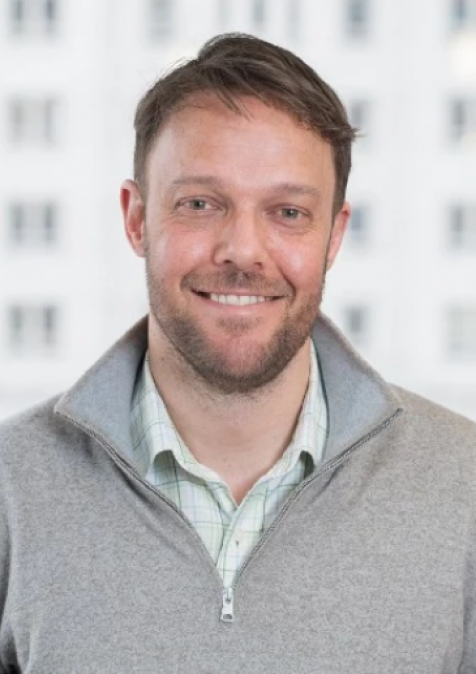
Based in Washington DC, where he launched the Accountability Lab in 2012, this British citizen describes himself as « inquisitive, energetic and values-driven ». He heads a global « translocal network » which is expanding rapidly and about to open new local labs in Uganda and Somalia. The Lab, a non profit organization, currently employs 104 people in 14 countries in Asia, Africa and Latin America.
The aim is to make governments more transparent and accountable, through positive change. The Lab supports active citizens, responsible leaders and accountable institutions. Why this particular topic ? « Ten years ago, I realized that without accountability, it was difficult to deal with all the problems that many countries are facing », says Blair Glencorse. « Unless we can build trusted relationships between people in power and citizens, it will be impossible to address our collective challenges » he adds.
Blair’s career started at the World Bank in the Fragile States Unit (2005-07). Later, he helped set up the Institute for State Effectiveness (ISE), an American think tank focused on governance and institutional reforms in countries affected by conflict. Between 2007 and 2012, he was an associate with the Institute, generating integrated approaches to state-building and providing practical policy advice in countries such as Afghanistan, India, Sierra Leone and Haïti. It was through these experiences that Blair came to undestand the centrality of accountability to the process of development.
During a trip to Nepal in 2010, he expected the young people he was meeting to be pushing for better education or access to healthcare and other basic services. Instead, they explained that what they needed was the rule of law and less corruption. « They had incredible ideas to solve these problems but because of the Western oriented international aid system, could not tap into the support they needed ». That was the beginning of the Lab for Blair, who realised that accountability begins with decolonizing existing institutional architectures and reorienting decision-making to make it as inclusive as possible.
« Naming and faming instead of naming and shaming »
Accountability Lab has raised more than 20 million dollars since then to support its efforts to drive bottom-up accountability. It now works across three key pillars to ensure impact and foster change. The first pillar is about building positive narratives and shifting norms, to create hope and change the way people engage around the issues.
Rather than « naming and shaming » the Lab supports «naming and faming », Blair points out. « This is essential because it lifts up people doing the right things and begins to build a sense that systems can change. Our Integrity Icon campaign is a great example of this. » Through this campaign, honest government officials across 14 countries are nominated by citizens, filmed and celebrated through a media-savvy outreach effort on TV, radio and social media.
The second pillar is knowledge building through incubators for civic activists and training for civil servants within government. The Lab also works to build « unlikely networks » among diverse constituencies, like musicians, film-makers, creatives, technologists and others. The idea is to ensure that diverse voices are heard and mainstream accountability ideas are translated into policy changes.
The third pillar relates to community-building, through the creation of feedback loops through which citizens can influence local governance processes. Through the Civic Action Teams (CivActs) for example, Blair and his team have done everything from supporting coordination of the massive earthquake relief effort in Nepal, to countering mis-information about COVID-19 in Pakistan, to improving the contracts signed between mining companies and communities in Liberia. « All of this begins with active listening », Glencorse points out : « Communities have all the answers to local challenges ».
A passion for Africa and International Politics
Blair grew up in central England but always knew his interest in international politics would take him elsewhere, which led initially to a stint in Zimbabwe, where he was a student teacher. « My experience in Zimbabwe was transformational », Blair says : « There is a straight line from my work at that point to my current work at Accountability Lab ».
After graduating with an MA in Modern History from the University of Edinburgh in 2002, Blair settled in Washington, DC where he studied for an MA in American Foreign Policy and International Economics at the Johns Hopkins School of Advanced International Studies (SAIS).
Blair came across the Atlantic Dialogues Emerging Leaders Program through the German Marshall Fund, a partner of the Policy Center for the New South. « ADEL is a great space to discuss ideas relevant to Africa and the Southern Atlantic, with a change of perspective and tons of interesting people as part community », he explains. Collaborations that Blair has engaged with as a member of the ADEL network include work to train local journalists and activists in Nigeria with the French journalist Sophie Bouillon, invited to the Atlantic Dialogues in 2017, and the virtual Atlantic Dialogues through which he has facilitated sessions, including with Bushra Ebadi.
Fond of running, biking and walking his dog, Blair reads and travels as much as he can. Among his favorite books, he mentions Seeing like a State by James Scott (Yale University Press, 1998), which examines how state-building can go wrong ; and Lean Startup (Pierson, 2012), a best-seller by Eric Ries, about constant innovation and « how to fail and learn quickly to grow your organization ». Both he says, have been helpful as he has worked to grow Accountability Lab into the leading network of local organizations pushing for better governance around the world.
In 2021, Blair was diagnosed with kidney cancer and with treatment, has made a full recovery, which he has spoken about eloquently elsewhere. « We all know that time is precious, but a near death experience certainly brings that home » Blair says. « My experience reminded me not to waste any time and to do those things that give us meaning. In the end, that is a life well lived ».