Podcasts

Back

Crisis in Venezuela: national and regional consequences

26
April 2016
Anna Ayuso Pozo

This podcast is performed by Anna Ayuso Pozo. The parliamentary elections on December 6 in Venezuela opened a new political era. The magnitude of the defeat of the governmental forces leaves no doubt about the vote against the authoritarian drift of the socialist revolution. The Congress is now in the hands of the opposition coalition that achieved 2/3 qualified majority (112 deputies). The vote was a clear punishment to the government led by Nicolas Maduro, who was appointed successor of the former President Hugo Chavez. He was unable to lead the adaptation demanded by the challenges of a changing economic cycle and contributed to polarize the society. Venezuela is now a test of the dilemmas of a continent that seeks to gain autonomy and overcome the endemic inequality gaps while trying to consolidate still imperfect democratic institutions. The Caribbean country is now a challenge for regional stability. Regional institutions, as UNASUR and CELAC, created over the last decade to give greater autonomy in resolving political crisis will be forces to act. This session will explore recent changes Venezuela's national policy and its regional implications in a context of changing political cycle.

RELATED CONTENT

  • Authors
    Giovanna Rinaldo
    November 4, 2026
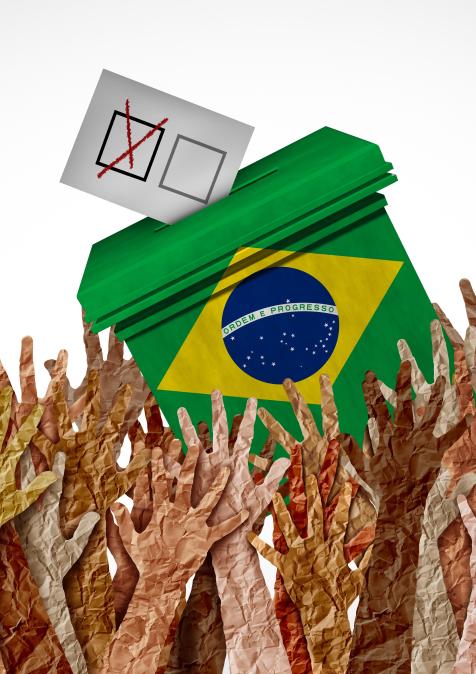
    Brazil’s presidential election, which concluded on October 25, 2026, was above all a digital battle. This is nothing new; the impact of social media on elections has been widely analyzed since Barack Obama's 2008 win marked a turning point for digital campaigning worldwide. Almost two decades later, social media is an entirely different breed, with a life of its own – and still very little regulation within electoral politics. The danger, however, is that digital players now also in ...
  • November 4, 2026
    Le 30 octobre 2026, le mandat de la Minurso a expiré et n’a pas été renouvelé. La raison : un projet américain, pourtant appuyé par 11 membres du Conseil de sécurité, auquel la Russie a opposé son veto, suivi d’un projet russe qui n’a pu recueillir que trois voix en sa faveur, sur lequel les États-Unis ont émis un vote négatif.Cette impasse révèle deux conceptions opposées du règlement. Washington entend recentrer le processus sur l’initiative marocaine d’autonomie et adapter progre ...
  • October 29, 2026
    Luiz Inácio Lula da Silva’s victory brings to an end one of the most closely contested elections in Brazil’s recent history. Before any broader analysis, however, a qualification is necessary. Supreme Court Justice Cristiano Zanin’s controversial decision to extend voting hours sparked debate over the electoral process. Although the measure was not mathematically decisive in Lula’s come-from-behind victory, the episode risks fuelling challenges to the result and further eroding poli ...
  • Authors
    October 29, 2026
    Wars are decided by those who hold military power, but their costs are increasingly borne by those who have little or no voice in the decisions that start them. The US–Iran war shows this imbalance very clearly. Its economic consequences have gone far beyond the battlefield and have disrupted energy markets, trade routes, food supplies, public finances and investment in the Gulf, Europe, Africa and Asia. The most striking feature of the conflict, however, is not only the size of the ...
  • October 28, 2026
    Depuis 2016, le Policy Center for the New South et le Centre de Géopolitique de l’école HEC Paris organisent chaque année deux éditions des « Dialogues Stratégiques ». Cette plateforme d’analyse et d’échange réunit des experts, des chercheurs provenant de différents think-tanks et du mo...
  • Authors
    Niagalé Bagayoko
    Eugène Berg
    Pierre Berthelot
    Vincent Campredon
    Christophe Chabert
    Alain Oudot De Dainville
    Emmanuel Veron
    October 28, 2026
    Bientôt disponible en vente. Cet ouvrage est issu de la 20e édition des Dialogues Stratégiques, organisée le 6 mai 2026. Il s’articule autour de deux thématiques : « Souverainetés critiques : sécuriser les infrastructures essentielles et les ressources stratégiques » et « La Méditerranée : entre coopération régionale et rivalités globales ». La première partie examine les conditions dans lesquelles les États peuvent protéger leurs infrastructures et maitriser leur accès au ...
  • October 22, 2026
    Strategic hedging is rational when it preserves a worthwhile choice at a tolerable cost while respecting existing commitments. Drawing on the literature on hedging and Latin American autonomy, this Policy Brief examines contrasting illustrations of that proposition. It distinguishes ambiguity about future alignment from uncertainty about existing obligations and explains how clearly bounded commitments can reconcile autonomy with credibility. The cases reveal different vulnerabiliti ...