Publications /
Opinion

As a Project Assistant responsible for Speech Writing in the Office of Dr. Ibrahim Mayaki, CEO of the African Union Development Agency-NEPAD, Seleman Kitenge, born in 1989 in Tanzania, is now based in Johannesburg. He was first a volunteer for the African Union (AU) in the same role for one year, before being hired in August 2020 by the AU Development Agency.
“I’m enjoying it, he says, some of my mentors are really good”. Among them, Togolani Mavura, Private Secretary and Speech Writer for the former President of Tanzania H.E Dr. Jakaya Mrisho Kikwete, and Dr. Ibrahim Mayaki himself, who has been taking time to mentor him personally. “Since I joined AUDA-NEPAD, my mentors have been like my guardian angels and makes it a growing journey for me”, he says.
Born in Dar es Salaam, raised by a father who is still a prominent tailor, Seleman Kitenge’s family comes from the Kigoma region, close to the Tanganyika Lake in the western part of Tanzania. His love for his country and Africa is intertwined with his personal longings. “My dreams have never changed, he says, I’ve always wanted to be a leader in either politics or diplomacy, in order to foster the development of our continent”.
Where does it come from? “This is part of my personality, and my father kept on encouraging me to read newspapers, books, and follow Tanzanian politics”. He wanted his son to understand the vision of one of the most admired African leader, Julius Nyerere (1922-1999), the father of Tanzania’s Independence. Called “Mwalimu” – “school teacher” in Kiswahili - Nyerere had a socialist vision for his country’s development and left a strong legacy.
The first trip to Russia
Seleman Kitenge could have been a singer, as he was into rap and singing in his teenage years, or a soccer player – soccer being one of his hobbies. But his parents kept pushing him into politics and diplomacy. So much so that they decided to sell a piece of land to finance his first trip abroad in July 2013. He went to Russia to follow a training program in Tver Oblast known as International Youth Forum Seliger. “This trip will help you to get more trips for free and make many friends from different parts of the world”, his father told him, foreseeing exactly what would happen next.
The young man studied Public Sector Financial Management at Tanzania Public Service College, and is a Bachelor of Arts in Sociology from the Open University of Tanzania. He holds a Post Graduate Diploma in Management for Foreign Relations from the Center for Foreign Relations, and has also made his way through many international programs, in Azerbaijan, Japan, Netherlands, the United Kingdom, Costa Rica, Morocco, France, Crimea, and Australia to name a few.
Three were outstanding in his view. He was awarded in June 2016 an Honorary Diploma of New Leaders for Tomorrow by the Crans Montana Forum in Vienna, Austria. “One of my best experiences, as I was one of the 3 African citizens in a group of 11 young leaders selected and the first Tanzanian to receive the honor”, he recalls.
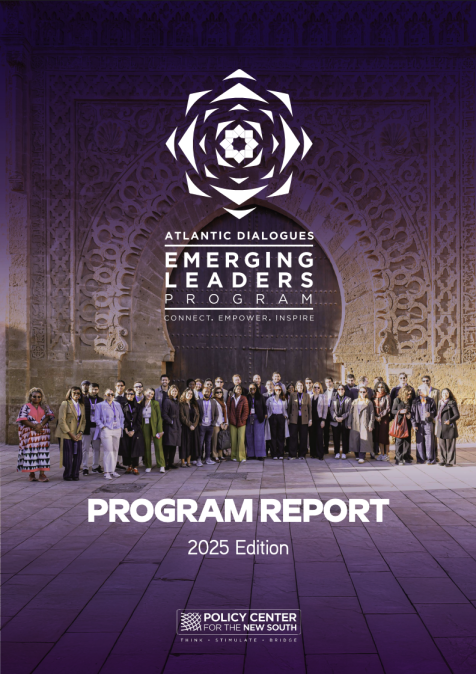
In 2018, he became one of the Atlantic Dialogues Emerging Leaders (ADEL) and came to Marrakech for a tailor-made networking and empowerment program before attending the high level international conference Atlantic Dialogues, organized by the Policy Center for the New South. There, he enjoyed the “unique blend” of the conference, “African with a taste of Europe and the Americas”, and the specific touch of the ADEL program: “We were trained as young leaders and also allowed to interact with senior leaders from AU, NATO, the UN, former Presidents and Prime ministers from all over the world”. One of the things he liked most: “Interacting with Havard and Cambridge students confidently, to engage and contribute as an equal expert on geopolitics, although my academic journey is just from local institutions”.
His third favorite program is the Young African Leaders Initiative (YALI), launched in 2010 by the State Department under the presidency of Barack Obama. A member of the first cohort of YALI’s East Africa Chapter in 2015, Seleman has listened to President Barack Obama in Nairobi (Kenya). He met “prestigious trainers coming from US Universities, former officials at the White House, the Department of State and even NASA”.
Dedicated to Africa’s future
Among many other things, he has been certified by the Commonwealth Secretariat as a Trainer of Trainers on issues around Hate Speech, Human Rights, and Countering Violent Extremism as well as being named by the European Union Commission as a One Young World Peace Ambassador. As much as he may have traveled abroad, he never thought of leaving Tanzania or Africa. “There were tempting opportunities out there, but I always came back to serve my country and continent”.
His vision is the one of a whole generation : “To see Africa prosper and have an equal share at the table of global affairs. Most importantly, see Africa become fully integrated economically to create more opportunities for the youth who are the most marginalized by economic systems across the continent”.
Moreover, he hopes to see extreme poverty eradicated, in order to facilitate the continent's economic transformation. He envisions seeing youth given more opportunities at the front leadership row on social, political, and economic issues. “I believe the energy, vibrancy, and innovative nature of youth will significantly help to fast-track Africa’s development if properly utilized at the national and continental levels.”
Before AUDA-NEPAD, he worked as an Administrator and Spokesperson at the Honorary Consulate of Sierra Leone in Dar es Salaam, and as a Program Officer with the United Nations Association of Tanzania. This non-profit umbrella organization is working closely with the UN in Tanzania but is not a part of the UN system.
There, Seleman Kitenge took part in a project to accelerate youth political and economic participation across the country. “We reached over 20 000 young people in the mainland and Zanzibar, to encourage them to participate in local governments and get to know and use the grants our government is allocating to the youth, to start businesses”.
A keen reader of political essays and biographies, he mentions “The world as it is” among his favorite books, written by Ben Rhodes, the former Deputy National Security Advisor for Strategic Communications and Speechwriting under President Barack Obama (2009-2017). A man he met twice, in Kenya and France, and who gave him his book as a present. Kofi Annan, the former UN Secretary-General, is one of his role models. Seleman Kitenge, an ambitious young man, would certainly like to walk in this path of greatness, “whether at the front stage or behind the scenes”.
You can consult Seleman’s portrait along with others on the ADEL Alumni Portrait page.