Publications /
Opinion

Back
ADEL Portrait : Joana Ama Osei-Tutu, Gender Without Borders
Authors
Sabine Cessou
December 1, 2021

This young and outspoken Ghanaian citizen, a peace and security expert with a focus on gender, describes herself as “engaging, accomodating and seeking”. Born and raised in Ghana, Joana has a deep knowledge of her country, as her father was transferred a lot throughout his career. Her family has also spent some time in Louisville, Kentucky. As a teenager, her dreams were definitely altruist, as she wanted to become a photojournalist or a human rights lawyer.

Since 2017, she is the Head of Women Peace and Security Institute at the Kofi Annan International Peacekeeping Training Center (KAIPTC) in Accra. The West African institution has trained since 2004 thousands of civilians, police and military staff from all over Africa and beyond. Its goal: “sustain a peaceful atmosphere in Africa”, as Joana sums it up.

There, she has climbed the ladder quickly. At first, she was a Research Associate in a Regional Partnership for Peace & Security Programme (2010-15), and then was appointed Deputy Head of the Peace and Security Studies Program (2015-17). In her current position, she is responsible for African women’s effective participation in peace negotiations and peacekeeping activities, and the integration of a gender perspective in research, policy and training activities.

This important task is done through many channels: advocacy, lobbying, high level conversations, but also on the ground. “At the community level, for example, we deliver a course on how to prevent and respond to gender based violence. We engage with traditional and religious leaders, civil society and media actors. We put all the actors in the same room and have a conversation so that they can learn from each other. This is powerful. We turn these exchanges into teachable moments and solutions”.

As a Project Lead in preventing and responding to Gender Based Violence in Africa, Joana is also supervising courses for local actors in Nigeria, Niger, Cameroon, Central African Republic and South Sudan. Her trips show her that “certain components are the same across the continent, in terms of patriarchal systems, but also in the will or call for resilience to change the status quo”.

To support her journey, Ama went as far as South Korea to gain more skills. In a bid for wider exposure, she applied to schools in Australia and the UK, but finally spent more than a year in Seoul, for a Master’s degree in International Development. “From my time at Ewha, I took away their work ethics, drive, and sense of getting the job done”, she says.

Her thesis on piracy in Somalia led her to be invited as a panelist at the Atlantic Dialogues in Marrakesh in the early 2013. She later on applied to the Atlantic Dialogue Emerging Leaders (ADEL) program, which she found more attractive and original than others, and came back to Marrakesh in 2018. As an ADEL, she felt “enlightened to know more about a very IT and entrepreneurial field”, and went back home “with good tips about leadership”.

A huge music lover and a keen reader of African historic litterature, Joana has learned to see the “beauty and the joy in spite of the pain and suffering”. On the banks of the Kivu Lake, in DRC, were she was delivering a Protection of Civilan training for MONUSCO staff, she remembers watching a group of children playing and being struck by their happiness and contentment.

Her next move at work is to “get more impact at a community level and find more allies, bringing men onboard”. Among her last reads, she mentions Becoming, by Michelle Obama and We’re Going to Need More Wine, by Gabrielle Union. When asked if she’s a feminist, this mother of two, a daughter and a son, replies immediately: “I am a humanist, and maybe a ‘genderist’! I want both my children to have equal opportunities”.

 You can consult Joana’s portrait along with others on the ADEL Alumni Portrait page.
RELATED CONTENT

  • November 13, 2026
    La réunion de l’Assemblée générale du 10 novembre 2026, convoquée à la suite du veto russe opposé le 30 octobre au projet de résolution américain sur le Sahara, constitue une nouvelle illustration de la volonté des États membres des Nations Unies de renforcer la transparence et la responsabilité politique des membres permanents du Conseil de sécurité. Sans remettre en cause le droit de veto ni modifier les règles de fonctionnement du Conseil, ce mécanisme impose que son exercice don ...
  • November 4, 2026
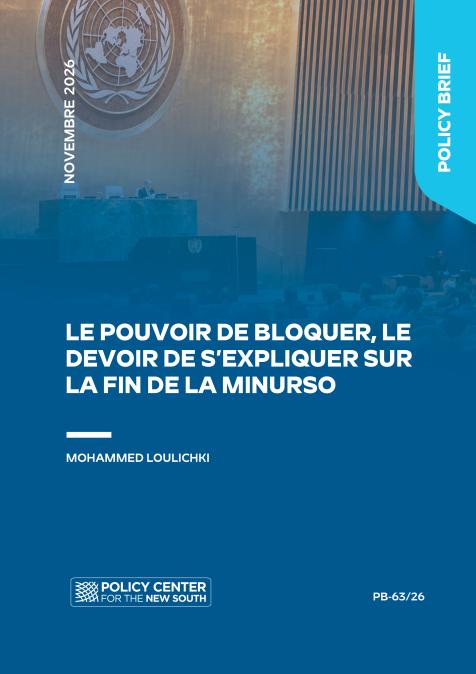
    Le 30 octobre 2026, le mandat de la Minurso a expiré et n’a pas été renouvelé. La raison : un projet américain, pourtant appuyé par 11 membres du Conseil de sécurité, auquel la Russie a opposé son veto, suivi d’un projet russe qui n’a pu recueillir que trois voix en sa faveur, sur lequel les États-Unis ont émis un vote négatif.Cette impasse révèle deux conceptions opposées du règlement. Washington entend recentrer le processus sur l’initiative marocaine d’autonomie et adapter progre ...
  • Authors
    Niagalé Bagayoko
    Eugène Berg
    Pierre Berthelot
    Vincent Campredon
    Christophe Chabert
    Alain Oudot De Dainville
    Emmanuel Veron
    October 28, 2026
    Bientôt disponible en vente. Cet ouvrage est issu de la 20e édition des Dialogues Stratégiques, organisée le 6 mai 2026. Il s’articule autour de deux thématiques : « Souverainetés critiques : sécuriser les infrastructures essentielles et les ressources stratégiques » et « La Méditerranée : entre coopération régionale et rivalités globales ». La première partie examine les conditions dans lesquelles les États peuvent protéger leurs infrastructures et maitriser leur accès au ...
  • Authors
    October 13, 2026
    “Every gun that is made, every warship launched, every rocket fired signifies in the final sense, a theft from those who hunger and are not fed, those who are cold and are not clothed.”President Dwight Eisenhower, April 16, 1953 This paper examines the economic and human impacts of the first six months of the Iran war—from February to the end of August 2026—on Iran’s Arab neighbors and compares these impacts with those on the three countries directly involved—Iran, Israel and t ...
  • Authors
    September 30, 2026
    On August 7, 2026, Saudi Arabia, Turkey, and Pakistan signed the Mecca Joint Défense Agreement, a collective-defense pact widely compared to NATO’s Article 5. This essay argues that the comparison is misleading. Mecca borrows NATO’s language of solidarity without yet possessing NATO’s institutional machinery, and the Houthi offensive against Saudi Arabia in September 2026 provided an early and revealing test of what the agreement actually means in practice. Neither Pakistan nor Turk ...
  • Authors
    August 25, 2026
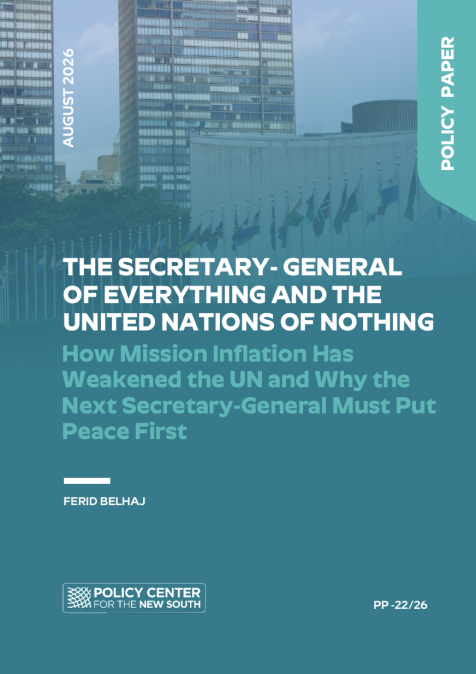
    The next Secretary-General should begin with an act of institutional rebellion: refuse to become the Secretary-General ofeverything. Over three decades the office's political and administrative reach has spread across sustainable development, climate, health, migration, digital governance, financing, gender, food systems, and a still-growing list of global priorities. These issues are not unimportant; the trouble is that institutional ambition has simply outrun institutional capabil ...
  • Authors
    August 13, 2026
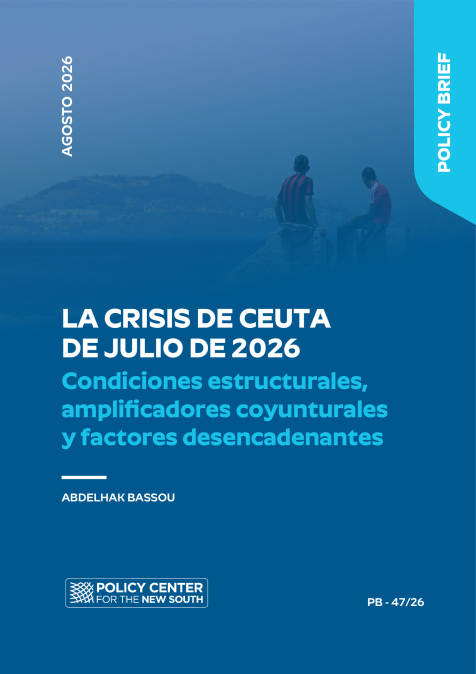
    Cuando estalla una crisis, esta da lugar a la activación de reflejos para su gestión y la limitación de sus efectos. Comienzan, entonces, los análisis y las suposiciones sobre las disfunciones, los incumplimientos y las fallas que la ocasionaron. En algunos casos, la teoría de la conspiración se inmiscuye y las hipótesis buscan a los autores que provocaron la crisis, sus designios y sus objetivos. Sin embargo, la teoría de la gestión de crisis nos enseña que una crisis surge según ...
  • Authors
    August 12, 2026
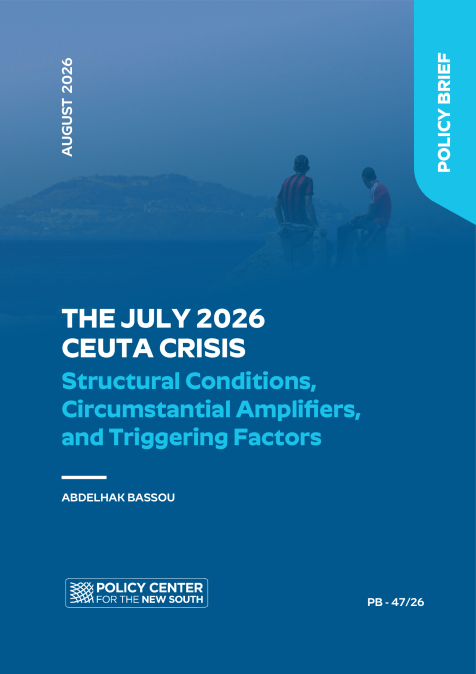
    When a crisis erupts, it sets crisis-management reflexes in motion and prompts efforts to contain its effects. Analysts then begin looking for the malfunctions, oversights, and failures that caused it. In some cases, conspiracy theories creep in, and speculation turns to who engineered the crisis, and to what end. Crisis-management theory teaches us, however, that a crisis unfolds under conditions that favor its emergence. Crises take shape in an environment where latent vulnerabil ...