Technology, Military Power, and the New Geopolitics of Security

February 27, 2026

Technological and industrial capabilities have become core instruments of state power, reshaping military strategies, economic competition, and global influence. The rapid rise of AI, cyber warfare, autonomous systems, and advanced manufacturing is redefining how states project power and deter adversaries. While technological leadership offers opportunities for innovation and strategic advantage, it also generates new risks related to escalation, dependency, and asymmetric vulnerabilities. In this evolving geopolitical landscape, the ability to integrate technology, industry, and strategy is increasingly decisive for long-term sovereignty and influence.

Speakers
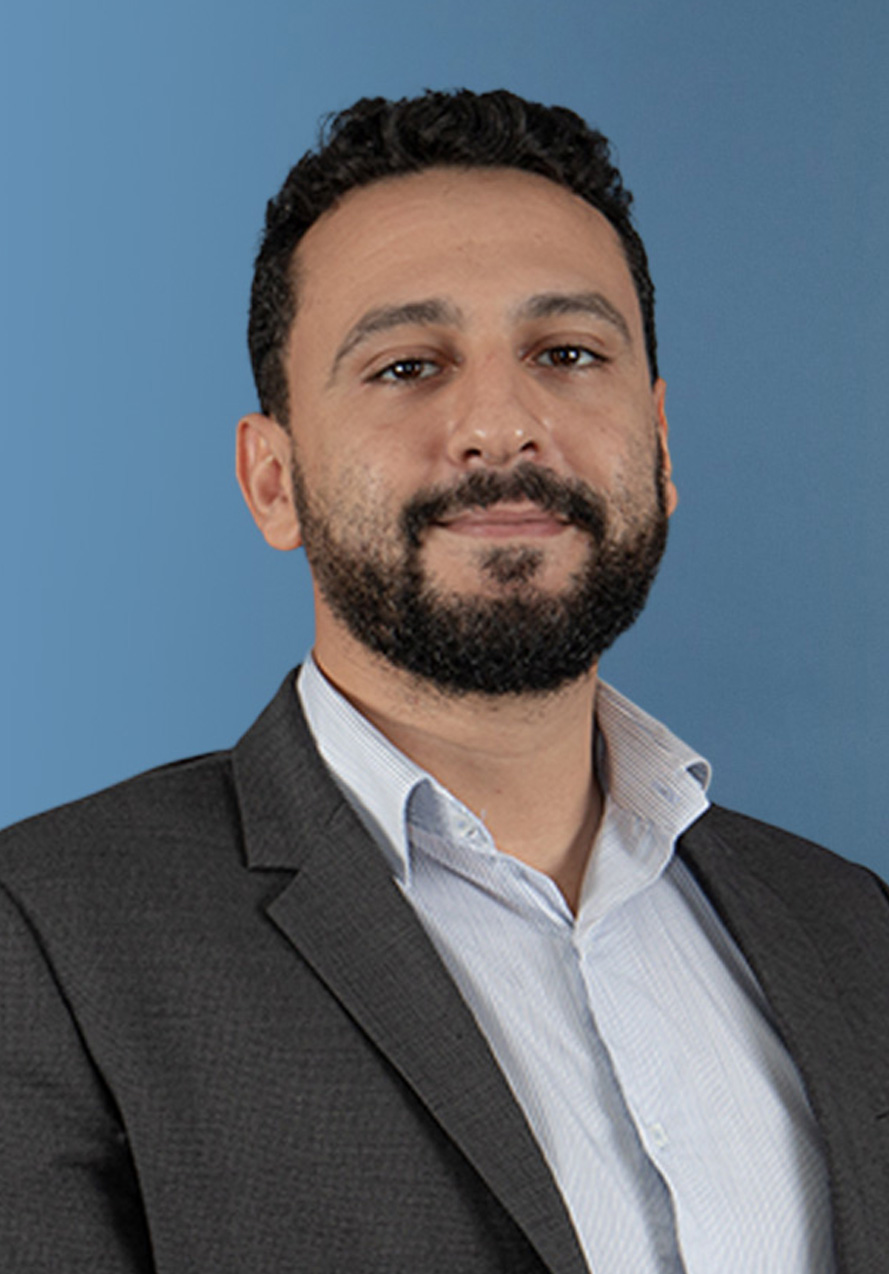
Akram Zaoui
Chargé de Mission to the Executive President
Akram Zaoui is a Senior International Relations Specialist and Chargé de Mission to the Executive President at the Policy Center for the New South (PCNS). Prior to this, he was Manager of Research Support and the Public Policy Lab at the PCNS. His main area of interest is the geopolitical economy of the Extended Middle East and North Africa (MENA) region. From 2018 to 2020, Zaoui was the coordinator of a network of 70+ civil society organizations (CSOs) across France, working with foundations, government, local communities, and the private sector. Zaoui holds a dual degree in corporate and public management from HEC Paris and Sciences Po, as well as a bachelor's degree (licence) in history from Université Paris 1 Panthéon-Sorbonne. He audited courses in Iranian and Shia Stud ...
RELATED CONTENT

  • October 18, 2021
    In the last few months, the global order has been going through some fundamental changes which are affecting the competition between the great powers and have a direct impact on their relations with regional partners. Emerging challenges such as the climate change, cyberwarfare and artificial intelligence, hybrid warfare and non-state actors are shaping a new world that is profoundly different compared to the post-9/11 era, where the war on terrorism opened the gates to what have be ...
  • Authors
    October 18, 2021
    If any proof was needed that change was in the air and repression on the horizon, it was in the center of Kabul: a simple sign was changed, the Ministry of Women’s Affairs was turned into the Ministry for the Promotion of Virtues and Prevention of Vice. This was nothing less than the return of the Taliban’s moral police, well remembered by the older population, ready to enforce a harsh interpretation of the religious law, the Sharia, including stoning, amputation, lashing, and publi ...
  • October 15, 2021
    La bande sahélo-saharienne connaît, depuis quelques années, une instabilité liée à plusieurs facteurs: le terrorisme, les effets du changement climatique, les tensions ethniques et commun ...
  • Authors
    October 5, 2021
    Seconde nation la plus peuplée d’Afrique après le Nigeria, l’Éthiopie se distingue par un essor économique continu depuis trente ans. Des progrès notables sévèrement remis en question par le conflit avec la province du Tigré, qui dure depuis près d’un an. Pays phare de la Corne de l’Afrique, l’Éthiopie s’est distinguée par une croissance moyenne à deux chiffres (10 %) sur la période 2010-2019. Tombée à 6 % en 2020, celle-ci ne devrait pas dépasser 2 % en 2021 selon l ...
  • August 24, 2021
    The Taliban movement took control of Afghanistan’s capital, Kabul, without confrontation or resistance, as soon as the president, Ashraf Ghani, fled the country. Afghan forces were not able to face the Taliban, despite of the fact that Taliban was technically outnumbered and outgunned by Afghan government forces. The New American administration first priority is to make US military mission in Afghanistan conclude by August 31st. Biden believes that the mission US army in Afghanistan ...
  • Authors
    August 11, 2021
    The ongoing war in the Tigray region of Ethiopia has resulted in the world’s worst humanitarian crisis in a decade. The escalating conflict has led to the death and displacement of thousands of civilians, raised ethnic tensions in Ethiopia, and caused a food crisis that could lead to widespread famine. Much can be said about this conflict—how it revolves around models of governance and conflicting visions of self-determination, and how its impact will be felt across the region. Here ...
  • July 26, 2021
    La région nord-est du Mozambique, Cabo Delgado, est, depuis 2017, le théâtre d’une insurrection meurtrière, menée par un groupe, connu sous le nom de Ahlu Sunna Wal Jamaa et que la population locale dénomme « Al Shabab ». Considérée comme la plus pauvre du pays, cette région abrite une population à majorité musulmane et qui reste marginalisée dans les politiques publiques de développement du Gouvernement, malgré l’exploitation intensive des importantes ressources naturelles de son s ...
  • July 02, 2021
    With the intensification of globalization dynamics, risks to the stability of the international system have grown to the extent that formerly localized threats are no longer locally conta ...
  • Authors
    Sous la direction de
    June 23, 2021
    Cette édition du Rapport géopolitique de l’Afrique, la quatrième, s’inscrit dans la droite ligne de la philosophie et de l’esprit du Policy Center for the New South, qui milite pour une Afrique partie intégrante du Sud global et acteur, en devenir, dans les affaires mondiales. L’Afrique comme continent et comme espace est le théâtre où se déploient les actions des Africains pour réagir et interagir avec les conjonctures internationales, et l’Afrique comme populations et institutions ...