Présentation du rapport « Diagnostic du secteur privé »

May 7, 2026

Le rapport de diagnostic du secteur privé au Maroc met en lumière les principaux défis qui freinent encore l’investissement privé et la création d’emplois, malgré les avancées réalisées en matière de stabilité macroéconomique, d’infrastructures et de réformes. Il identifie notamment la complexité réglementaire, le déficit de compétences et le manque de dynamisme des marchés comme des obstacles majeurs à une croissance plus inclusive. Le rapport se concentre sur quatre secteurs à fort potentiel, le solaire décentralisé, le textile bas carbone, l’huile d’argan et les cosmétiques naturels, ainsi que l’aquaculture marine considérés comme des leviers stratégiques pour soutenir la transition verte, renforcer la compétitivité et stimuler l’emploi, notamment pour les jeunes et les femmes.

Speakers
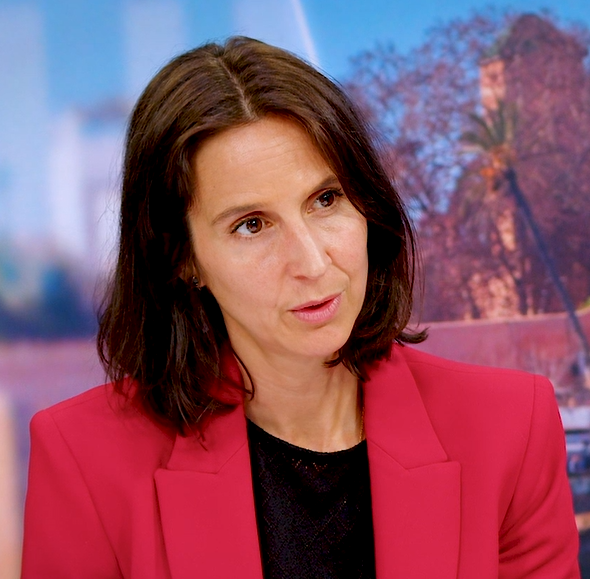
Tayeb Ghazi
Senior Economist
Tayeb Ghazi is Senior Economist at the Policy Center for the New South (PCNS). He is also a member of the Social and Solidarity Economy Research Group at Cadi Ayyad University and holds a master's degree in applied finance from the same university. He is currently working on topics related to labour market, education, migration and some aspects of international trade in developing countries. ...

RELATED CONTENT

  • Authors
    Nesreen Barakat
    Leila Baghdadi
    Ishac Diwan
    Ibrahim Elbadawi
    Alia El Mahdi
    Nada Eissa
    Mahmoud Mohieldin
    Mustapha Nabli
    Omar Razzaz
    Maha Yahya
    Co-directed by Ishac Diwan and Ibrahim Elbadawi
    October 31, 2022
    In the chaotic global post-COVID-19 economy, with the ongoing war in Ukraine, the challenge of adjusting to the global stagflation that is engulfing the world is particularly hard for the oil importing countries of the Middle East and North Africa (MENA) region. A regional commission of experts, working under the auspices of the Economic Research Forum (ERF), and the Finance for Development Lab (FDL), was asked to evaluate the macro-economic risks ahead, and to make recommendations ...
  • Authors
    October 24, 2022
    The pandemic has hit Latin America hard, and its economic recovery has been slower than in other regions. In addition to the legacy of higher public indebtedness, the pandemic left scars on the labor market and the human capital formation of future workers. The COVID-19 crisis has receded in Latin America but has left a significant toll. Reported deaths from the pandemic are currently low and converging to global levels. The average excess mortality during the pandemic was among t ...
  • October 14, 2022
    En attribuant le prix Nobel d'économie 2022 à Ben S. Bernanke, Douglas W. Diamond et Philip H. Dybvig, le jury Nobel a voulu distinguer des travaux, remontant aux années 1980, qui permettent de mieux comprendre l'implication des banques dans les crises. Travaux pionniers, également, dans l'élaboration d'une théorie bancaire, où l'analyse historique est présente avec Ben S. Bernanke qui a longuement étudié le rôle des banques dans la crise de 1929, afin de ne pas renouveler les erreu ...
  • Authors
    October 12, 2022
    There is an international movement to tighten monetary and fiscal policies as a response to the global inflation phenomenon. Accordingly, global economic growth projections for 2022 and 2023 have been revised downward. As inflation will decline only gradually, given the price stickiness of its core components, there is likely to be momentarily a situation of stagflation, i.e. a combination of significant inflation and low or negative GDP growth. We discuss how the current global s ...
  • October 7, 2022
    “The debate on the viability of industrial policy design based on the fragmentation of global value chains, from a cost optimization perspective, did not arise first in the wake of the Covid-19 crisis but was present long before. This industrial policy design was justified by the great development of logistics and transport across the world’s industrial clusters, which allowed just-in-time manufacturing to become the main adopted production model. However, the disruption of logistic ...
  • Authors
    Sous la direction de Larabi Jaïdi
    September 29, 2022
    La succession des chocs pandémique, climatique et géopolitique a éprouvé les économies africaines. Les liens commerciaux et financiers avec le monde ne sont plus seulement considérés comme des moteurs de performance, mais aussi comme des sources potentielles de vulnérabilité. La défiance à l’égard de la mondialisation s’est accrue. Parce qu’elle est venue souligner la dépendance du continent, le dérèglement de ses rapports à la nature et sa vulnérabilité face aux tensions géopolitiq ...
  • Authors
    August 24, 2022
    Chinese economic figures released since August’s beginning have shown a slowdown in its growth. New Omicron coronavirus outbreaks in the context of the Covid-zero policy, the housing slump and heat waves have been, decelerating the economy’s pace. China’s current growth slowdown is an additional step in the trajectory of gradually declining rates that has accompanied the “great rebalancing” since the beginning of the 2010s. One significant difference now is the perception of exhaus ...
  • Authors
    Lahcen Oulhaj
    July 15, 2022
    Cet ouvrage est conçu pour les étudiants de Master en Sciences économiques. Il peut également être utile pour les doctorants dans ce domaine. Il présente les applications des différentes méthodes économétriques sous le logiciel R. C’est pour cette raison qu’il commence par un court chapitre de présentation de R et des données macroéconomiques de la Banque mondiale (BM) pouvant être utilisées pour l’estimation de différents modèles. Le manuel se divise par la suite ...
  • Authors
    Inácio F. Araújo
    Fatna El Hattab
    Soulaimane Anis
    June 30, 2022
    Depuis l’année 2015, le Maroc a fait de la régionalisation avancée un choix stratégique pour concrétiser sa volonté politique de mettre en œuvre une approche de développement territorial plus intégrée. Cette initiative vise à assurer un développement territorial durable, robuste et inclusif mais aussi à capitaliser sur les potentialités de chaque région en termes de ressources. Ainsi, de nouvelles structures ont été mises en place pour moderniser les services publics et améliorer le ...