Présentation du Rapport annuel sur la Géopolitique de l'Afrique 2020, avec Abdelhak Bassou

September 9, 2020

Au moment où elle fêtait le passage à 2020, l’Afrique était loin de soupçonner que l’année à laquelle elle faisait ses adieux, aurait le funeste “privilège” de porter dans ses registres d’Etat-civil, la naissance d’un virus qui allait paralyser le monde, dans la première moitié de l’année suivante. C’est sur cette Afrique de l’année pré-Covid-19 que portent les différents papiers du présent Rapport. Les uns, reflétant les espoirs, les ambitions et les projets africains et, les autres, s’attardant sur les craintes et les angoisses du continent. Découvrez le Rapport annuel sur la Géopolitique de l'Afrique 2020 avec Abdelhak Bassou, fellow au Policy Center for the New South https://www.policycenter.ma/publications/rapport-annuel-sur-la-géopolitique-de-lafrique-2020
Speakers
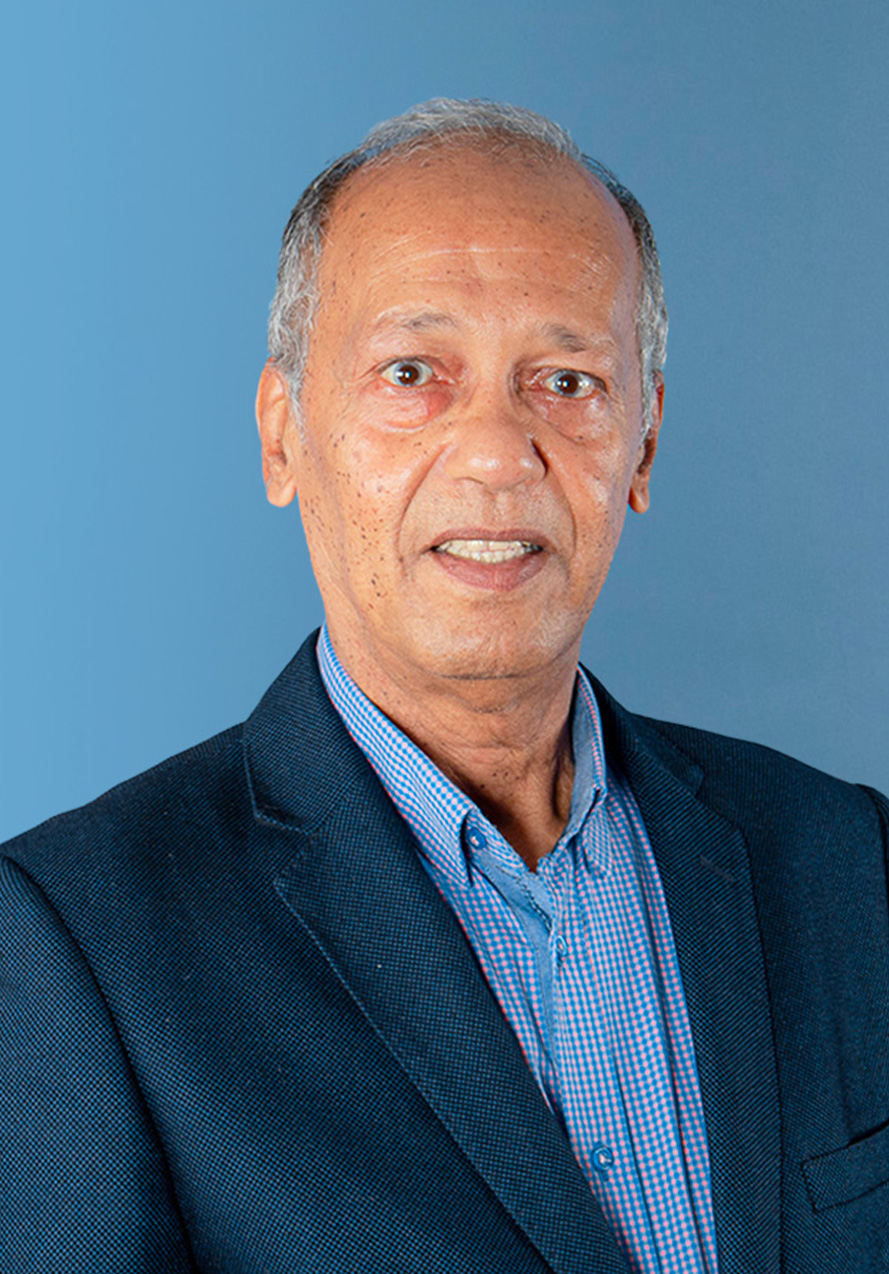
Abdelhak Bassou
Senior Fellow
Abdelhak Bassou is a Senior Fellow at the Policy Center for the New South and a non-resident senior fellow at the Atlantic Council’s Africa Center. He is also an Affiliate Professor at Mohammed VI Polytechnic University. Bassou has had an extensive career in Moroccan National Security, where he served in various capacities including as head of the border division from 1978 to 1993. He was the former director of the Royal Institute of Police in 1998 and served as Head of Regional Security (Errachidia 1999-2003, Sidi Kacem 2003-2005) and as Central Director of General Intelligence from 2006 to 2009.   He holds a master's degree in political science and international studies from the Faculty of Law, Economics, and Social Sciences in Rabat. His academic research delves into ...

RELATED CONTENT

  • January 23, 2026
    The post-1945 international order, an architecture born of war-weariness and colonial twilight, is now a majestic but empty shell. Its foundational promise—a universal system of rules administered impartially—has been hollowed out by decades of selective enforcement, instrumentalized law, and a chasm between the rhetorical ideals of its custodians and their geopolitical practice. This is not a temporary dysfunction, but a systemic failure of legitimacy. From the invasion of Iraq und ...
  • Authors
    January 21, 2026
    In response to developing countries’ dissatisfaction with the New Collective Quantified Goal (NCQG) of $300 billion, which was decided at the Twenty-Ninth Conference Of the Parties (COP29) to the United Nations Framework Convention on Climate Change, in 2024 in Baku, Azerbaijan, the COP29 and COP30 presidencies promised to develop a roadmap to achieve $1.3 trillion in external climate finance that developing countries need, and to present it at COP30 in Belém, Brazil[1]. The two pre ...
  • January 21, 2026
    The Policy Center for the New South hosted a seminar on January 16, 2026, titled “Crisis or Opportunity? Multilateralism in a Polycentric World.”The discussion addressed the growing strain on global cooperation amid overlapping financial, climate, security, and technological shocks, occ...
  • Authors
    Stephan Klingebiel
    Andy Sumner
    January 9, 2026
    Global cooperation is under stress. It hardly requires detailed analysis: the international system is in a profound crisis, when seen from many Northern vantage points. What if we see the same turbulence but from a different vantage point? For many in the Global South the current period signals risk, but also opportunity. That the same events could spark a sense of crisis in one group but opportunity in another is nothing new. However, the sheer scale, speed, and scope of recen ...
  • January 09, 2026
    This episode explores the Trump administration’s confrontational stance toward Venezuela, including sanctions and military posturing and evaluates their effectiveness in undermining Madur ...
  • January 6, 2026
    La création de l’Alliance des États du Sahel (AES) symbolise une rupture politique et géostratégique majeure, appuyée sur un discours souverainiste et anti-occidental. Deux ans après, Mali, Burkina Faso et Niger peinent à assurer leur intégrité territoriale, à stabiliser leur sécurité intérieure et à bâtir une gouvernance solide. L’intégrité territoriale est un problème commun aux trois États, car dans ces pays, la cohésion de l’État et le contrôle du territoire sont directement men ...
  • Authors
    January 5, 2026
    The candidate could not have been more controversial—or more celebrated. Born in Kampala, the capital of Uganda, once ruled by Idi Amin, who famously declared himself “Conqueror of the British Empire” and “King of Scotland,” Zohran Kwama Mamdani, 34, is of Indian descent. His father is an academic, a professor of anthropology at Columbia University, his mother, Mira Nair, is an influential filmmaker. Zohran arrived in the USA on a visa at age seven. No doubt the agents of the feared ...
  • Authors
    Niccola Milnes
    December 30, 2025
    Fuel access has become a strategic pressure point across Mali and its neighbors. In 2025, Jama’t Nusrat al Islam wal- Muslimeen (JNIM) shifted from sporadic interdictions to a deliberate fuel-blockade strategy intended to pressure Bamako without holding territory. By selectively constraining movement along the Sikasso–Kayes–Bamako corridor, the group turned fuel scarcity into a tool of coercion, governance, and narrative control—shaping behavior in the capital while remaining largel ...
  • Authors
    December 18, 2025
    The return of President Donald Trump to the White House at the start of 2025 was expected to signal an American retreat from international engagement, especially in regions of traditional security interest, such as southern Europe, North Africa, and the Middle East. To the surprise of many observers around the Mediterranean, and perhaps to the dismay of some in the Trump administration’s ideological orbit, this has not happened. If anything, the second half of 2025 has seen a high d ...