Présentation d'ouvrage : Dialogues Stratégiques - 12ème volume

October 27, 2022

Depuis 2016, le Policy Center for the New South et le Centre de Géopolitique de l’école HEC Paris organisent chaque année deux éditions des « Dialogues Stratégiques ». Cette plateforme d’analyse et d’échange réunit des experts, des chercheurs provenant de différents think-tanks et du monde académique, des praticiens, ainsi que des décideurs politiques pour débattre des grandes questions géopolitiques et sécuritaires à l’échelle internationale, ainsi que des problématiques d’importance commune à la fois pour l’Europe et l’Afrique.

Le cycle de séminaires a pour vocation d’offrir un environnement orienté vers les politiques publiques « policy-oriented », où les panélistes se réunissent dans un cadre interactif et constructif pour confronter et enrichir leurs analyses respectives. Cette collaboration est issue du partenariat tissé entre les deux centres de réflexion, en vue de favoriser le dialogue scientifique et multidisciplinaire et de contribuer à la production d’analyses pertinentes sur des problématiques majeures.

Dans la perspective de partager les fruits des échanges menés lors des séminaires avec les participants et les parties prenantes intéressées, les discussions et échanges font l’objet de « Policy Papers » qui sont regroupés au sein d’une publication conjointe.

Le 12ème volume de la publication des Dialogues Stratégiques consignant les débats de la précédente édition, a été présenté et discuté, le 27 octobre 2022 au sein du Policy Center for the New South.
Speakers
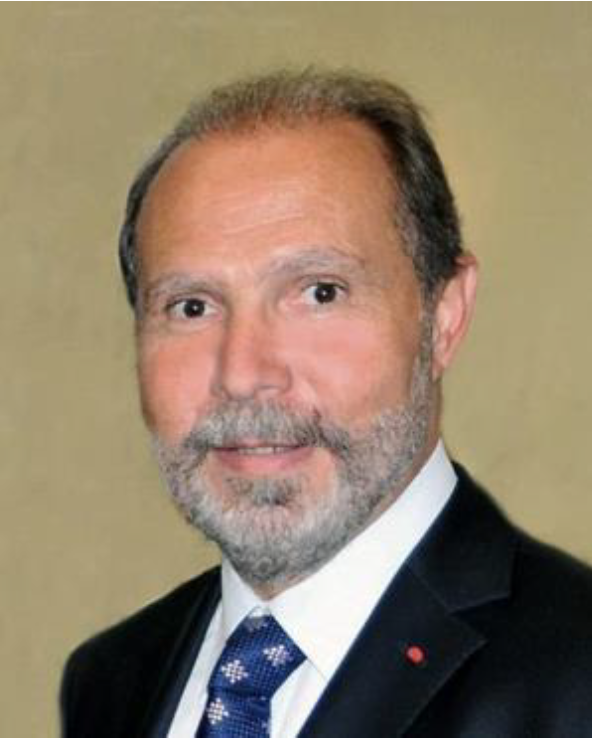
Abdelhak Bassou
Senior Fellow
Abdelhak Bassou is a Senior Fellow at the Policy Center for the New South and a non-resident senior fellow at the Atlantic Council’s Africa Center. He is also an Affiliate Professor at Mohammed VI Polytechnic University. Bassou has had an extensive career in Moroccan National Security, where he served in various capacities including as head of the border division from 1978 to 1993. He was the former director of the Royal Institute of Police in 1998 and served as Head of Regional Security (Errachidia 1999-2003, Sidi Kacem 2003-2005) and as Central Director of General Intelligence from 2006 to 2009.   He holds a master's degree in political science and international studies from the Faculty of Law, Economics, and Social Sciences in Rabat. His academic research delves into ...
Pascal Chaigneau
Directeur du Centre HEC de Géopolitique
Professeur des Universités (classe exceptionnelle), Pascal Chaigneau est responsable du département de science politique de l’Université Paris V Sorbonne Paris Cité. A l’Ecole HEC, il est directeur scientifique du double diplôme HEC-Sciences Po, directeur de la Prep ENA et responsable du programme Business environment de l’executive MBA. Directeur de séminaire à l’Ecole de Guerre, il est expert relations internationales de la Marine Nationale et Directeur de la Chaire de Géopolitique de la Gendarmerie Nationale. Il a créé le Centre d’Etudes Diplomatiques et Stratégiques doté du statut consultatif auprès des Nations Unies. Avocat spécialiste en droit international, il est conseiller du commerce extérieur de la France et a été pendant dix ans administrateur de Radio France Inter ...
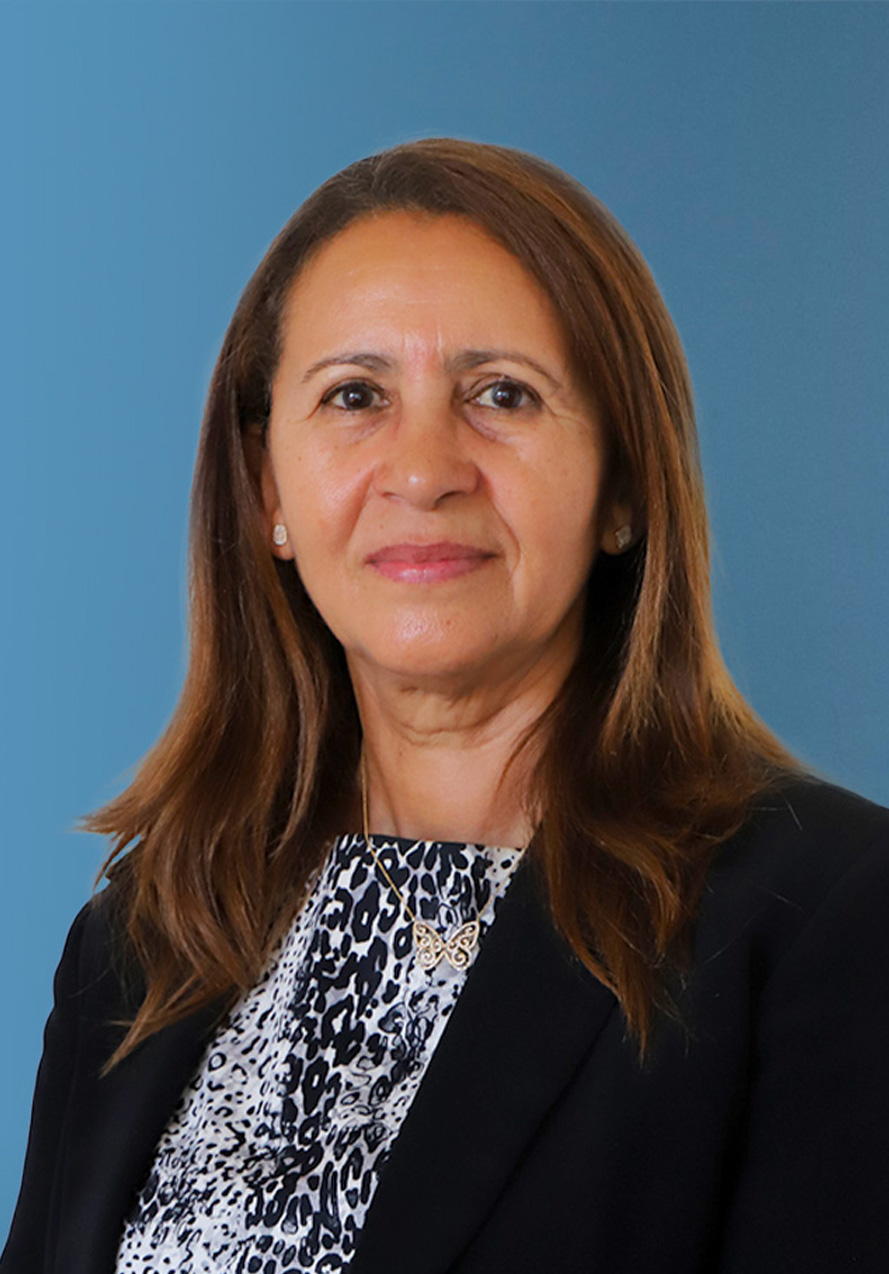
Nouzha Chekrouni
Senior Fellow
Dr. Nouzha Chekrouni is a Senior Fellow at the Policy Center for the New South. She has extensive experience in academia, diplomacy and political leadership.  She has served as His Majesty’s Ambassador to Canada (2009-2016), and Dean of the Council of Arab League Ambassadors to Canada (2015-2016). Dr. Chekrouni was Minister for the Moroccan Community Living Abroad (2002-2007), a Member of Parliament (2002-2007), and the Minister for Women and Social Issues (1998-2002). She holds a Bachelor Degree from the Philological Faculty at the University of Fez, a Post-Graduate Diploma and a PhD in Linguistics from the Université Sorbonne Nouvelle in Paris. Dr. Chekrouni has also completed a Certificate in Ethics and International Relations at Harvard University. She is a 2016 Sen ...
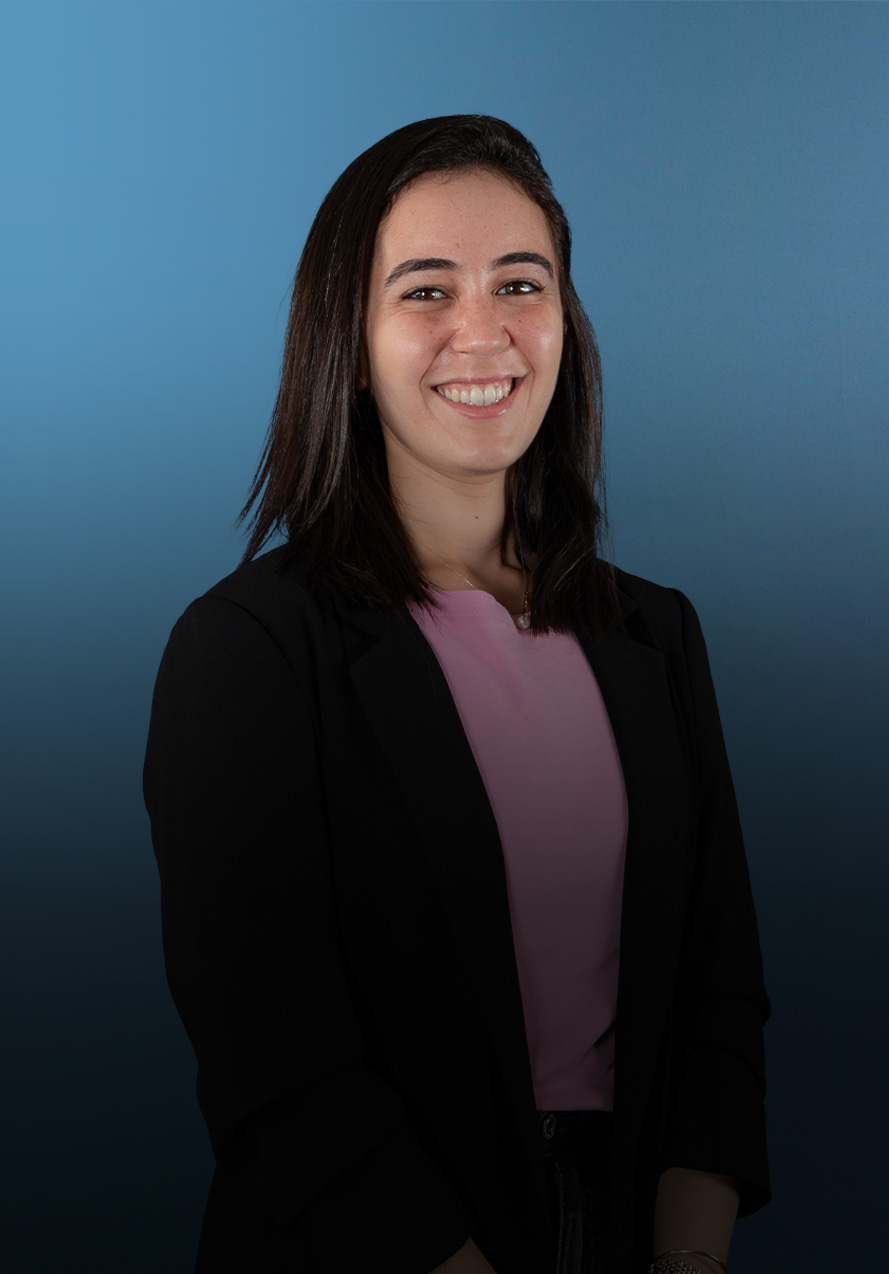
Nihal El Mquirmi
International Relations Specialist
Nihal El Mquirmi is an International Relations Specialist within the Department of Research in International Relations at the Policy Center for the New South. Her research focuses on North Africa, the gender-security nexus and the use of Private Military and Security Companies. Nihal joined the Policy Center for the New South in March 2019 following the completion of her M.A. in International Security at the University of Warwick, and her B.A. Hons in International Relations from Complutense University of Madrid. Prior to joining the Policy Center, Nihal interned at the General Consulate of Morocco in Brussels and at the Mission of Morocco to the European Union. ...

Thierry Garcin
Chercheur Associé, Centre HEC de Géopolitique
Politologue, chercheur associé à l’Université de Paris (École doctorale), professeur invité à la Sorbonne Abou Dhabi, Thierry Garcin privilégie l’approche géopolitique des relations internationales, avec un intérêt particulier pour l’arme nucléaire, les conflits armés et la notion de puissance. Docteur en science politique (HDR), il a notamment enseigné à Paris I, Paris III et à l’IEP. Maître de conférences à HEC, il vient de publier la seconde édition de Géopolitique de l’Arctique (Economica). Responsable de l’émission quotidienne de Radio-France, « Les Enjeux internationaux », durant 33 ans. Parmi ses publications : « La Fragmentation du monde », « La puissance dans les relations internationales », Paris, Economica, 2018. Géopolitique de l'Arctique, Paris, 2e éd., Economica, ...
Alain Oudot de Dainville
Ancien Chef d’État-Major de la Marine
L'Amiral Alain Oudot de Dainville a effectué une longue carrière dans la Marine nationale, débutée dans l'aéronavale comme pilote de porte-avions, poursuivie comme commandant de bâtiments lors des opérations en Océan Indien et en mer Adriatique et terminée à la tête de la Marine. Il est ensuite nommé pendant 7 ans à la présidence d'une société qui commerce avec l'Arabie Saoudite et les pays du Moyen Orient. Il est aujourd’hui chercheur associé à HEC et visiting professor à la Sorbonne d'Abu Dhabi. ...

RELATED CONTENT

  • Authors
    November 16, 2026
    How can international arbitration preserve its core principles of neutrality, party autonomy and enforceability while adapting to a world increasingly characterized by geopolitical fragmentation, technological disruption and competing regulatory interests? Meeting this challenge demands a collective effort, bringing together arbitral institutions, national courts, governments, international organizations, academics and practitioners. It requires openness to institutional innovation, ...
  • Authors
    Bambang Brodjonegoro
    November 12, 2026
    This Opinion was originally published in asiapathways-adbi.org When G20 leaders meet in Miami next month, the discussions are expected to focus on how to sustain growth in a world marked by economic fragmentation, supply chain disruptions, fiscal pressures, and geopolitical uncertainty. Yet the global economy’s success depends not only on G20 members, but also on the many developing countries outside the group. Strengthening regional cooperation is a practical way to bridge thi ...
  • Authors
    Giovanna Rinaldo
    November 4, 2026
    Brazil’s presidential election, which concluded on October 25, 2026, was above all a digital battle. This is nothing new; the impact of social media on elections has been widely analyzed since Barack Obama's 2008 win marked a turning point for digital campaigning worldwide. Almost two decades later, social media is an entirely different breed, with a life of its own – and still very little regulation within electoral politics. The danger, however, is that digital players now also in ...
  • Authors
    October 29, 2026
    Wars are decided by those who hold military power, but their costs are increasingly borne by those who have little or no voice in the decisions that start them. The US–Iran war shows this imbalance very clearly. Its economic consequences have gone far beyond the battlefield and have disrupted energy markets, trade routes, food supplies, public finances and investment in the Gulf, Europe, Africa and Asia. The most striking feature of the conflict, however, is not only the size of the ...
  • October 22, 2026
    Strategic hedging is rational when it preserves a worthwhile choice at a tolerable cost while respecting existing commitments. Drawing on the literature on hedging and Latin American autonomy, this Policy Brief examines contrasting illustrations of that proposition. It distinguishes ambiguity about future alignment from uncertainty about existing obligations and explains how clearly bounded commitments can reconcile autonomy with credibility. The cases reveal different vulnerabiliti ...
  • October 15, 2026
    The Policy Center for the New South, in partnership with The Asian Network, is organizing a webinar titled “Emerging Powers and the Remaking of Global Order” to examine the growing role of emerging powers and the Global South at a time of profound transformation in the international sys...
  • Authors
    October 13, 2026
    “Every gun that is made, every warship launched, every rocket fired signifies in the final sense, a theft from those who hunger and are not fed, those who are cold and are not clothed.”President Dwight Eisenhower, April 16, 1953 This paper examines the economic and human impacts of the first six months of the Iran war—from February to the end of August 2026—on Iran’s Arab neighbors and compares these impacts with those on the three countries directly involved—Iran, Israel and t ...