Prabhu L. PINGALI, Professor of Applied Economics and Management, Cornell University

June 24, 2015
Speakers

Prabhu L. PINGALI
Professor of Applied Economics and Management, Cornell University
Prabhu Pingali is a Professor in the Charles H. Dyson School of Applied Economics and Management at Cornell University, with a joint appointment in the Division of Nutritional Sciences, and the Founding Director of the Tata-Cornell Institute for Agriculture and Nutrition (TCI). Prior to joining Cornell, he was the Deputy Director, Agricultural Development Division of the Bill & Melinda Gates Foundation, from 2008–May 2013. In addition, he worked with the CGIAR for 15 years from 1987-2002, first with IRRI in the Philippines and then with CIMMYT in Mexico. Pingali is a member in the U.S. National Academy of Sciences and an AAEA Fellow. He has over three decades of experience working with some of the leading international agricultural development organizations as a research ...

RELATED CONTENT

  • Authors
    August 5, 2026
    This paper addresses the persistent challenge of resource dependence in the world's poorest countries, focusing on the ten poorest African nations where natural- resource rents average 14% of income. It argues that four decades of conventional policy advice, which treated resource dependence primarily as a revenue management problem, have failed to help these countries. While stabilization funds and permanent-income frameworks aim to smooth consumption, they do not answer the fundam ...
  • Authors
    July 31, 2026
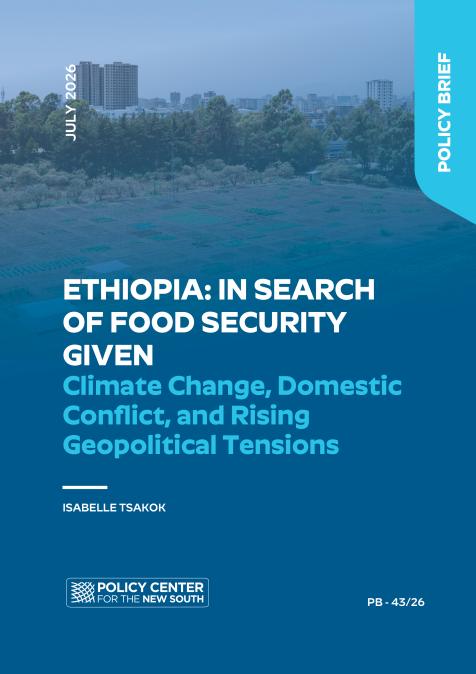
    Ethiopia continues to struggle to lay the economic foundations of food security for all, more than 30 years after first adopting the East Asian Developmental State Model (EADS) under Zenawi (1911-2012), continued under Hailemariam Desalegn (2012-April 2018), and later shifting toward a neo-liberal, Washington consensus-oriented approach under Abiy Ahmed (2018-present). The achievements recorded under the EADS approach—particularly double-digit annual growth, substantial poverty ...
  • Authors
    April 26, 2023
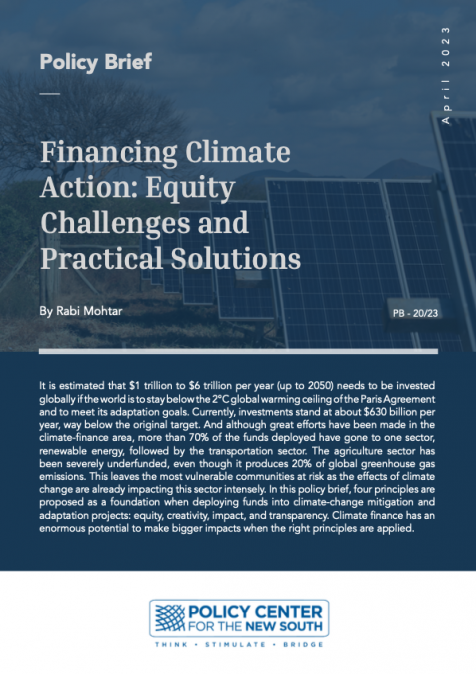
    It is estimated that $1 trillion to $6 trillion per year (up to 2050) needs to be invested globally if the world is to stay below the 2°C global warming ceiling of the Paris Agreement and to meet its adaptation goals. Currently, investments stand at about $630 billion per year, way below the original target. And although great efforts have been made in the climate-finance area, more than 70% of the funds deployed have gone to one sector, renewable energy, followed by the transportat ...
  • March 1, 2022
    Known for being a climate change hotspot, Morocco is at the forefront of a climate disaster. Consequences are already being felt, whether in the form of increasing temperature or a downward trend in precipitations, which directly threaten the water security and, by extension, the social-ecological systems of the country. The systems by which food, energy, and water are produced, distributed, and consumed heavily depend on one another. Their implicit feedbacks and links are not linea ...
  • Authors
    Paola Maniga
    Yassine Moustanjidi
    February 15, 2021
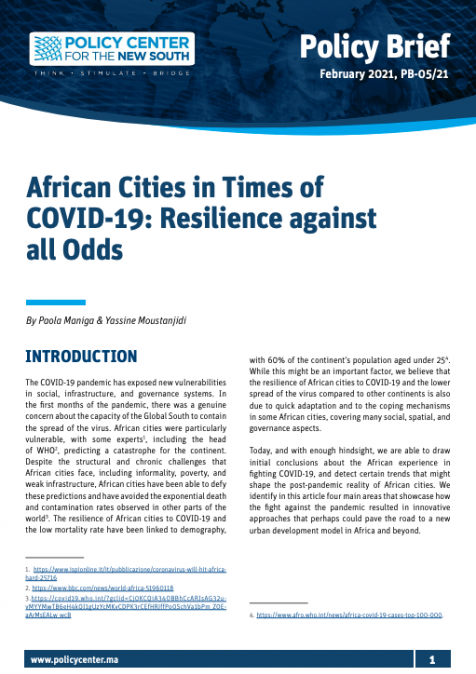
    The COVID-19 pandemic has exposed new vulnerabilities in social, infrastructure, and governance systems. In the first months of the pandemic, there was a genuine concern about the capacity of the Global South to contain the spread of the virus. African cities were particularly vulnerable, with some experts1, including the head of WHO2, predicting a catastrophe for the continent. Despite the structural and chronic challenges that African cities face, including informality, poverty, a ...
  • August 1, 2018
    “This article has been originally published in 'Morocco in Focus 2018,' the magazine of the Moroccan Embassy in New Delhi, India on the occasion of the Morocco National Day 2018.” Introduction In an article published last year, the author stressed the role of partnership between Morocco and India for the inclusive growth of small farmers. There is no doubt that agriculture remains a major instrument for human development both in India and in Africa. Several international reports&n ...
  • Authors
    Under the Supervision of
    Philippe Chalmin
    July 4, 2016
    Guinea’s bauxite, Moroccan phosphates, Nigerian Bonny Light, Zambian copper, Côte d'Ivoire’s cocoa, Ethiopian coffee or Madagascar’s vanilla: all are examples demonstrating that raw materials have a dimension that is as global as it is local. Global by the markets on which they are traded, local by their quality, a key element of their price, and their macroeconomic impact, particularly for Africa. In line with the 2016 CyclOpe report, which celebrates three decades of existence thi ...
  • July 21, 2015
    The 16th Annual Global Development Conference has been dedicated this year to the theme of ‘Agriculture for Sustainable Growth: Challenges and Opportunities for a New ‘Green Revolution’.  One of the sub-themes that has been addressed during this event is related to the design of the optimal agricultural policy supposed to lead towards development, especially in low-income countries. The objective of this blog is to cover the key elements that make an agricultural policy su ...