
Post Covid-19 Commodity Finance with Helyette Geman (4/5)

May 14, 2020

Retrouvez les analyses de nos expert-e-s au sujet de l'impact de la crise Covid 19 en une série de 5 entretiens

Speakers
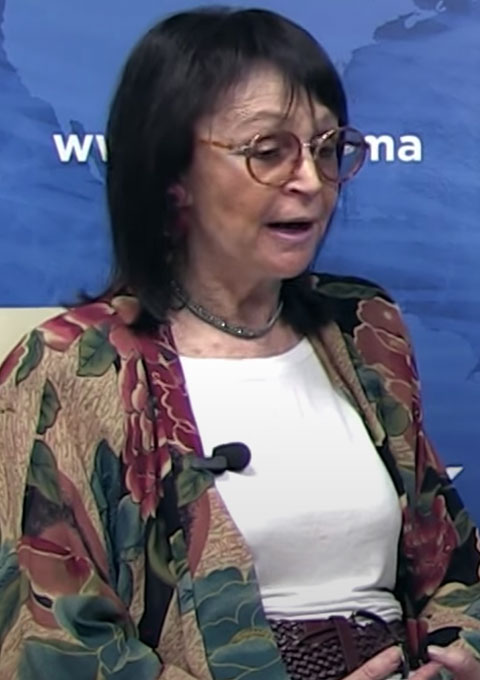
Helyette Geman
Senior Fellow
Helyette Geman is Senior Fellow at the Policy Center for the New South, Director of the Commodity Finance Center at Birkbeck, University of London, and a Research Professor at the Johns Hopkins University, who focuses on Probability, Commodities and Finance. She was Chairman of the Finance Department at ESSEC Business School from 1988 to 1995, and the Director of Dauphine Master 203 at the University of Paris Dauphine from 1995 to 2005. Helyette Geman is a Graduate from Ecole Normale Supérieure in Mathematics and holds a PhD in Probability and a PhD in Finance. She worked as a scientific expert for EDF Trading, Louis Dreyfus, BMP Billiton, Bunge Invivo and financial institutions. Her book “Commodities and Commodity Derivatives” published in 2005 by Wiley Finance has become th ...
RELATED CONTENT

  • Authors
    Marie-Claire Aoun
    October 14, 2015
    Plusieurs facteurs bien connus sont à l’origine de l’effondrement des cours du brut depuis juin 2014. Face à une offre pétrolière excédentaire avec l’essor des pétroles de schiste américains, le ralentissement de la croissance économique des pays émergents, notamment des pays à forte intensité énergétique comme le Brésil, la Chine ou la Russie se traduit par une consommation pétrolière mondiale, toujours en croissance, mais à un rythme moindre que les années précédentes. A ces évolu ...
  • Authors
    Rabah Arezki
    Akito Matsumoto
    September 22, 2015
    “It was the best of times, it was the worst of times.” With these words Charles Dickens opens his novel “A Tale of Two Cities”. Winners and losers in a “tale of two commodities” may one day look back with similar reflections, as prices of metals and oil have seen some seismic shifts in recent weeks, months and years. This blog seeks to explain how demand — but also supply and financial market conditions — are affecting metals prices. We will show some contrast with oil, where suppl ...
  • Authors
    August 28, 2015
    The African endowment in mineral resources is well known and has often been a mixed blessing, according to the socalled “natural resources curse”. Bauxite, an ore that serves as a feedstock for aluminium production, is particularly present in Guinean soil but, notwithstanding its efforts to do so, this country has not yet succeeded in transforming this red treasure into a real source of social and economic development. Despite the difficult economic context and a long road ahead, th ...
  • August 18, 2015
    OCP Policy Center and the German Marshall Fund of the United States, in partnership with the Fernando Henrique Cardoso Institute, organized an Atlantic Strategy Group conference on June 23rd and 24th, 2015 in São Paulo, Brazil with a focus on trade, energy, food, and Geopolitical System...
  • Authors
    July 27, 2015
    The Chinese stock markets have been recently affected by plummeting indexes and high volatility. The substantial level of “mom and pop” speculators has been identified as one of the reason for these dynamics. Although there is no speculative bubble at the moment, we may question the impact of potential excessive trading on the promising future of Chinese commodity exchanges. ...
  • Authors
    Karim EL MOKRI
    July 6, 2015
    « Les asymétries et l’instabilité du marché des matières premières dans les pays en développement : politiques et impacts sur le développement », une problématique d’un intérêt particulier pour ces pays, a fait l’objet d’un séminaire de recherche organisé par la Fondation pour les Etudes et Recherches sur le Développement International (Ferdi), les 24 et 25 juin 2015 à Clermont-Ferrand. Cet évènement a été tenu la veille du workshop co-organisé par la Ferdi et OCP Policy Center ...
  • Authors
    June 1, 2015
    The financialization of commodity chains has its origins far beyond the increased participation of investment funds on the futures markets. It should basically be understood as the consequence of the progressive inability of players that make up these commodity chains to jointly manage price risk resulting from the transfer of product from upstream to downstream. This dynamic has emerged since the late 1970s, but it is likely that the current drop in prices, if it proved sustainable ...
  • Authors
    June 1, 2015
    La financiarisation des filières de matières premières trouve ses origines bien au-delà de la participation accrue des fonds d’investissement sur les marchés « futures ». Elle doit fondamentalement se comprendre comme la conséquence de l’incapacité progressive des acteurs qui les composent à gérer en commun le risque de prix qui découle du transfert du produit, de l’amont vers l’aval. Cette dynamique s’est affirmée depuis la fin des années 1970, mais il est probable que la chute act ...


