Otaviano Canuto on Bloated Central Bank Balance Sheets

April 14, 2021

When the global financial crisis hit the international economy in 2008, central banks in major advanced economies widened their range of monetary policy instruments, increasingly resorting to unconventional tools. Initially to avoid a deepening of the financial destabilization and bankruptcy of solvent-but-illiquid private sector balance sheets, as it happened during the Great Depression of the 30s in the last century. Subsequently to fight economic stagnation and deflation risks as private agents deleveraged. While the “liability-driven” initial phase can be seen as “quantitative stabilizing”, the later “asset-driven” balance sheet expansion is the true “quantitative easing”. There are good reasons to believe that there will be no return to the pre-QE configuration of balance sheets. First, the increasing global financial integration in the last few decades has imposed increasing challenges in terms of making liquidity management effective as cross-border volumes of capital flows have expanded significantly. Second, changes to financial regulation have induced private agents to alter their behavior and strategies. Finally, a new task has come under the purview of central banks: monitoring relationships between various benchmark curves—i.e., operating as quasi-market makers. As a spill-over from abroad, central bank balance sheets in some emerging market economies also bloated. The era of bloated central bank balance sheets seems to be a component of the “new normal”, even if they undergo some diet in the future.

Speakers
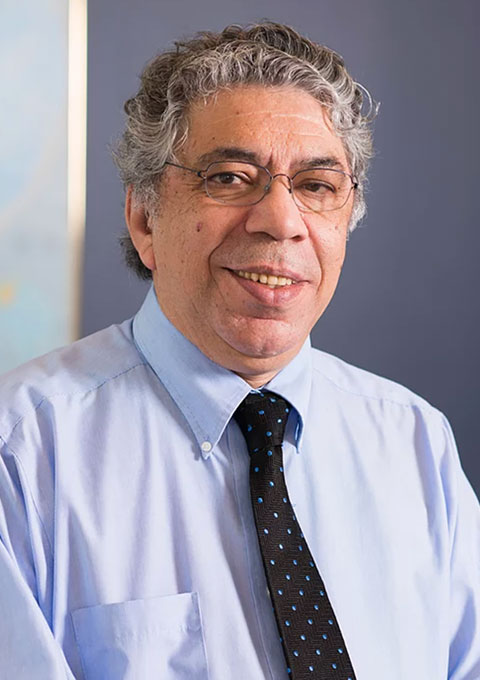
Otaviano Canuto
Senior Fellow
Senior Fellow at the Policy Center for the New South, Affiliate Professor at Mohammed VI Polytechnic University and Non-Resident Senior Fellow at Brookings Institute. Former Vice President and Executive Director at the World Bank, Executive Director at the International Monetary Fund (IMF) and Vice President at the Inter-American Development Bank. ...

RELATED CONTENT

  • December 17, 2019
    Across Africa, many rural communities still depend on manual and animal power for their farm needs, whether it is for production, harvesting or postharvest activities. In fact, in sub-Saharan Africa, engine power represents a meagre 10 per cent of all energy used on farms, compared to 50 per cent in developing regions. Without access to mechanised tools and technologies, farming is a tough, laborious and time-consuming process. Farmers are often left with small harvests, low income ...
  • December 17, 2019
    L’Inde est confrontée, aujourd’hui, à plusieurs défis énergétiques : - Assurer la sécurité énergétique du pays, en généralisant l’accès pour tous à l’électricité. Ce qui n’est pas le cas en 2019. - Le faire en réduisant sa dépendance aux énergies fossiles, afin de mieux répondre aux orientations des Conférences des parties, COP 21 et COP 22. Pour cela, les autorités gouvernementales vont mener, dès 1981, une réflexion sur les énergies renouvelables, les conduisant à privilégier l ...
  • December 14, 2019
    Moderator Alan Kasujja, Lead Presenter, Newsday, BBC News Speakers Rym Ayadi, Founder and Scientific Director, Euro-Mediterranean Network for Economic Studies – EMNES Otaviano Canuto, Senior Fellow, Policy Center for the New South Harinder Kohli, Founding Director and Chief Executive, E...
  • December 14, 2019
    Moderator John Yearwood, President and CEO, Yearwood Media Group Speakers Uri Dadush, Senior Fellow, Policy Center for the New South Matthias Fekl, Former Minister for Foreign Trade, France Renato Flôres, Director, International Intelligence Unit, Fundação Getulio Vargas ...
  • December 14, 2019
    Moderator Alan Kasujja, Lead Presenter, Newsday, BBC News Speakers Rym Ayadi, Founder and Scientific Director, Euro-Mediterranean Network for Economic Studies – EMNES Otaviano Canuto, Senior Fellow, Policy Center for the New South Harinder Kohli, Founding Director and Chief Executive, E...
  • December 14, 2019
    Moderator Alan Kasujja, Lead Presenter, Newsday, BBC News Speakers Rym Ayadi, Founder and Scientific Director, Euro-Mediterranean Network for Economic Studies – EMNES Otaviano Canuto, Senior Fellow, Policy Center for the New South Harinder Kohli, Founding Director and Chief Executive, E...
  • December 14, 2019
    Moderator John Yearwood, President and CEO, Yearwood Media Group Speakers Uri Dadush, Senior Fellow, Policy Center for the New South Matthias Fekl, Former Minister for Foreign Trade, France Renato Flôres, Director, International Intelligence Unit, Fundação Getulio Vargas ...
  • Authors
    December 11, 2019
    The Atlantic Current’s 6th edition provides overview, fresh insights, latest data, and broader analysis on the Atlantic space’s current challenges, as well as their implications for the South. Different chapters explore emerging trends and critical issues, such as the World Trade Organization reform, Brexit and the future of EU, the expansion of militancy in the Sahel and Coastal Africa, the role of cultural diplomacy and the deepening of Sino-African relations within a shifting an ...