Marchés de capitaux et marchés financiers : quels leviers de développement au Maroc ?

May 11, 2026

Cet épisode interroge la capacité du Maroc à atteindre ses ambitions économiques avec un système de financement encore largement dominé par les banques. Dans un contexte de besoins croissants en investissement et de transformation du tissu productif, les marchés de capitaux apparaissent comme un levier stratégique pour mobiliser l’épargne, soutenir les entreprises et diversifier les sources de financement. À travers l’analyse de Mohammed Benmoussa, l’épisode met en lumière les réformes et dynamiques nécessaires pour faire des marchés de capitaux un moteur durable de croissance et de compétitivité pour le Maroc.

Speakers
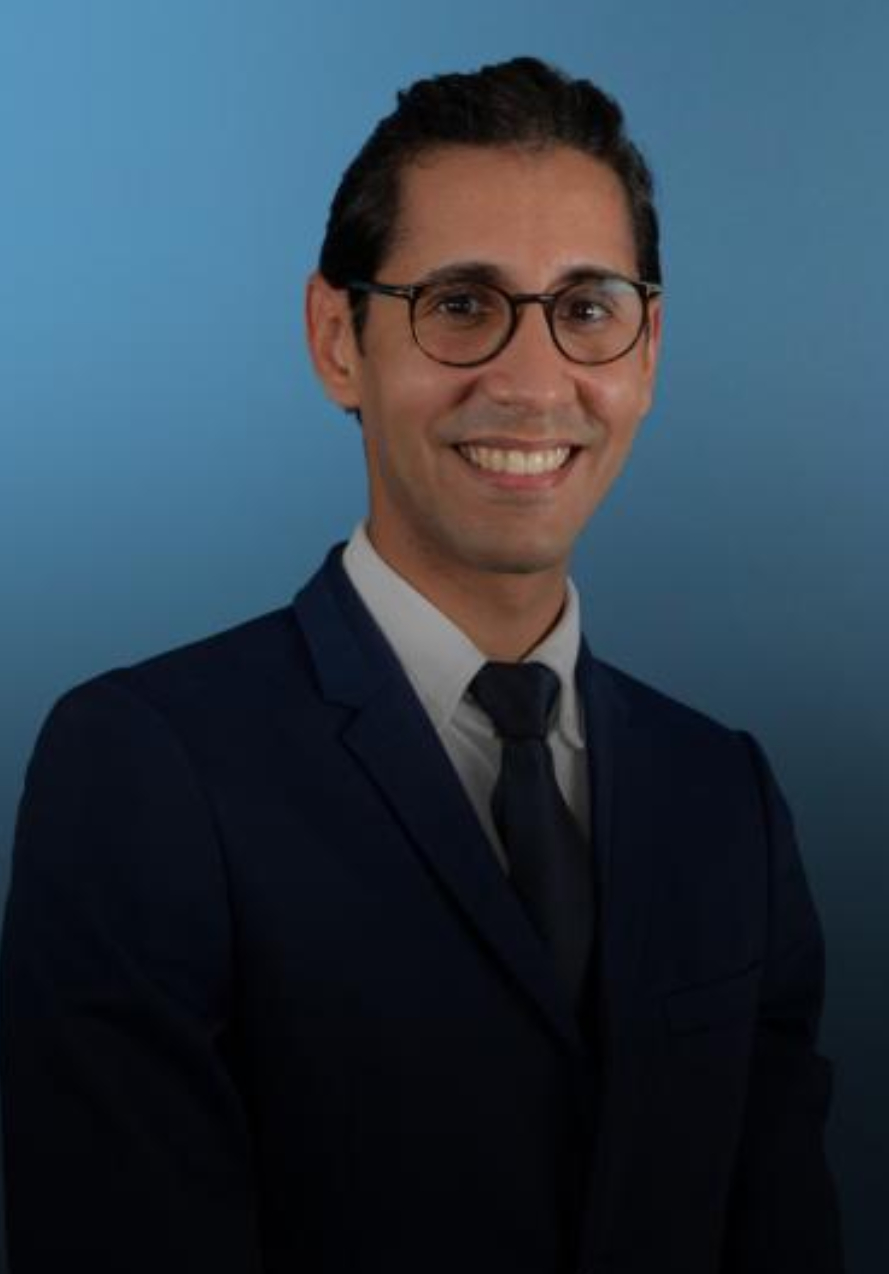
Ahmed Ouhnini
Economist, Policy Center for the New South
Ahmed Ouhnini is an Economist at the Policy Center for the New South. His research area covers agricultural economics, human and social development. Previously, he has worked as a researcher at the Paris School of Economics (PSE) and has also a record of working in consulting services in Morocco. Ahmed holds an engineering Diploma in Agriculture and Rural Development from the National School of Agriculture of Meknes and a Master’s Degree in Law, Economics and Management from the Paris 1 Pantheon Sorbonne Institute of Development. ...
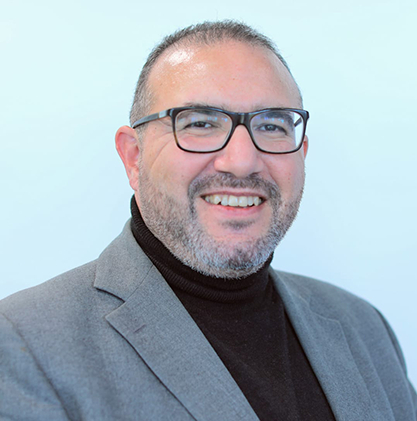
Mohammed Benmoussa
Affiliate Professor, Mohammed VI Polytechnic University, Rabat
Mohammed Benmoussa is a Moroccan economist and senior consultant in economic policy, taxation, and public finance, as well as a former banker and capital market practitioner. He is Professor of Corporate and Market Finance at Mohammed VI Polytechnic University. In December 2019, he was appointed by HM King Mohammed VI to the Special Commission on the New Development Model. He is also President of the Forum of Progressive Economists, President of the Damir Movement and the La Samir Front. He previously served as President of the Brokerage Firms Association and Vice-President of the Casablanca Stock Exchange. ...

RELATED CONTENT

  • December 15, 2017
    Moderator: Adama Gaye, CEO, Newforce Africa - Philippe Chalmin, Professor, Economic History, Paris Dauphine University - Uri Dadush, Senior Fellow, OCP Policy Center - Jean Hervé Lorenzi, President, Cercle des Economistes - Paulo Portas, Former Minister of Foreign Affairs, Portugal - Is...
  • December 14, 2017
    Moderator: André Caillé, Board Member, Junex - Eric Festa, Senior Vice President, LNG Business Development, Total - R. Andreas Kraemer, Founder & Chairman, Ecologic Institute - Thione Niang, Co-Founder of Akon Lighting Africa - Simone Tagliapietra, Research Fellow, Bruegel ...
  • December 13, 2017
    - Lilia Rizk, OCP Policy Center - Yassir Essyagi, OCP Policy Center   ...
  • Authors
    Lahcen Oulhaj
    September 20, 2017
    Le présent livre présente un ensemble d’outils et de notions mathématiques communément utilisés en économie appliquée. Il commence par rappeler les notions d’algèbre matricielle, et enchaîne avec l’étude des systèmes linéaires d’équations et les transformations de matrices, pour traiter de la décomposition des matrices, devenue un outil couramment utilisé en économétrie des séries chronologiques et des données de panel. Le calcul différentiel et intégral, de plus en plus utilisé en ...
  • Authors
    September 15, 2017
    After a strong rising tide starting in the 1990s, financial globalization seems to have reached a plateau since the global financial crisis. However, that apparent stability has taken place along a deep reshaping of cross-border financial flows, featuring de-banking and an increasing weight of non-banking financial cross-border transactions. Sources of potential instability and long-term funding challenges have morphed accordingly.      Financial globalization is mor ...
  • Authors
    Taoufik Abbad
    July 5, 2017
    Le processus continu et renforcé de l’accumulation du capital physique, dans lequel s’est engagé le Maroc depuis le début des années 2000, a permis de préserver la stabilité des équilibres fondamentaux et d’amortir les différents chocs exogènes, aussi bien internes qu’externes. Cependant, cet effort d’accumulation n’a pas permis d’insuffler un accroissement significatif des gains de productivité et d’accélérer la transformation de la base productive. Ce Policy Brief propose de décri ...
  • Authors
    Taoufik Abbad
    July 5, 2017
    The continuous and reinforced process of accumulating physical capital, in which Morocco has embarked since the early 2000s, has helped to preserve the stability of the fundamental equilibrium and cushion the economy from various external and exogenous shocks. However, these accumulation efforts have not led to a significant increase in productivity gains or to an accelerated transformation of the productive base. This Policy Brief aims to describe the underpinnings of the capital a ...
  • Authors
    Aleksandra Liaplina
    June 29, 2017
    The world economy – and emerging market and developing economies in particular – display a gap between infrastructure needs and its finance (Canuto, 2014). On the one hand, infrastructure investment has fallen far short of what would be necessary to support potential growth. On the other hand, abundant financial resources in world markets have been facing very low and decreasing interest rates, whereas opportunities of higher return from potential infrastructure assets are missed. H ...