Marchés de capitaux et marchés financiers : quels leviers de développement au Maroc ?

May 11, 2026

Cet épisode interroge la capacité du Maroc à atteindre ses ambitions économiques avec un système de financement encore largement dominé par les banques. Dans un contexte de besoins croissants en investissement et de transformation du tissu productif, les marchés de capitaux apparaissent comme un levier stratégique pour mobiliser l’épargne, soutenir les entreprises et diversifier les sources de financement. À travers l’analyse de Mohammed Benmoussa, l’épisode met en lumière les réformes et dynamiques nécessaires pour faire des marchés de capitaux un moteur durable de croissance et de compétitivité pour le Maroc.

Speakers
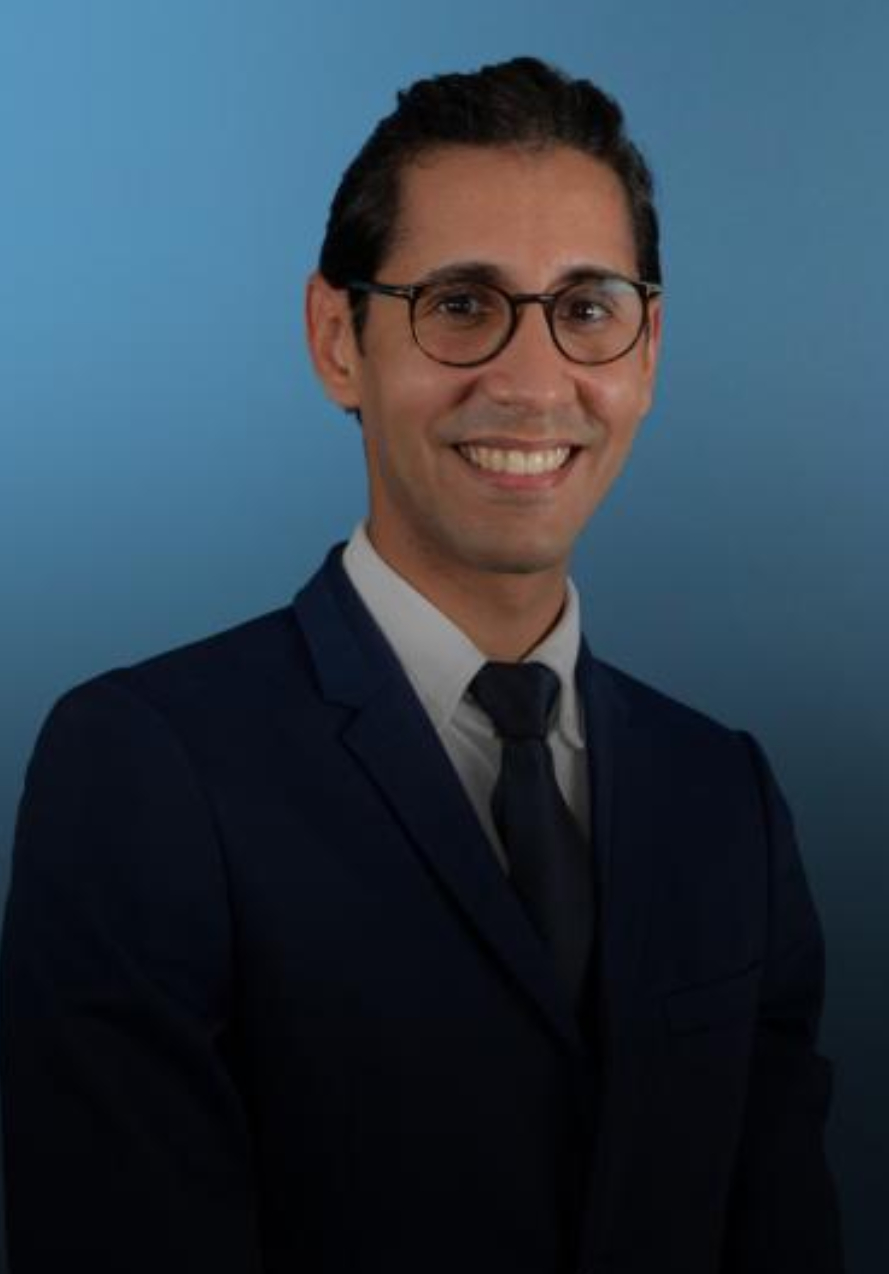
Ahmed Ouhnini
Economist, Policy Center for the New South
Ahmed Ouhnini is an Economist at the Policy Center for the New South. His research area covers agricultural economics, human and social development. Previously, he has worked as a researcher at the Paris School of Economics (PSE) and has also a record of working in consulting services in Morocco. Ahmed holds an engineering Diploma in Agriculture and Rural Development from the National School of Agriculture of Meknes and a Master’s Degree in Law, Economics and Management from the Paris 1 Pantheon Sorbonne Institute of Development. ...

Mohammed Benmoussa
Affiliate Professor, Mohammed VI Polytechnic University, Rabat
Mohammed Benmoussa is a Moroccan economist and senior consultant in economic policy, taxation, and public finance, as well as a former banker and capital market practitioner. He is Professor of Corporate and Market Finance at Mohammed VI Polytechnic University. In December 2019, he was appointed by HM King Mohammed VI to the Special Commission on the New Development Model. He is also President of the Forum of Progressive Economists, President of the Damir Movement and the La Samir Front. He previously served as President of the Brokerage Firms Association and Vice-President of the Casablanca Stock Exchange. ...

RELATED CONTENT

  • June 21, 2017
    Ce podcast est présenté par Moubarack Lo. Il y analyse l’apport de l’adhésion marocaine à la CEDEAO suite à l’accord de principe donné par ses membres au 51e sommet de Monrovia le 4 juin ...
  • Authors
    June 9, 2017
    In June 2017, the second Annual Report on Commodity Analytics and Dynamics In Africa (Arcadia report) was published, in collaboration between the OCP Policy Center and CyclOpe. Its aim is to annually report on the evolution of the economic, legal, financial and societal links between Africa and the world commodity markets, both with regard to the cyclical changes in the markets, and to the structural changes or failures that may have emerged. Focusing on 2016 and early 2017, the Arc ...
  • Authors
    Matheus Cavallari
    June 6, 2017
    One major policy issue in Brazil is how to boost productivity, while following a path of fiscal consolidation that will take at least a decade to bring the public-debt-to-GDP ratio back to 2000 levels (Canuto, 2016a). The productivityboosting agenda includes not only the implementation of a full range of structural reforms, but also recovering and upgrading the national infrastructure and other long-term investments. Given that fiscal consolidation has already been leading to less t ...
  • June 06, 2017
    Ce podcast est présenté par Mme. Clélie Nallet, chercheur au Programme Afrique subsaharienne de l’Ifri. La catégorie « classes moyennes africaines » est désormais largement mobilisée dans ...
  • Authors
    April 20, 2017
    Last week the World Bank released a Staff Note (2017) analyzing the pension reform proposal sent last December by Brazil’s Federal Government to Congress. It concludes that (p.16, our emphasis): “… the proposed pension reform in Brazil is necessary, urgent if Brazil is to meet its spending rule, and socially balanced in that the proposal mostly eliminates subsidies received under the current rules by formal sector workers and civil servants who be ...
  • Authors
    Luiz A Pereira da Silva
    April 5, 2017
    Development finance is an issue that typically concerns developing countries where numerous, grave socioeconomic problems persist, including – and not among the least – the need for stable development finance in higher quantity and of higher quality. However, development finance could also be used today as a growth-enhancing concept applicable to advanced economies, to boost their growth and help their social inclusion. It could contribute to rebalancing macroeconomic policies and m ...
  • Authors
    April 3, 2017
    Turkey has been approaching a crossroads for some time now. Soon enough it will have to choose a direction. On April 16, 2017 Turks will vote in a referendum on President Recep Tayyip Erdogan’s proposed constitutional amendment that would shift the country’s power center from a parliamentary system to a presidential one.  If successful, not only would this further consolidate power in the executive’s hands—in this case Erdogan himself—but it would also pave the way for him to ...
  • Authors
    Diana Quintero
    March 23, 2017
    Colombia is a country of incredible contrast: known to be one of the places on earth where people feel happiest, it is also one of the most unequal and for many decades, a country immersed in a protracted conflict. Despite the latter - and here is the starkest contrast - Colombia has recently succeeded in reducing poverty and building the foundations for sustainable growth and prosperity. The Santos administration has delivered on two of its main promises: sign a peace agreement wi ...